

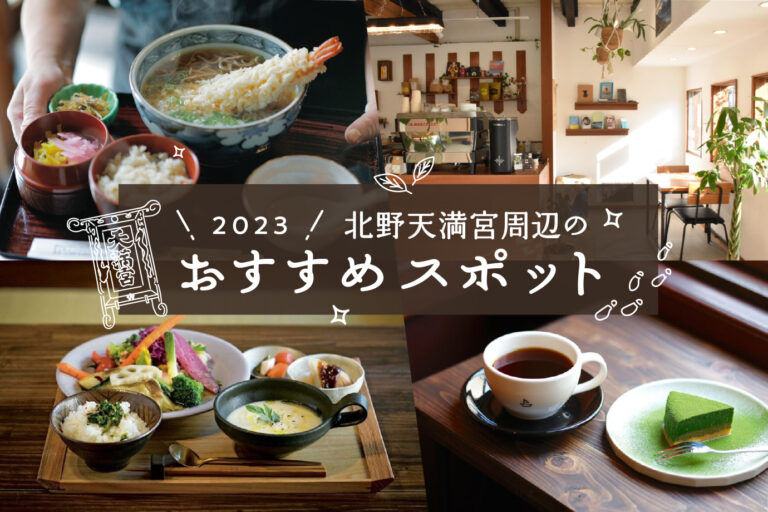
[2023]Recommended spots around Kitano Tenmangu Shrine in Kyoto...


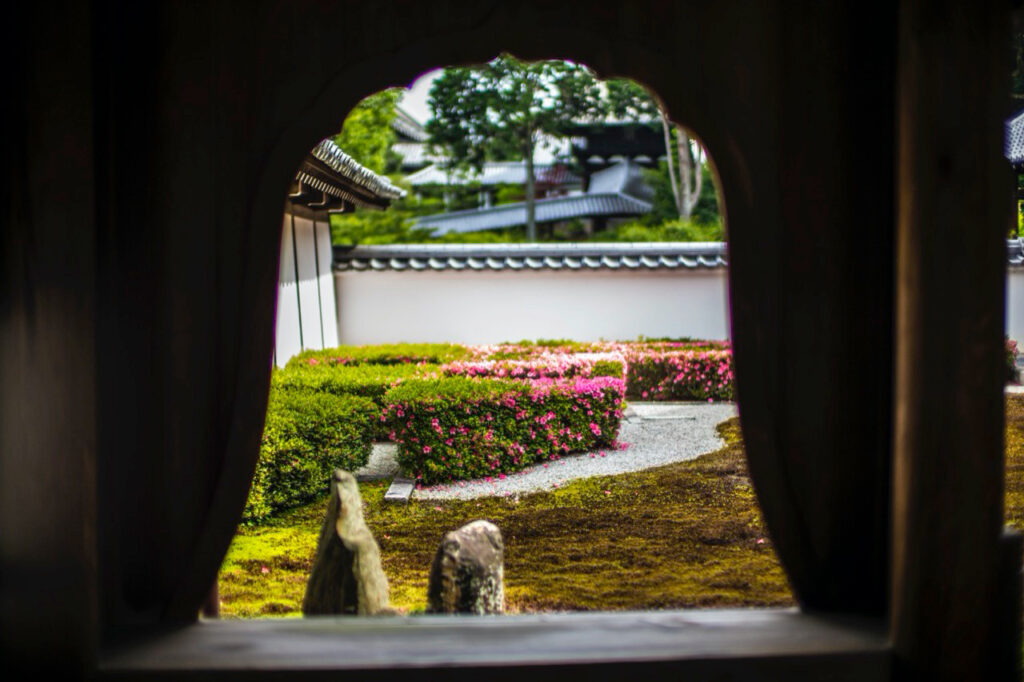

The historic temple [Tofukuji] was restored in the Muromachi period (1333-1573) and prospered as the fourth largest Zen temple among the five temples of Kyoto. The temple is visited by many people for its beautiful scenery in each season, such as the famous garden and the autumn leaves on the Tsutenkyo Bridge. In this issue, we pick up and introduce its historical background, main architectural structures, daily touches, and other highlights.
It is the main temple of the Tofukuji School of the Rinzai Sect, which boasts a magnificent temple complex. It was built in the early Kamakura period (1185-1333) at the behest of Doie Kujo, who was regent at the time. It took 19 years from 1236 (Katei 2) to 1255 (Kencho 7) to complete the construction.
In the midst of its prosperity, it was largely destroyed by fire in 1319, 1334, and 1336. However, four months after the last fire in 1336 (Engen), reconstruction began, and in 1346 (Jowa 3), more than ten years later, the temple once again boasted of its greatness. The temple was listed as one of the "Kyoto Gozan" (five mountains in Kyoto), which was introduced by the Hojo clan in the Kamakura period, just before the fire in 1334, and after the reconstruction, the temple was fully recognized as a Zen Buddhist temple.
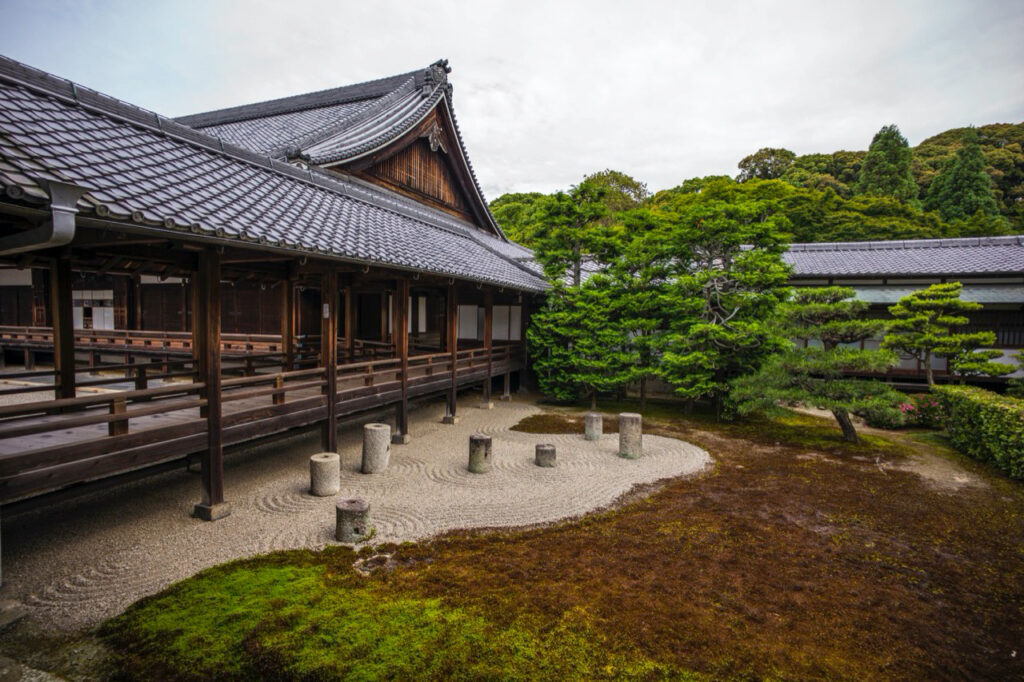
Honbo Garden, East Garden
The regent, Doie Kujo, took the characters for "east" and "fortune" from Todaiji, the largest temple in Nara, and Kofukuji, the most prosperous temple in Nara, to name the temple Tofukuji, and built a magnificent temple complex. The temple was renamed "Tofuku-ji" after the characters for "east" and "fortune" from Kofuku-ji, the most prosperous temple in Nara, and a magnificent complex was built around it. Tacho" refers to a branch temple built by the abbot or high priest on the temple grounds, and it is said that there were more than 80 tacho at one time in the history of Tofukuji Temple.
[Tofukuji Temple still preserves valuable Zen Buddhism architecture from the Middle Ages, known as "garan-men. The "Garan" refers to the pure place where monks gather to practice Buddhism, and "Shichido-garan" refers to a group of buildings on the temple grounds. Tofukuji Temple boasts one of the largest seven halls among Zen temples, comparable in scale to those of Todaiji Temple and Kofukuji Temple. It is also home to many national treasures and important cultural properties, and is a place of deep historical art and culture.
The Sanmon Gate (National Treasure), rebuilt in 1425 by Ashikaga Yoshimochi, the fourth shogun of the Muromachi Shogunate, is the oldest and largest of the three gates of Zen temples in Japan, using three different architectural styles: Daibutsu-style, Zen-shu-style, and Japanese-style. It is approximately 22 meters high, with statues of Buddha, including a crowned Shakyamuni Buddha and 16 arhats, on the top, and the ceiling is decorated with extremely colored flying dragons and celestial maidens painted by the monk Myojyo (Chodenshi) and other artists. The interior of the temple is not open to the public, but during the Nirvana Festival from March 14 to March 16, a special opening is held, where visitors can climb up to the gate and enjoy a panoramic view of southern Kyoto from the top of the tower. Visitors can also view the "Great Nirvana," said to be one of the three major Nirvana paintings in Kyoto. The Shien Pond in front of the Sanmon Gate is a place where visitors can enjoy lotus blossoms in summer.
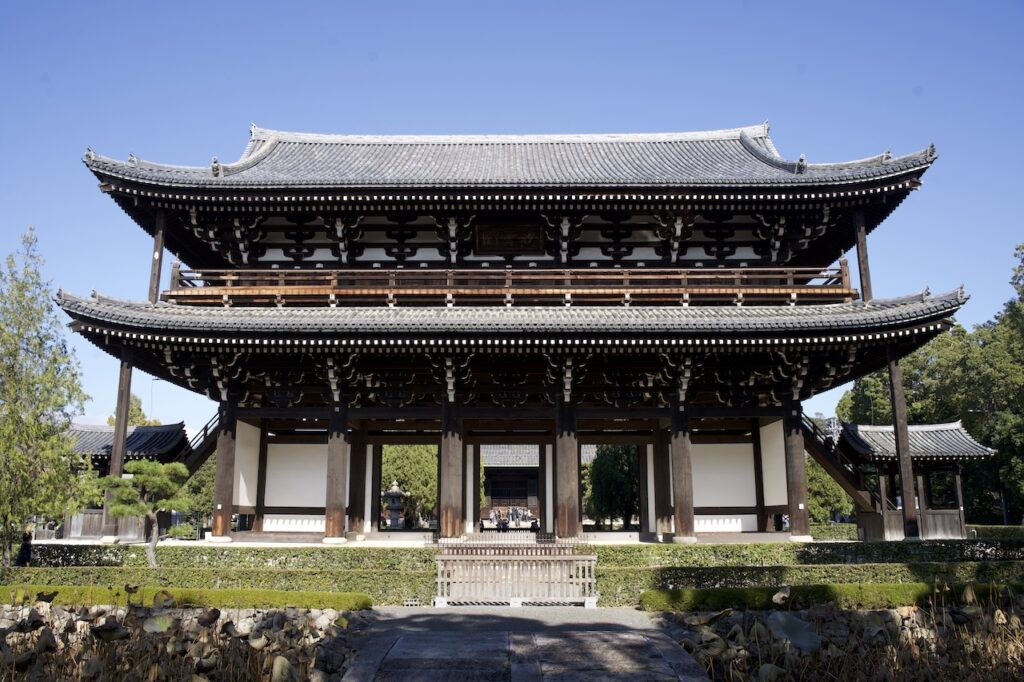
Sanmon Gate (National Treasure)
The hojo is the residence of monks in Zen temples, and later it became more of a reception room. [Like the Dharma Hall, the Hojo at Tofukuji Temple was destroyed by fire in 1881, and rebuilt in 1890. In 1939, the gardener Mirei Shigemori arranged four gardens on the east, west, south, north, and south sides of the vast Hojo, and called them "Tofuku-ji Hojo: Eight Phases of the Garden. Among the many Hojo gardens of the Zen sect, the Tofukuji Honbo Garden (Hojo) was the only one with a garden around all four sides. It is highly regarded as a Zen garden that reproduces the style of the Kamakura period with a modern approach, and was registered as a "National Place of Scenic Beauty" in 2014, and named "National Place of Scenic Beauty: Tōfukuji Honbo Teien".
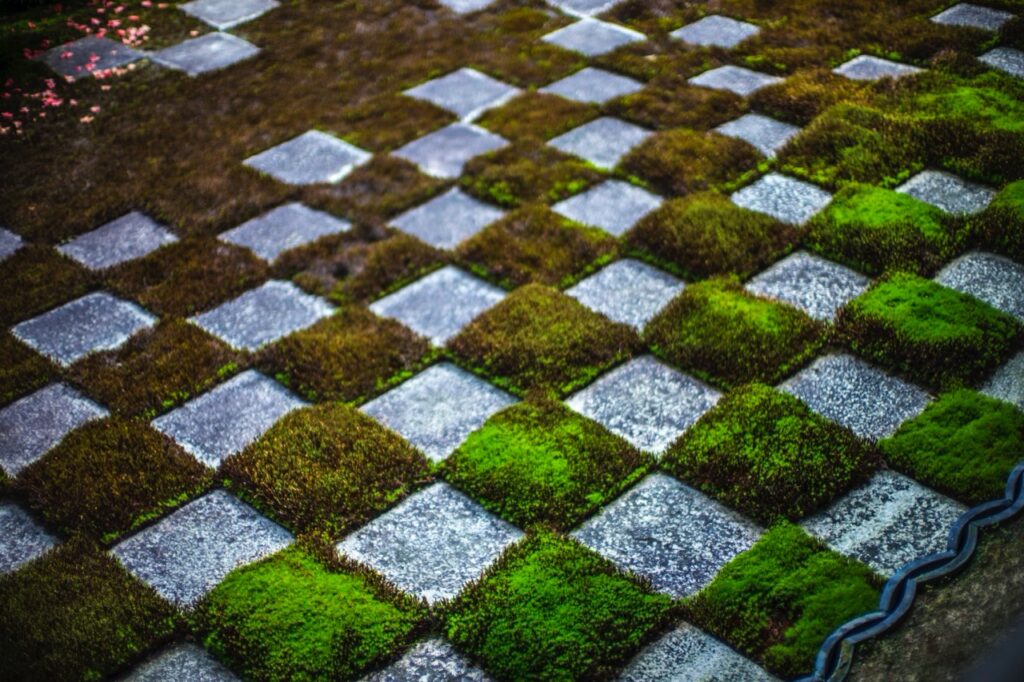
Honbo Garden, North Garden
Centered on the Hojo, there are four gardens located in the east, west, south, north, and west, and they are called the "eight-phase garden" in reference to the eight phases of the Buddha's life. The east garden represents the constellation "Big Dipper," the south garden represents the ancient Chinese "Horai Shenzen" philosophy, and the west and north gardens are decorated with moss and paving stones in a "checkerboard" pattern. Visitors can enter through the Kori (500 yen for the Honbo garden).
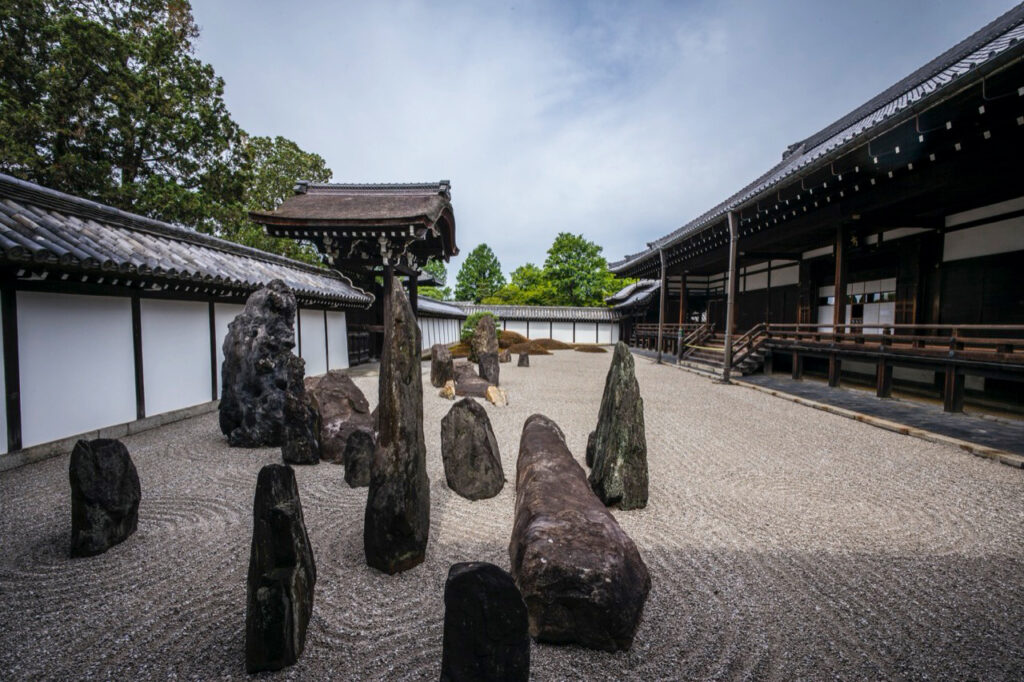
Honbo Garden, South Garden
The three bridges, called "Tofukuji's three famous bridges," are the Tsutenkyo Bridge, the Bastoretsu Bridge, and the Gagunkyo Bridge, which cross the Sengyokukan River, which flows through a ravine in the temple's grounds. The Tsutenkyo Bridge, built by Haruya Myotaro in 1380, is a covered wooden bridge approximately 27 meters long connecting the main hall and the Kaisando-Hall.
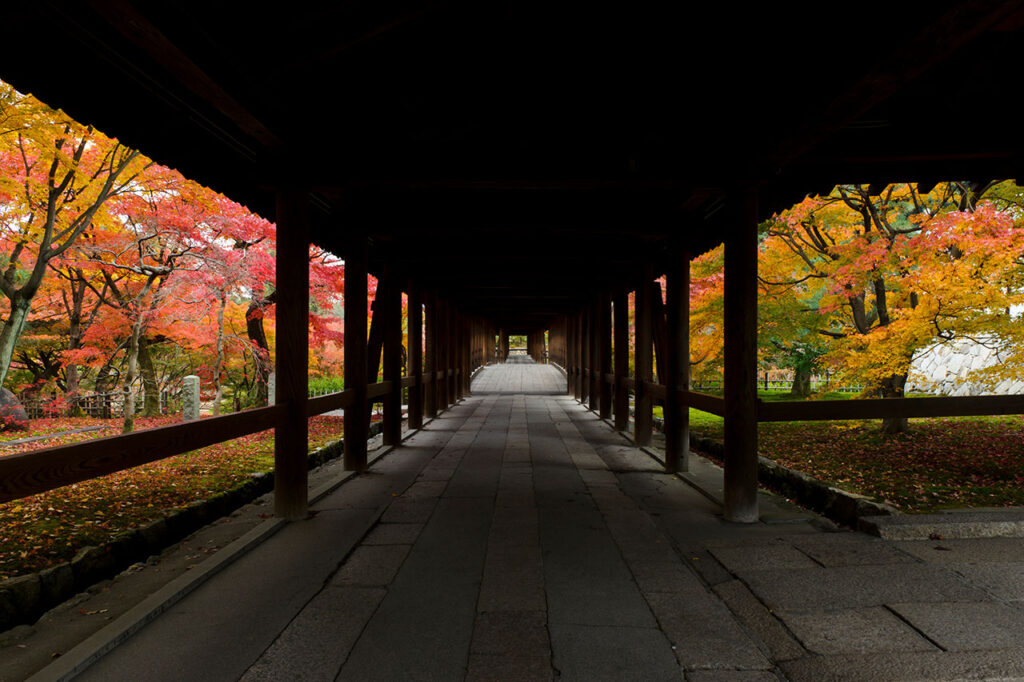
The view from Tsuten Bridge during the fall foliage season is so pleasing that it is called "autumn foliage that spreads out like a sea of clouds".
The valley below is planted with approximately 2,000 maple trees, a variety of maple called "to-mae-ji," which is said to have been brought back from the Sung Dynasty by Enji Ben-en (Seiichi Kokushi), and boasts one of the best views in Kyoto during the fall foliage season. In the season of autumn foliage, it boasts one of the best views in Kyoto, and in the season of fresh green foliage, the green maples full of vitality are beautiful.
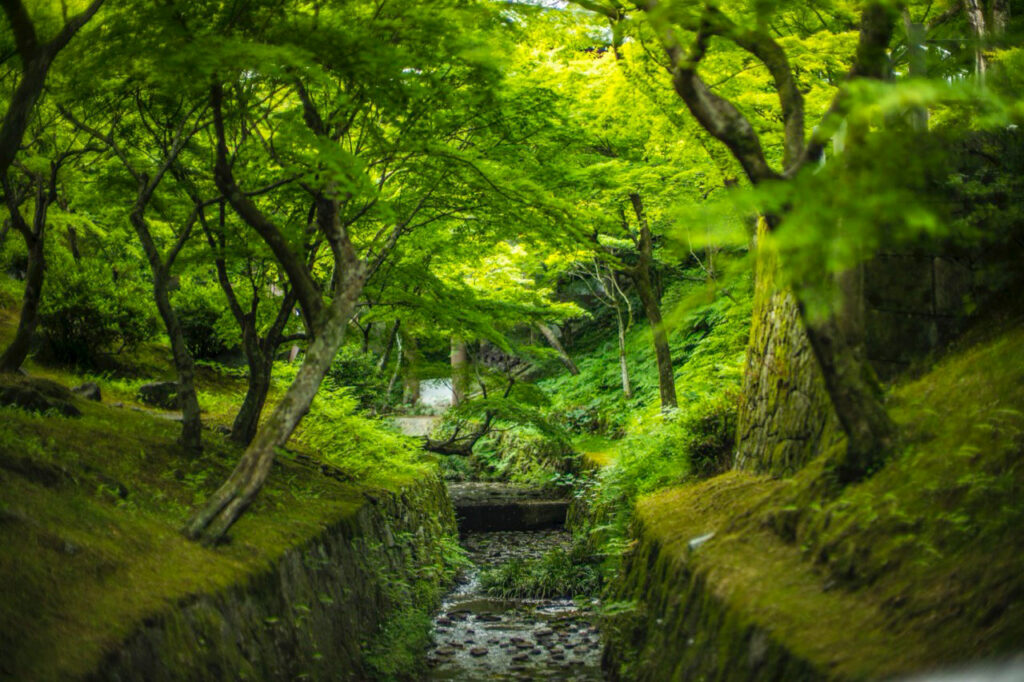
septillion (long scale)
The "Hondo" is one of the main buildings of Tofukuji Temple, which also serves as the "Hatto" and "Butsuden" halls. The "Hodo" is said to have housed a 15-meter statue of Sakyamuni Buddha when it was first built, but it was destroyed by fire during the war of 1881, and was rebuilt in its present form in 1934. It is a wooden structure with a total height of 26 m, a frontage of 41 m, and a depth of 30 m. It is the largest temple complex built by the Kujo Doke family in Kyoto.
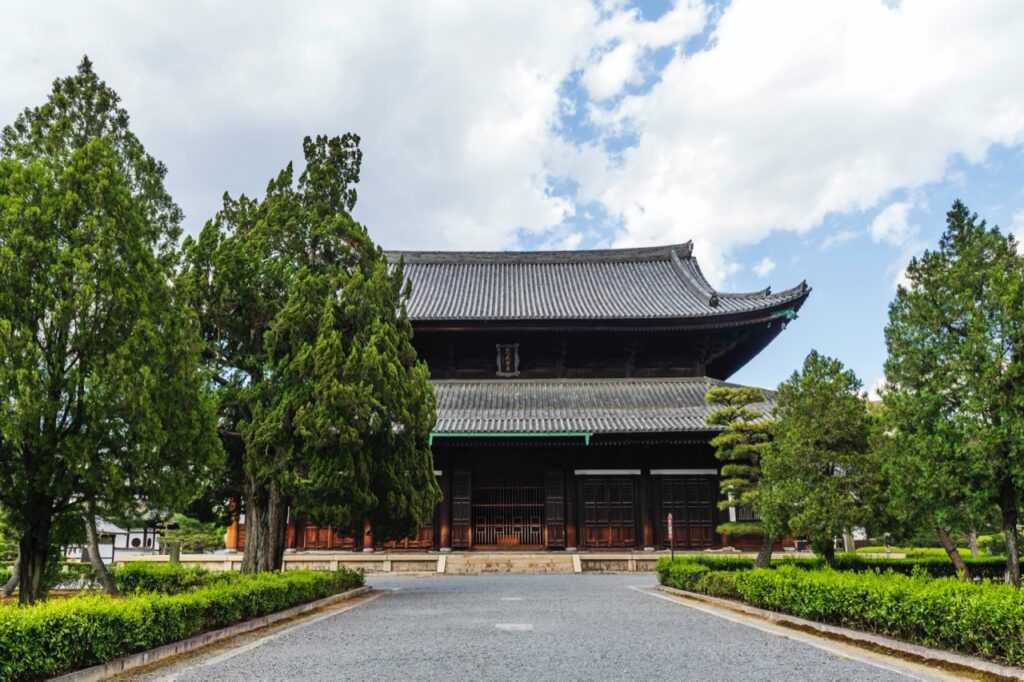
lecture hall of a temple (esp. Zen)
Since the interior of the temple is not usually open to the public, visitors can view it from the outside and catch a glimpse of the ceiling painting of "Soryu (Dragon with Clouds and Dragons)" along with the principal image of the temple. It is said to have been painted in 17 days by the Japanese-style painter Impression Domoto. In addition, a large painting of the Nirvana by Meicho is hung on the platform of the temple during the "Nirvana Puja" held every year in March.
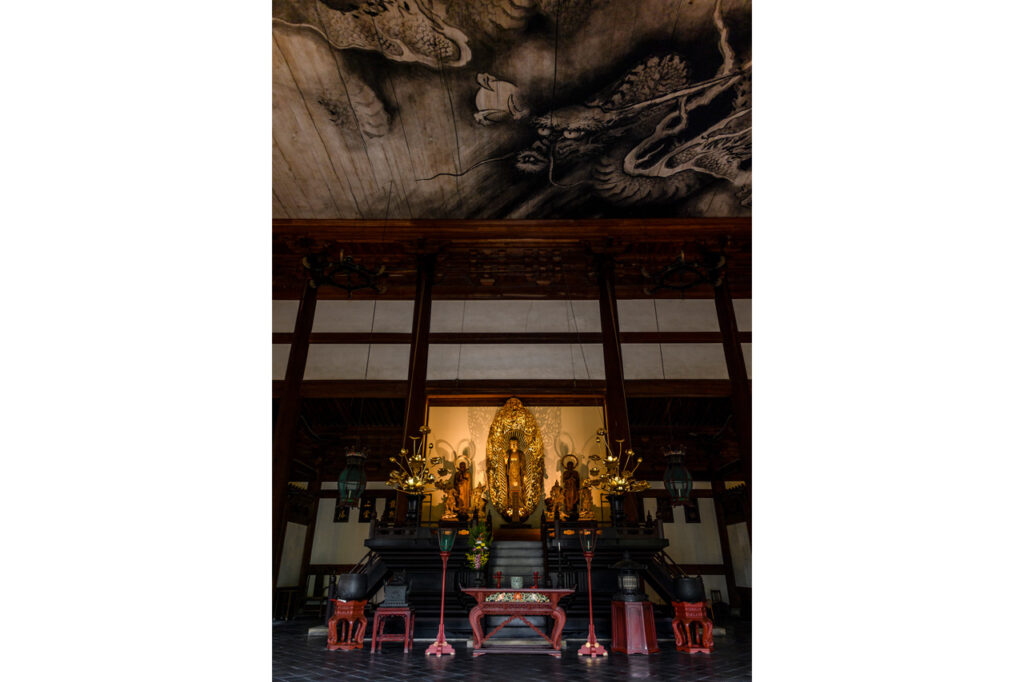
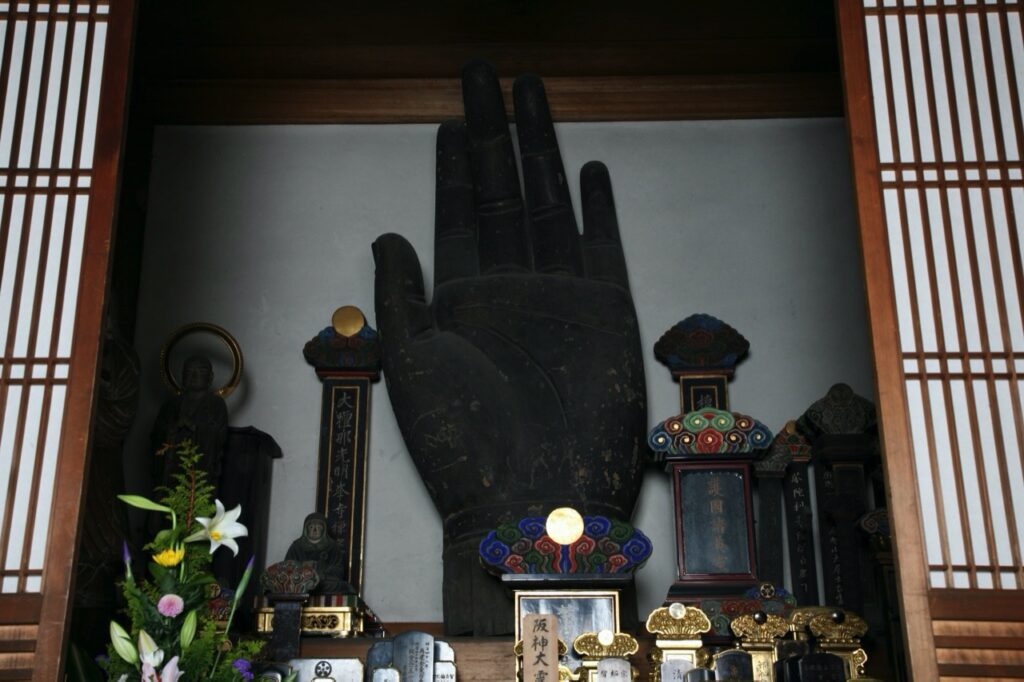
A huge hand measuring approximately 2 meters is enshrined on the altar of the Buddhist tablets in the "Hatto" hall. When the hall was destroyed by fire in 1881, only the left hand was rescued and enshrined as it is today.

Over 600 interviews per year! An order site carefully selected by the editors who knows Kyoto and Shiga.
nowOfficial LINE friend registration500 yen OFF coupon is being issued!

Distributed every Friday morning at 8:00 am! From new restaurant information to event information that we want to share with you, We deliver articles about Kyoto that are useful to know. About 20,000 people have registered.Click here to add a friend!
 News
News Feature article
 Featured event