

[2023]Recommended spots around Kitano Tenmangu Shrine in Kyoto...


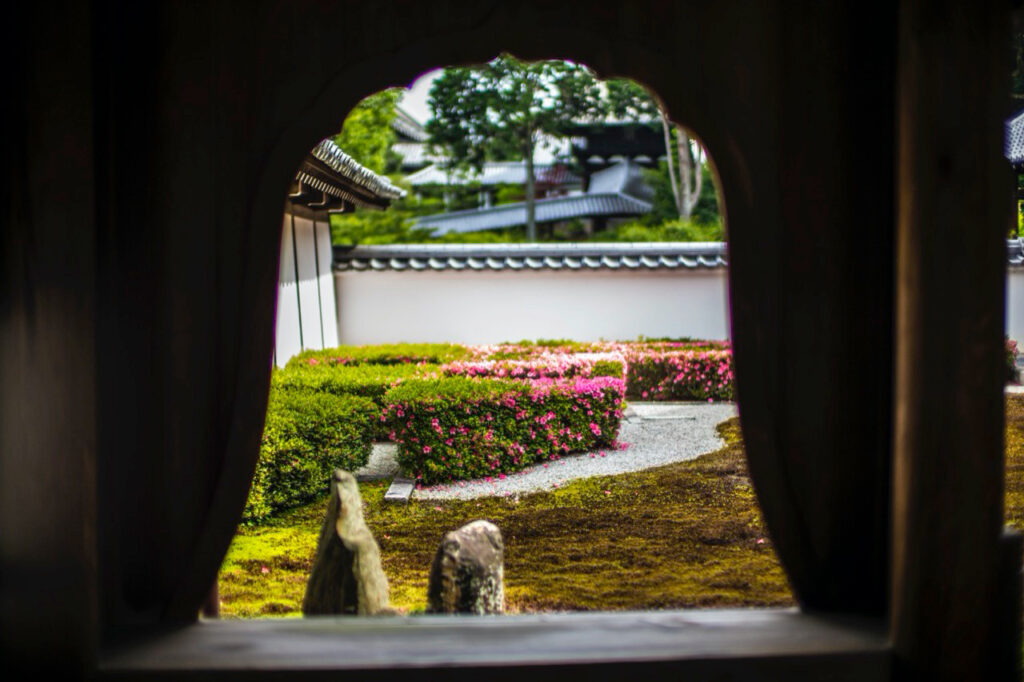

The historic temple [Tofukuji] was restored in the Muromachi period (1333-1573) and prospered as the fourth largest Zen temple among the five temples of Kyoto. The temple is visited by many people for its beautiful scenery in each season, such as the famous garden and the autumn leaves on the Tsutenkyo Bridge. In this issue, we pick up and introduce its historical background, main architectural structures, daily touches, and other highlights.
Crossing the Tsutenkyo Bridge from the Hojo, Kaisando-Do stands on the highest point of the temple grounds and houses a statue of Enji Benen (Seiichi Kokushi), the founder of the temple (not open to the public). In the Dennekaku, located above the hall, there is a standing image of the Amida Nyorai, a seated image of the monk Hotei, who is said to be the origin of the Fushimi dolls, and a seated image of the Yakushi Nyorai. The gardens in front of "Kaisando-Do" and "Fumon-in" were created in the mid-Edo period and combine the styles of a karesansui garden and a pond garden, so that visitors can enjoy different aspects of the garden at once.
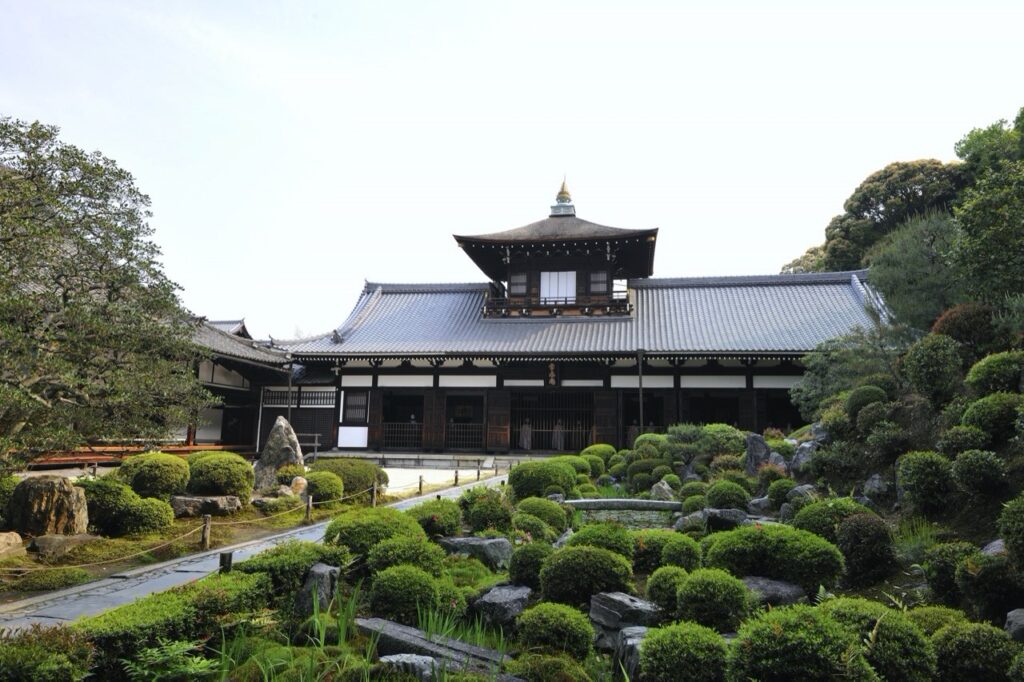
Kaisando-Hall (Important Cultural Property) *The inside of the building is not open to the public.
[The "Zendo" is located on the west side of the main hall of Tofukuji Temple. It was rebuilt in the Muromachi Period in 1347 (Jowa 3) in the Tang style. It is the only zendo that has survived from the Nanbokucho Period as the largest and oldest zendo in existence, and survived the fire of the Meiji Period. It is a magnificent reminder of the prosperity of the past, and conveys the style of medieval Zen Buddhism architecture. It is a single-story gabled structure with a gable and a mokoshi (a storey), with a seven-ken (12.7m) long girder and a four-ken (7.3m) beam span. It is composed of a Kamakura-style hanagashira window and lattice window, a wave ranma with arched wood, and a double rainbow beam and a large bottle bundle in the center of the moya. It is also Japan's largest and oldest zazen dojo, where more than 400 monks once practiced Zen meditation.
Sunday Zazen meeting: 6:30-7:30 p.m., free of charge, with temporary closure.
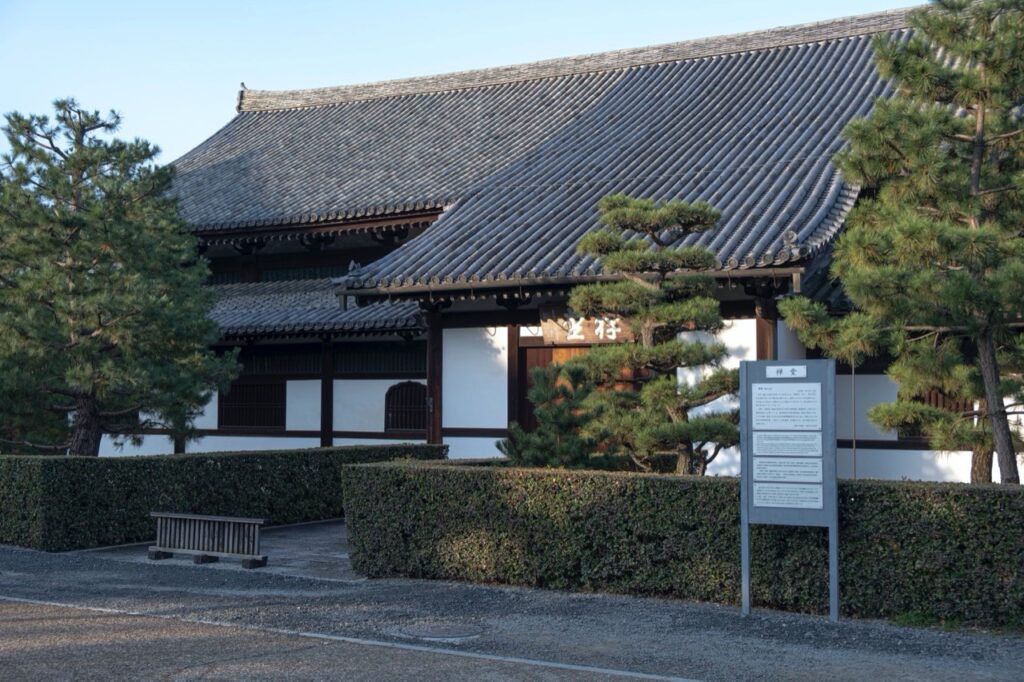
Zendo (Important Cultural Property)*Normally closed to the public.
The "Toji" on the west side of the "Sanmon" and the "Bathhouse" on the east side are also outstanding architectural features of [Tofukuji].
Like the Zendo, the Toji survived the fire of the Meiji period (1868-1912) and still retains the style of medieval Zen Buddhism architecture. It was designated as an important cultural property in 1902. The building is a single gabled structure with a girder length of 35 m (7 ken) and a beam length of 14 m (4 ken). The gabled decoration on the front and back of the building, including the brim and mirror ceiling in the attic, and the gabled roof with double rainbow beams and a large bottle bundle, show the old Zen style of architecture. It is also called "Hyakumen-toilet," "Hyakusetsuchin," or "100-man toilet. In Zen Buddhism, defecating was a form of ascetic practice, and many monks used to go to the toilet together.
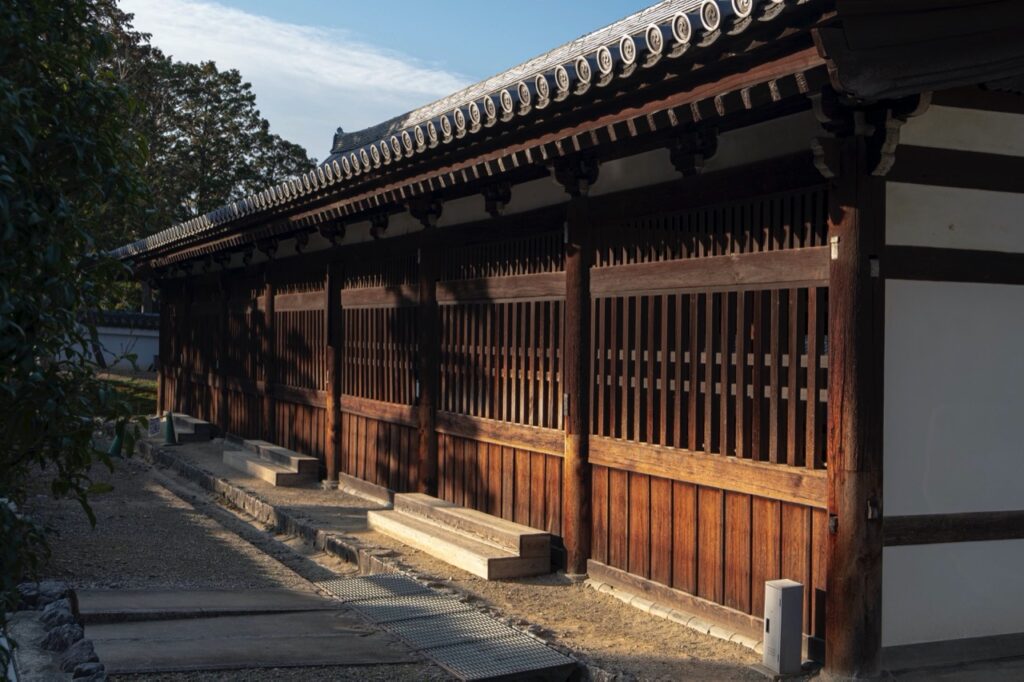
Toji (Important Cultural Property) *Normally closed to the public.
The bath was built in 1459 and is the oldest existing Zen temple building (Important Cultural Property). It is a single-story building with a gabled roof in the front and a gabled roof in the rear. Inside, two steam baths are lined up on the east side, and a cauldron and fire pit are located in the rear, resembling a sauna bath as we know it today. At that time, because monks practiced asceticism in units of 100, they did not use hot water for ablution, but instead used steam to soften and rub off the grime from their bodies, thereby saving water and firewood.
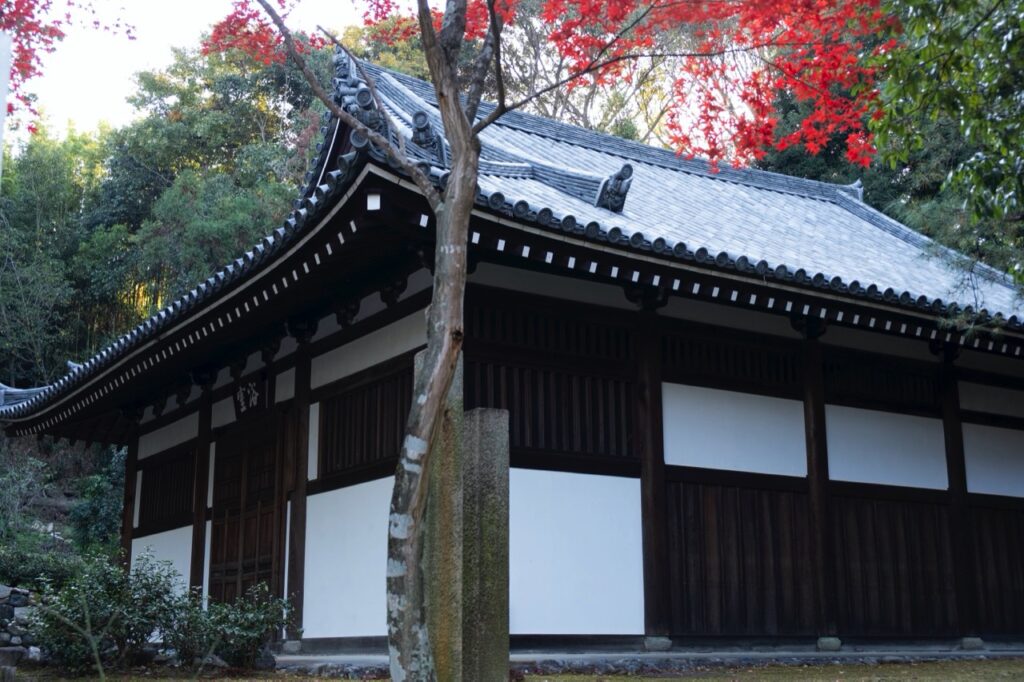
Bathroom (Important Cultural Property)*Normally closed to the public.
Please stop by at Tofukuji Temple to see the magnificent historic temple building and the garden, which shows different aspects of the temple as the seasons change.
■Special viewing during the fall foliage season
Best time to see autumn leaves / Usually mid-November to late November
看楓特別拝観 通天橋公開
拝観期間/2025年11月15日(土)~12月7日(日)
拝観時間/9:00~16:30(16:00受付終了)
拝観料/龍吟庵1000円、三門1000円
看楓特別拝観 三門・龍吟庵公開
拝観期間/2025年11月8日(土)~12月7日(日)
拝観時間/8:30~16:30(16:00受付終了)
拝観料/通天橋・開山堂1000円、本坊庭園500円
早朝特別拝観
拝観期間/2025年11月20日(木)〜12月8日(月)
拝観時間/7:30~8:30
拝観料/1800円
*For inquiries, please contact JR Tokai.
Night Special Viewing
拝観期間/2025年11月19日(水)〜12月7日(日)
Hours of visitation / 17:30-19:30
Entrance fee/2,800 yen
*For inquiries, please contact JR Tokai.
※11月1日(土)~12月12日は境内駐車場・北駐車場閉鎖
Sunday Zazen Meeting
Period / Every Sunday *For the latest information東福寺公式サイトで随時更新
Time/6:30-7:30
Admission/free *Suspension is available.
Kyoto Station - Tofukuji Temple
JR Nara Line] JR "Kyoto Station" - JR Nara Line - Approx. 3 minutes - JR "Tofukuji Station" - 10 minutes walk - Tofukuji Temple
City Bus] Route 88/208
Kyoto Station - D2 bus stop outside the central exit - approx. 15 minutes - Bus stop "Tofukuji" - 4 minutes walk - Tofukuji Temple
Fushimi Inari Taisha ~ Tofukuji Temple
Walking] 16 min.
JR Nara Line] Fushimi Inari Taisha - 1 minute walk - JR "Inari" station - approx. 2 minutes - JR "Tofukuji" station - 8 minutes walk - Tofukuji
Keihan Line] Fushimi Inari Taisha Station - 4 minute walk - Keihan "Fushimi Inari Taisha Station" - approx. 3 minutes - Keihan "Tofukuji Station" - 6 minute walk - Tofukuji
City Bus] South Route 5
Fushimi Inari Taisha Shrine - 5 minute walk - Bus stop "Inari Taisha-mae" - approx. 5 minutes - Bus stop "Tofukuji-michi" - 6 minute walk - Tofukuji Temple
Yasaka Shrine ~ Tofukuji Temple
Keihan Line] Yasaka Shrine - 11 minute walk - Keihan "Gion-Shijo" station - approx. 5 minutes - Keihan "Tofukuji" station - 6 minute walk - Tofukuji
City Bus] Route 202/207
Yasaka Shrine - 3 minutes walk - Bus stop "Gion" - 15 minutes - Bus stop "Tofukuji" - 4 minutes walk - Tofukuji
Shijo-Kawaramachi ~ Tofukuji Temple
Keihan Line] Keihan "Gion-Shijo" station - about 5 minutes - Keihan "Tofukuji" station - 6 minutes walk - Tofukuji
City Bus] Route 58/207
Bus stop "Shijo Kawaramachi" - about 20 minutes - Bus stop "Tofukuji" - 4 minutes walk - Tofukuji
JR Nara Line] JR "Saga-Arashiyama" station - approx. 19 minutes - JR "Kyoto" station - approx. 2 minutes - JR "Tofukuji" station - 8 minutes walk - Tofukuji
Parking/ Parking is available at the south side of Zendo or Tofukuji North Parking Lot.
*Parking lot closed and traffic restrictions apply during the fall foliage. For details, please contactOfficial sitecheck

Over 600 interviews per year! An order site carefully selected by the editors who knows Kyoto and Shiga.
nowOfficial LINE friend registration500 yen OFF coupon is being issued!

Distributed every Friday morning at 8:00 am! From new restaurant information to event information that we want to share with you, We deliver articles about Kyoto that are useful to know. About 20,000 people have registered.Click here to add a friend!
 News
News Feature article
 Featured event