

![[Sennyuji Temple]](https://www.leafkyoto.net/leaf/wp-content/uploads/2021/08/210309_sennyuji_a-300x200.jpg)
![[Goryo Shrine/Kamigoryo Shrine]](https://www.leafkyoto.net/leaf/wp-content/uploads/2021/09/上御霊本殿-1-300x211.jpg)
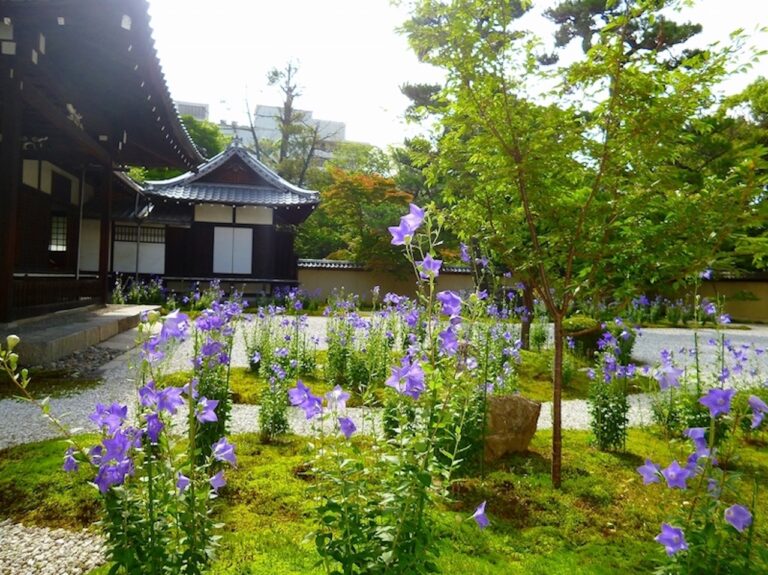
Botanical Crests - Kikyo (Chinese bellflower)


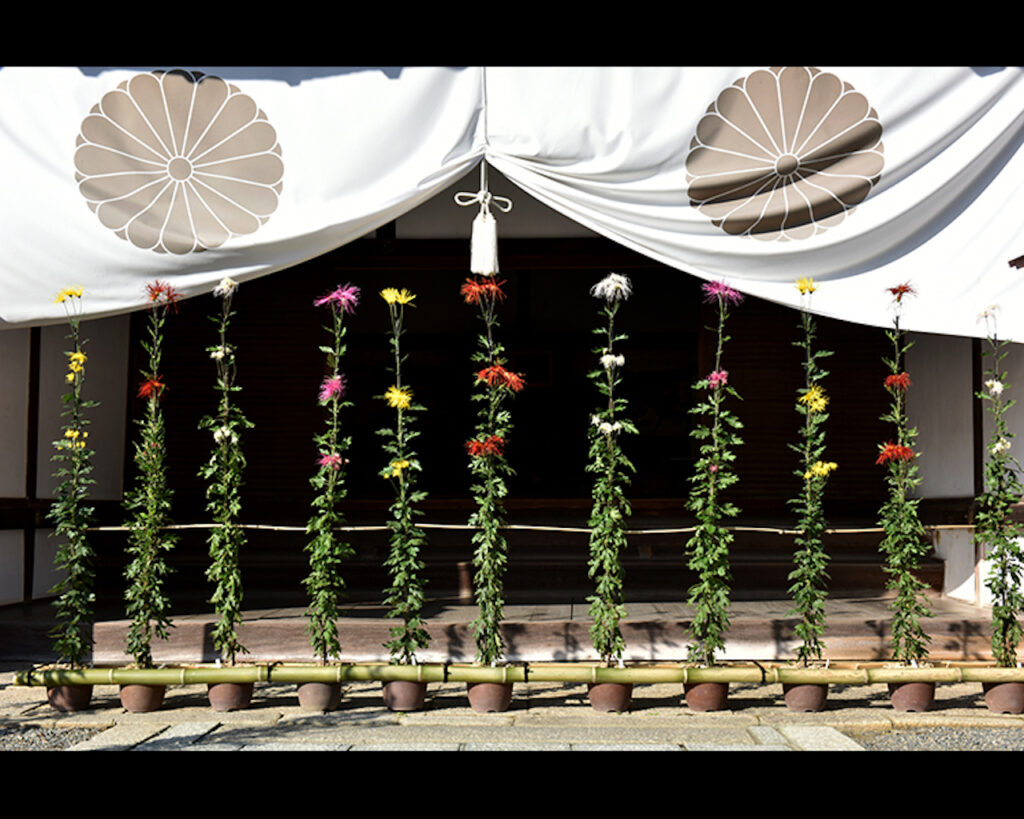

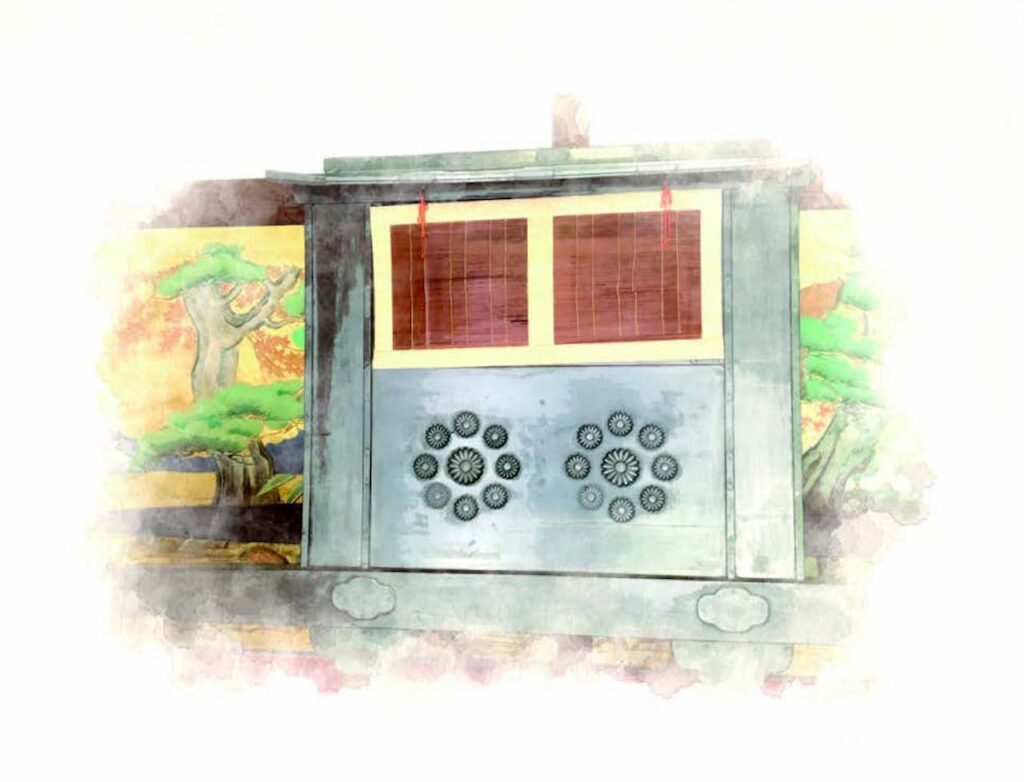
Note the subtly placed crests and the unusual nine-dot chrysanthemum pattern throughout the set-up.
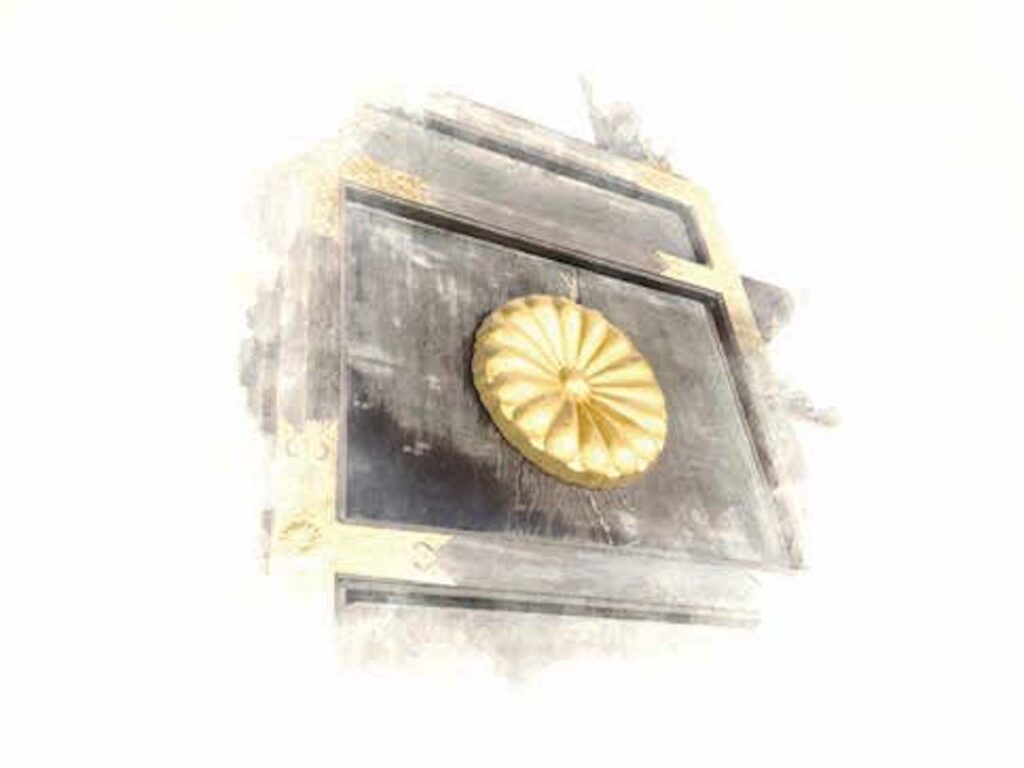
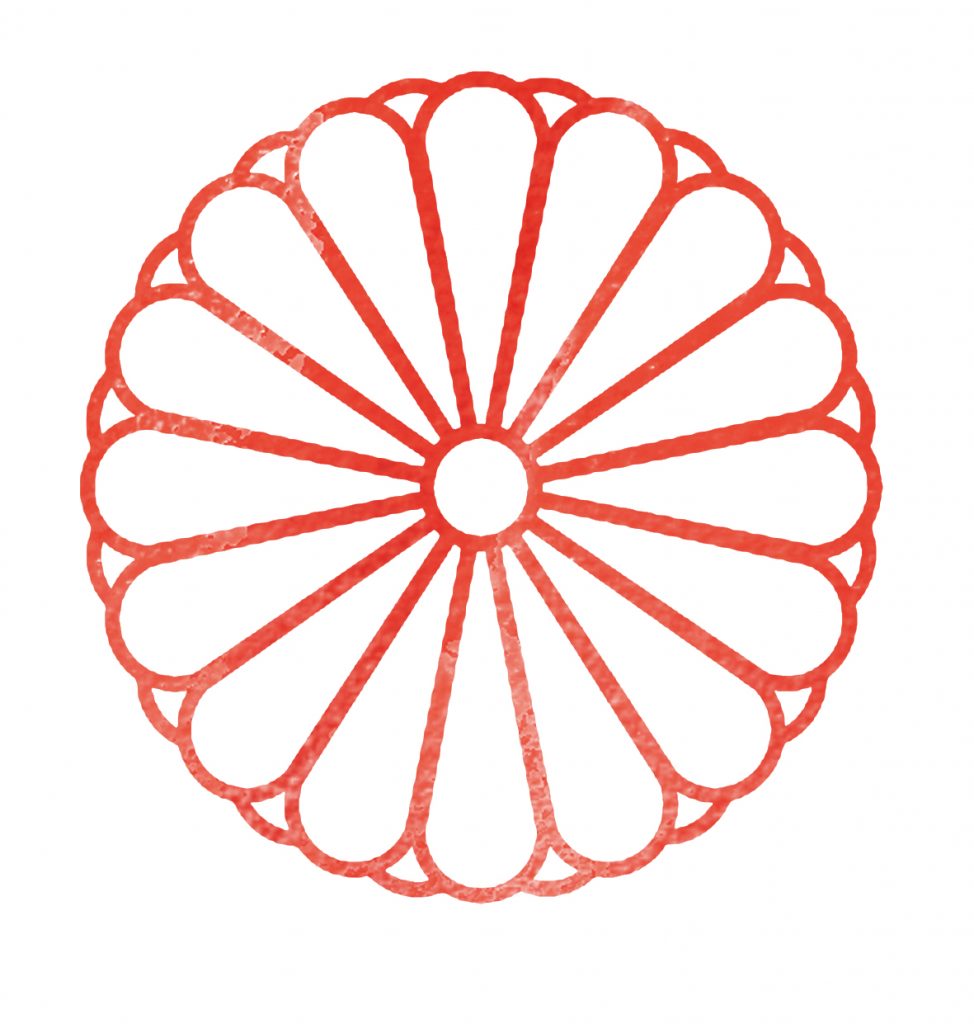
The temple crest of Daikakuji Temple is the eightfold chrysanthemum crest "16-leaf eightfold Omotegiku" of the valve, which is officially designated as the crest of the imperial family. We asked about spots where the crest can be seen on the temple grounds.
Most of the halls have been relocated from buildings that were actually used in the Imperial Palace, and you can see this everywhere, from the balustrades of the corridors to the door decorations," Takehara said. As Mr. Takehara says, a large banner with a crest welcomes visitors at the entrance to the Shikidai (ceremonial platform) in front of the entrance to the shrine. The Imperial Gate, with its powerful crest, is only open on special occasions, such as official visits by the imperial family and memorial services, so you cannot get close to it, but the solemn atmosphere can be seen from a distance.
When Hōhō Go-Uda served as abbot of the temple, his emblem was a 'kuyo chrysanthemum' with eight chrysanthemums surrounding a central chrysanthemum. You can see the crest on the gosho used by the emperor, which is rare in Daikakuji Temple, on display in the entrance of the Shikidai," he said. There are many souvenirs you can take home with you, such as fu senbei crackers branded with the chrysanthemum crest, a red seal book designed with the crest as the moon, and an omamori, a good-luck charm. They also sell them online, so those who cannot visit the temple can also check them out.
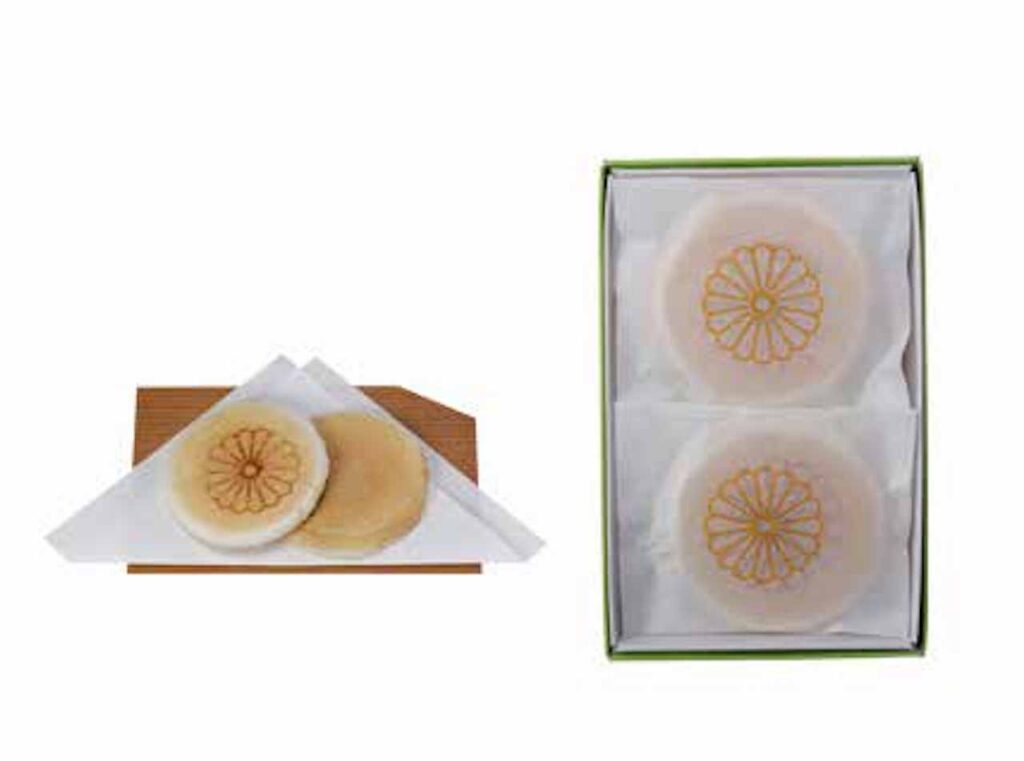
Don't miss the Daikakuji Sagagan chrysanthemum, the most impressive exhibition event, which is presented to the Imperial Court.
The chrysanthemums that grew wild on Kikugashima and the banks of Osawa Pond in the Heian period (794-1185) cannot be seen today, but they are growing their own Daikakuji Saga chrysanthemums, which are considered to be kept outside the gate. It is a thin, thread-like ancient chrysanthemum, and is grown to a height of 2 meters so that it can be appreciated from the corridor. Three chrysanthemums are planted in one pot, with seven flowers at the bottom, five flowers in the middle, and three flowers at the tip, forming a "753" pattern, and the leaves, from the bottom, are yellow with dead leaves, green, and young leaves, representing the four seasons. The leaves also represent the four seasons, with four different colors of flowers. Since they are vulnerable to strong sunlight and wind and rain, the Daikakuji Saga Chrysanthemum Preservation Society takes care of them as if they were their own children. During the Saga Chrysanthemum Exhibition, held every year from November 1 to 30, as many as 800 pots of Saga chrysanthemums bloom in the temple grounds. The potted plants are presented to the imperial court and delivered to the residences of the imperial family. We are grateful that people look forward to seeing them every year.
The Daikakuji Saga chrysanthemum still has a connection with the imperial family. Mr. Takehara-san's careful explanation of the chrysanthemums gave us a glimpse of the hard work of the members of the Daikakuji Saga Chrysanthemum Preservation Society. The high quality of the chrysanthemums, which have been carefully preserved, should be appreciated together with the chrysanthemum crest.
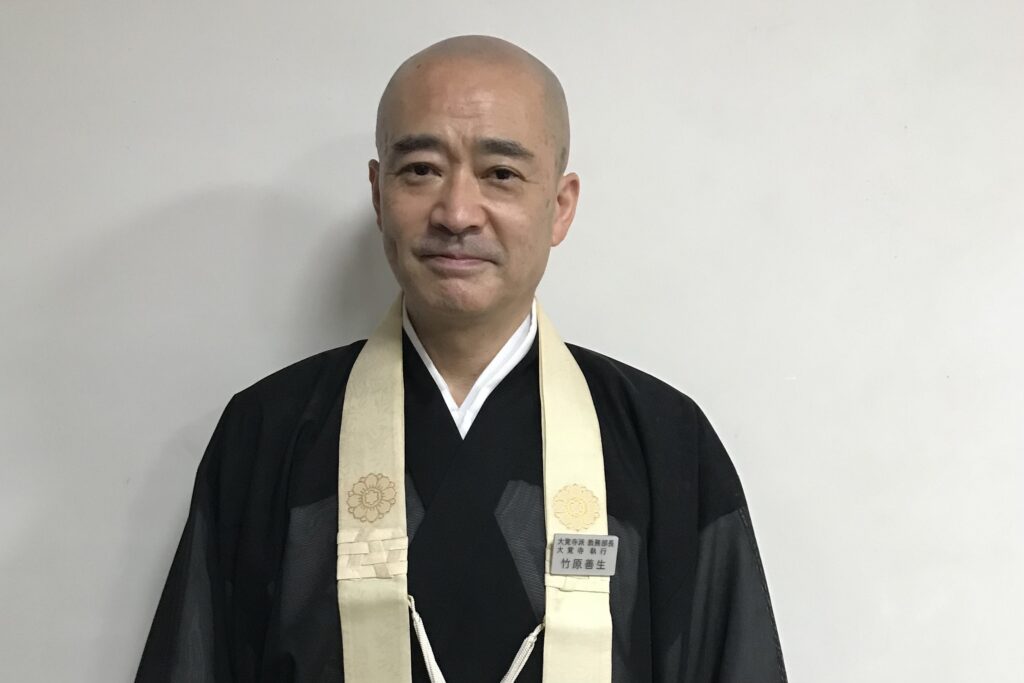
Director of Educational Affairs, General Affairs Agency, Daikakuji School of Shingon Buddhism Yoshio Takehara, Director, Saga Goryu Kado Sojijo, Executioner, Daikakuji Temple, the former Saga Gosho Daihonzan, Director, Saga Goryu Kado Sojijo.

Over 600 interviews per year! An order site carefully selected by the editors who knows Kyoto and Shiga.
nowOfficial LINE friend registration500 yen OFF coupon is being issued!
Distributed every Friday morning at 8:00 am! From new restaurant information to event information that we want to share with you, We deliver articles about Kyoto that are useful to know. About 20,000 people have registered.Click here to add a friend!
 News
News Feature article
 Featured event