



![A landmark of Kyoto! A guide to the highlights and history of the World Heritage Site [Toji Temple].](https://www.leafkyoto.net/leaf/wp-content/uploads/2023/12/231215-toujimidokoro-1024x682.jpg)

Toji Temple, the head temple of the Shingon sect of Buddhism, still has a strong presence as a relic of the Heian-kyo capital in the city of Kyoto. Officially named Kyo-o-gokoku-ji Temple, it was built in conjunction with the relocation of the capital to Heian-kyo. Later, the temple was given to Kobo Daishi Kukai and became the first Shingon esoteric Buddhism temple in Japan. The temple grounds, which retain the layout of the temple since its founding, are designated as a historic site and contain many national treasures and important cultural properties. The five-story pagoda is one of the most famous symbols of Kyoto.
[Toji Temple is easily accessible from Kyoto Station and is a recommended place to visit when sightseeing around the station.
In this issue, we will introduce in detail the highlights and history of Toji Temple, which is also registered as a World Heritage site. You can also visit the temple when the cherry blossoms and autumn leaves are lit up and Koboichi is held every month.
In 794 (Enryaku 13), Emperor Kanmu moved the capital to Heian-kyo. In 796, To-ji Temple was built as an official temple to serve as a national shrine. [Located on the east side of the Rajomon Gate, the entrance to Heian-kyo, To-ji Temple was originally a counterpart to Sai-ji Temple.
Emperor Saga, who ascended to the throne after Emperor Kanmu, bestowed Toji Temple to Kobo Daishi Kukai, who had studied esoteric Buddhism in Tang China. Kukai proceeded with the construction of a lecture hall and a five-story pagoda, and the temple complex that remains to this day was built. Thus, To-ji Temple became the head temple of Shingon esoteric Buddhism.
Eventually, at the end of the Heian period, Toji Temple declined along with the devastated capital.
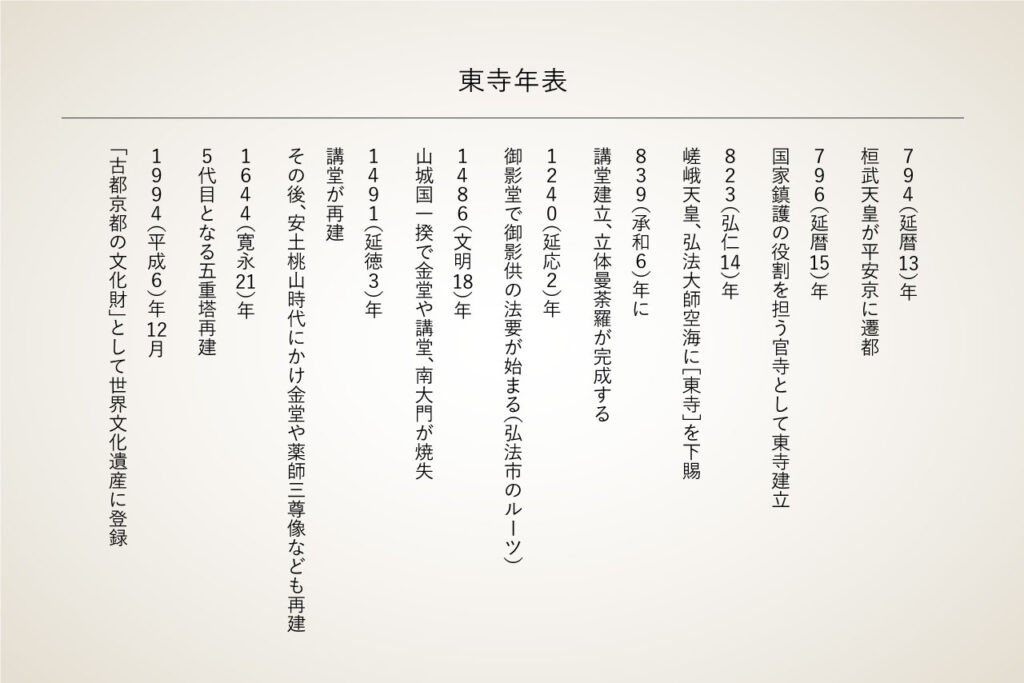
In 1233, a seated statue of Kobo Daishi Kukai was completed by Unkei's son, Buddhist priest Kosho, and in 1240, a memorial service was held in the Mikageido, which became the origin of Kobo Market.
However, during the Muromachi period (1336-1573), the temple was spared from damage during the Onin War, but in 1486, the Kondo, lecture hall, corridor, and Nandaimon gate were destroyed by fire in the Yamashiro Provincial Revolt.
Five years later, the auditorium was rebuilt. During the Momoyama period (1568-1600), the Kondo hall, the statue of Yakushi Sanzon, and the Nandaimon gate were also rebuilt, finally restoring the temple to its original appearance. The five-story pagoda, which was destroyed by lightning, was rebuilt in the Edo period (1603-1867).
To-ji Temple, which has been repeatedly rebuilt by the people, was registered as a World Heritage Site in December 1994 as a "Cultural Property of Ancient Kyoto.
Miedo
Mikado, located in the northwest of the temple grounds, is said to be the former residence of Kukai. Also called "Daishi-do," it consists of a rear hall, a front hall, and a central gate. The building, which dates back to the Nanbokucho Period, is designated as a National Treasure and has an impressive, serene atmosphere.
In the front hall, a statue of Kobo Daishi, a national treasure, is enshrined as the principal image. In the back hall, a seated statue of Fudo Myoo, a statue of Daishi Nenmochi, is enshrined, but it is not open to the public because it is a secret statue of Buddha.
At the Mikageido, a Mieku (memorial service) is held at 10:00 a.m. on the 21st day of every month. Mieiku is a memorial service to express gratitude to Kobo-Daishi Kukai. In particular, the memorial service on April 21 (March 21 in the lunar calendar), the day Kukai entered the Buddhist monastery, is called Sho Mieiku. On this day, the main image is open all day long.
Shojinku, which begins at 6:00 a.m. each morning, is also the time when the principal image is opened to the public.
In the Ikushimi Kuyo, one meal, two meals, and tea will be offered, just as Kukai did when he lived in the Mikageido. Everyone is welcome to participate, and no fee is required. 5:50 p.m., gather at either the Karamon or Seimon of the Mikageido, and after the 6:00 bell rings, enter the Mikageido to pay your respects.
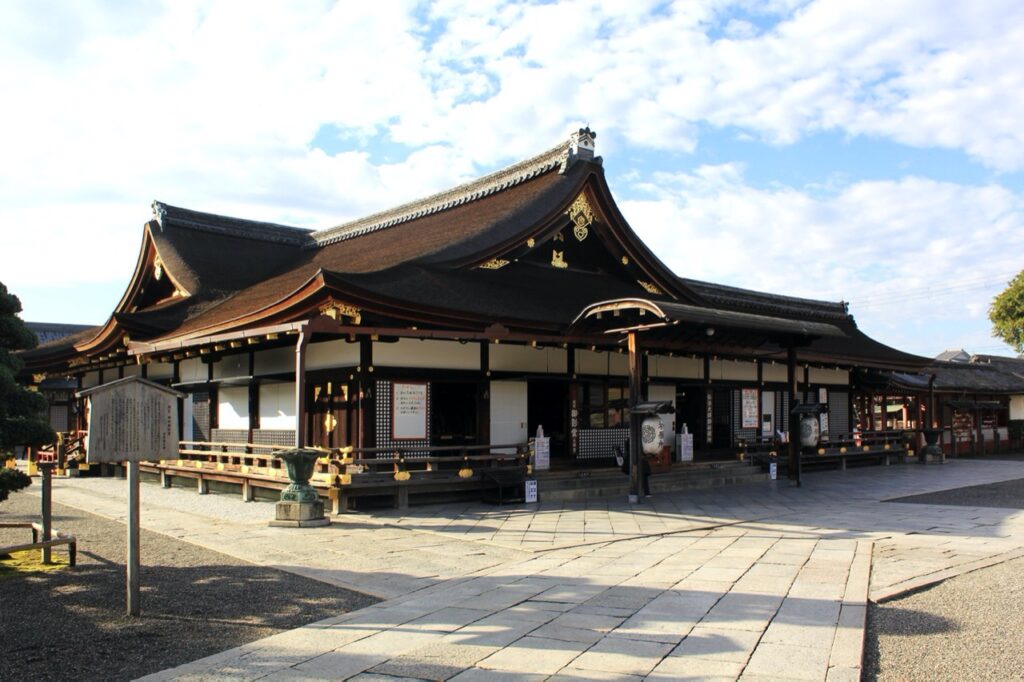
Mikageido (National Treasure)
Kanchiin
The pagoda of Toji Temple was founded by Gobo around 1359 during the Nanbokucho period (1359-1368). Here, Gobo and his disciple, Gempo, compiled documents and collected many esoteric Buddhist scriptures. It can be said to be a kind of "Kangakuin" in the Shingon sect, a kind of laboratory in a university.
The Kyakuden of Kanchiin, which retains elements of the shoin-style architecture, is designated as a national treasure. In addition, "Eagle" and "Bamboo Forest" by Musashi Miyamoto are painted in the upper room.
The main hall is located on the east side of the guest house, and its principal deity is the Godai Kokuuzo Bosatsu, an Important Cultural Property.
Currently, Kanchiin is open to the public year-round. Admission is 500 yen for adults. They also accept sutra copying from the general public, and writing pens are available for loan. Hours are from 9:00 a.m. to 3:00 p.m. A sutra fee of 1,000 yen is required. Reservations are not required, so feel free to try sutra copying.
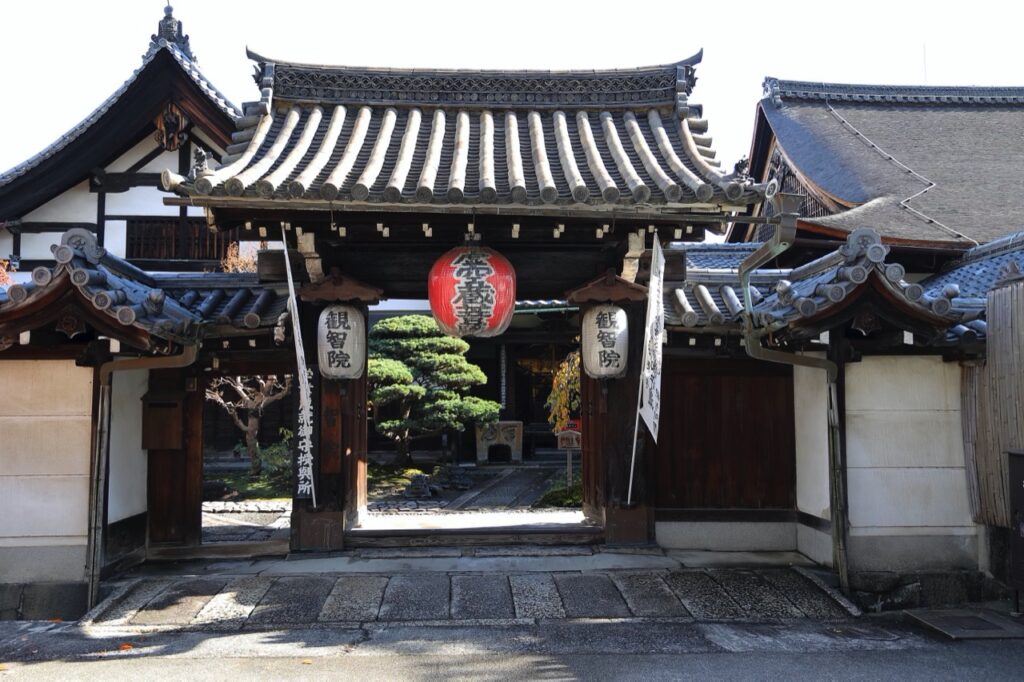
Kanchiin temple
Namdaemun
Nandaimon is the front gate in the layout of To-ji Temple. In 1895, to commemorate the 1,100th anniversary of the relocation of the capital to Heian-kyo, the gate was rebuilt by relocating the West Gate of Sanjusangendo (Sanjusangen-do). As an architectural structure built in the Momoyama Period, it is designated as an Important Cultural Property.
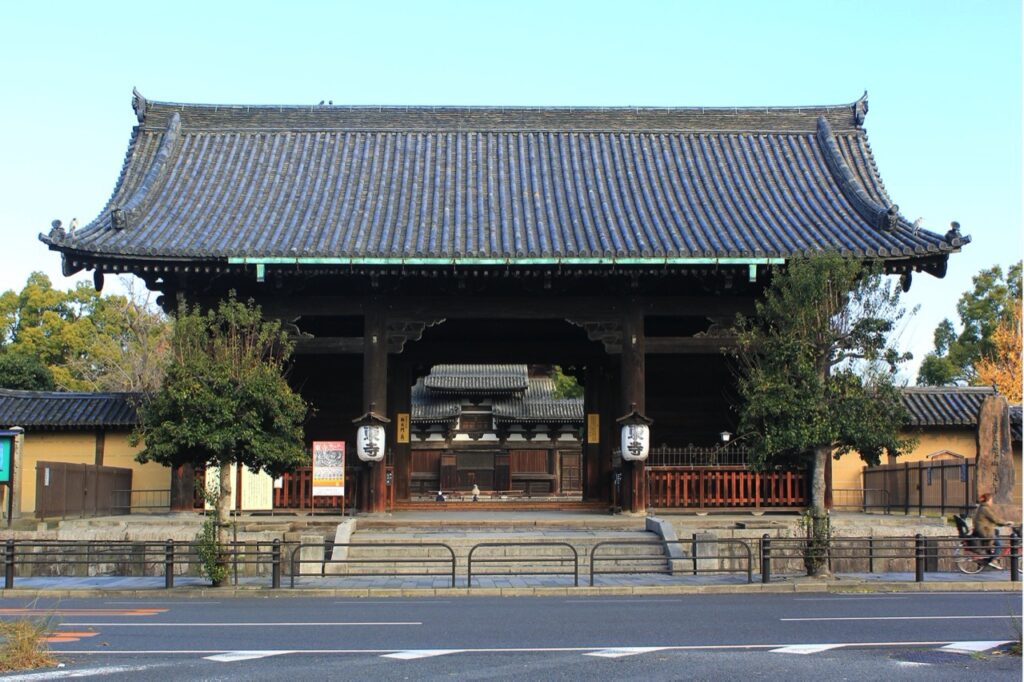
Namdaemun (Important Cultural Property)
Garden
On the north side of the five-story pagoda is Hyotaike Pond. When the pond is lit up at night, the reflections of the cherry blossoms, autumn leaves, and the five-story pagoda are reflected in the pond, making it a popular photo spot. In early summer, lotus flowers are in full bloom, creating the illusion of the Pure Land of Ultimate Bliss.
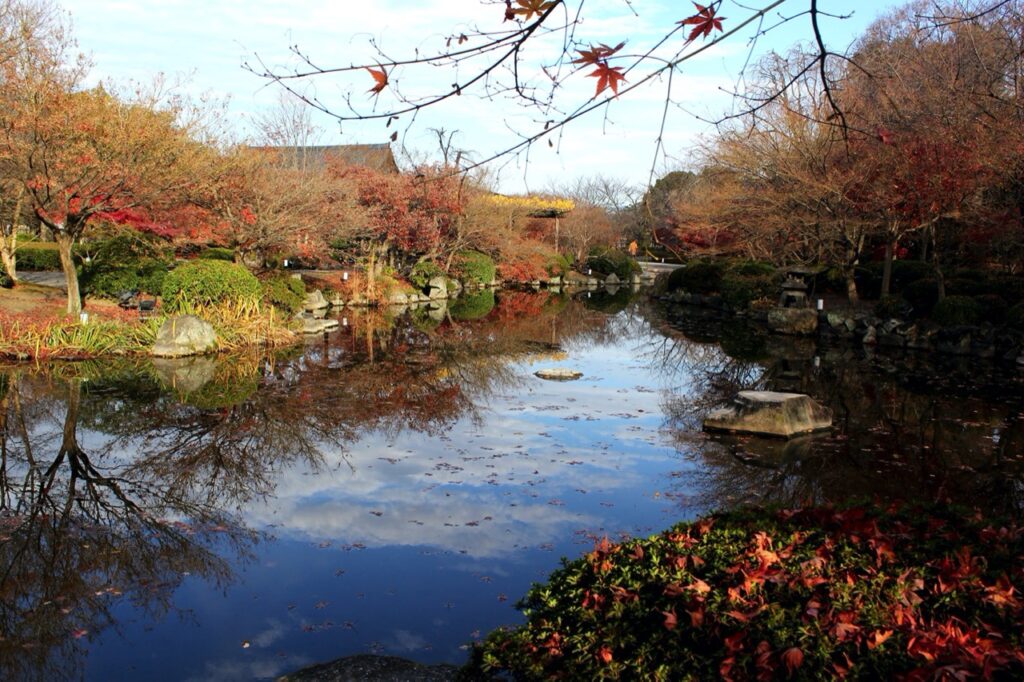
pond of gourds
dining room
A place where monks are supposed to find practice in their lives based on Buddhist teachings.
The dining hall, built in the Heian period, was destroyed by fire in 1930. The present building was rebuilt over a period of three years. The main image of Senju Kannon was also severely damaged in the fire, and after restoration, it is housed in the Treasure House. Today, the eleven-faced Kannon is enshrined as the principal image in the dining room.
In the hall, there is also a sutra office for the 88 Shikoku pilgrimage and the Rakuyo Sanjusangjo Kannon Sacred Temple. Red seals are also accepted here.
Since 2012, visitors can experience sutra copying in the cafeteria. Applications can be made directly at the cafeteria from 9:00 am to 3:00 pm. The fee for sutra chanting is 1,000 yen. However, please note that the time and place may be changed if there is an event or memorial service at the dining hall.
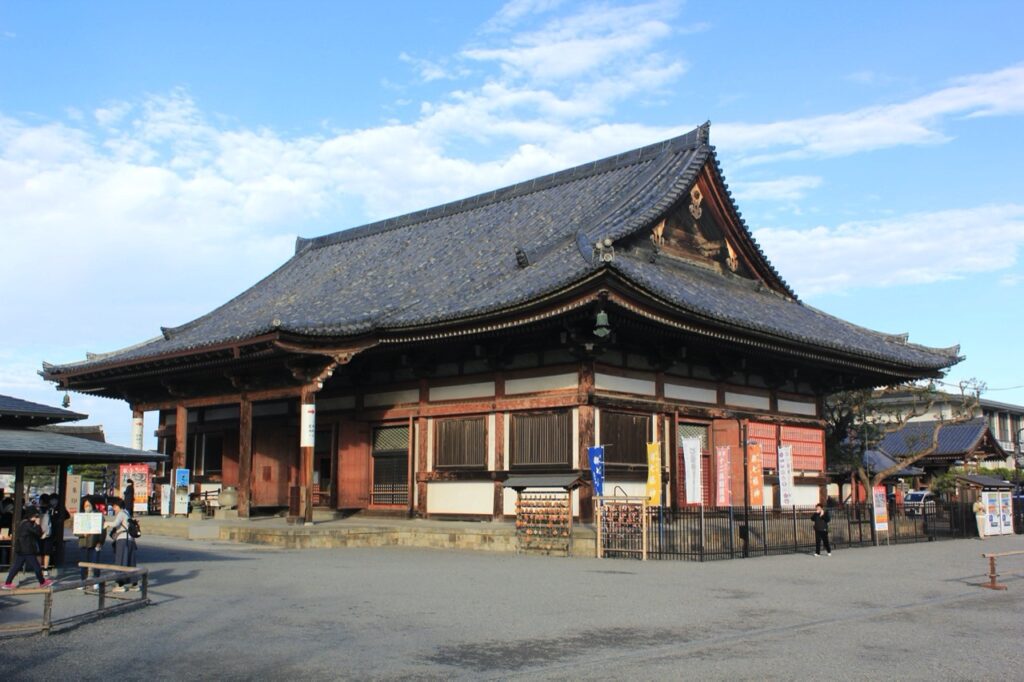
cafeteria
Treasure House
This facility stores, researches, and organizes many valuable historical materials, including national treasures and important cultural properties. The first and second floors of the museum are used as exhibition rooms. The museum is open to the public twice a year, in spring and fall, during special openings, so be sure to check it out.
The museum is open from 9:00 a.m. to 5:00 p.m. and closes at 4:30 p.m.
Small Child Cell
Koshibo, which used to welcome the emperor, was rebuilt in 1934 on the occasion of the 1,000th anniversary of the death of Kobo-Daishi Kukai.
On its west side is the Lotus Gate, a national treasure. When Kukai left Toji Temple for Koyasan in his later years, Fudo Myoo appeared to see him off. The gate is said to have come to be called Lotus Gate because lotus flowers bloomed at the feet of Fudo Myoo and on the path he walked. It is currently closed to the public.
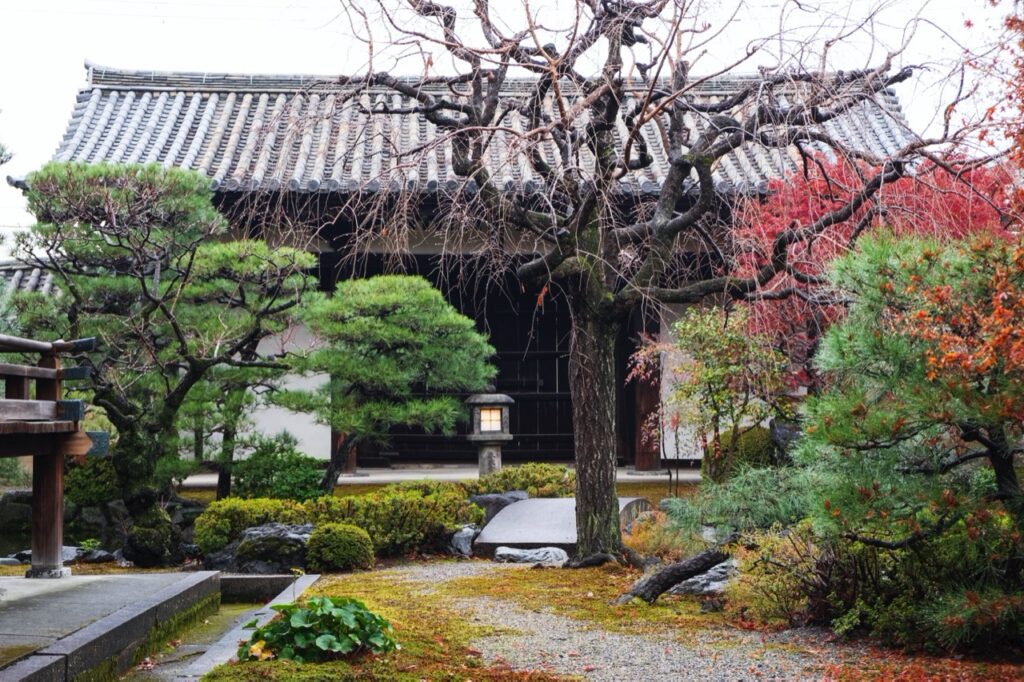
Interior of Lotus Gate (National Treasure) *Not open to the public
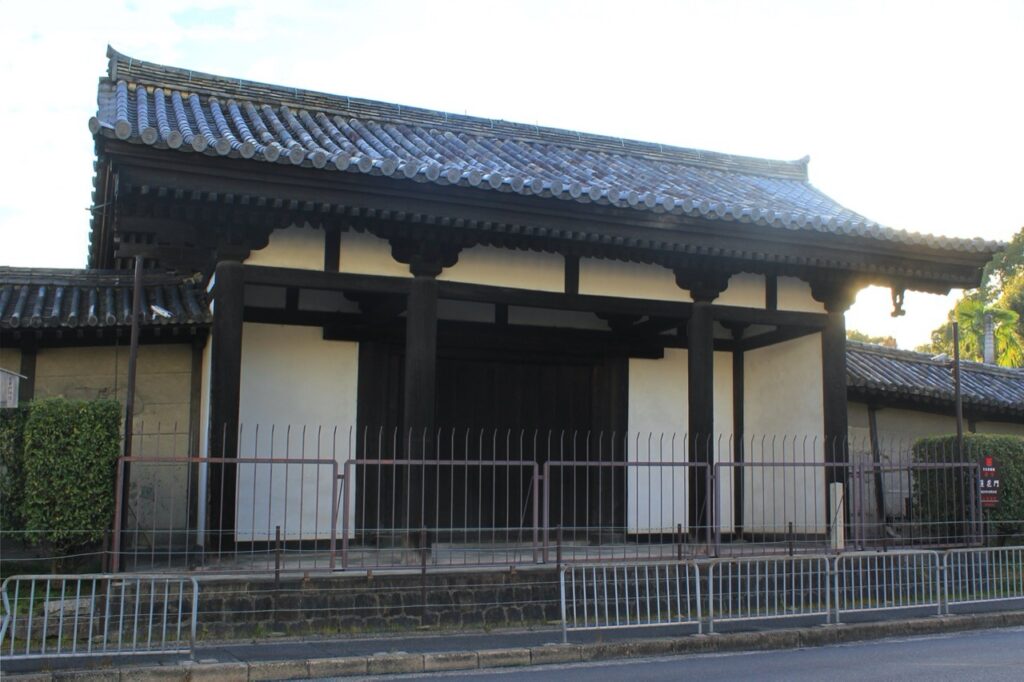
Lotus Gate seen from the outside
Kanjoin
Built around 843 by Jitsue as an important center for esoteric Buddhism, it was damaged by an earthquake in 1585 and rebuilt in 1634 during the Edo period (1603-1868).
[The Mikagei-no-musubi (memorial service) held in the Mikageido was originally held in 910 (Engi 10) at the Kantei-in Temple. It is designated as an important cultural property and is usually closed to the public.
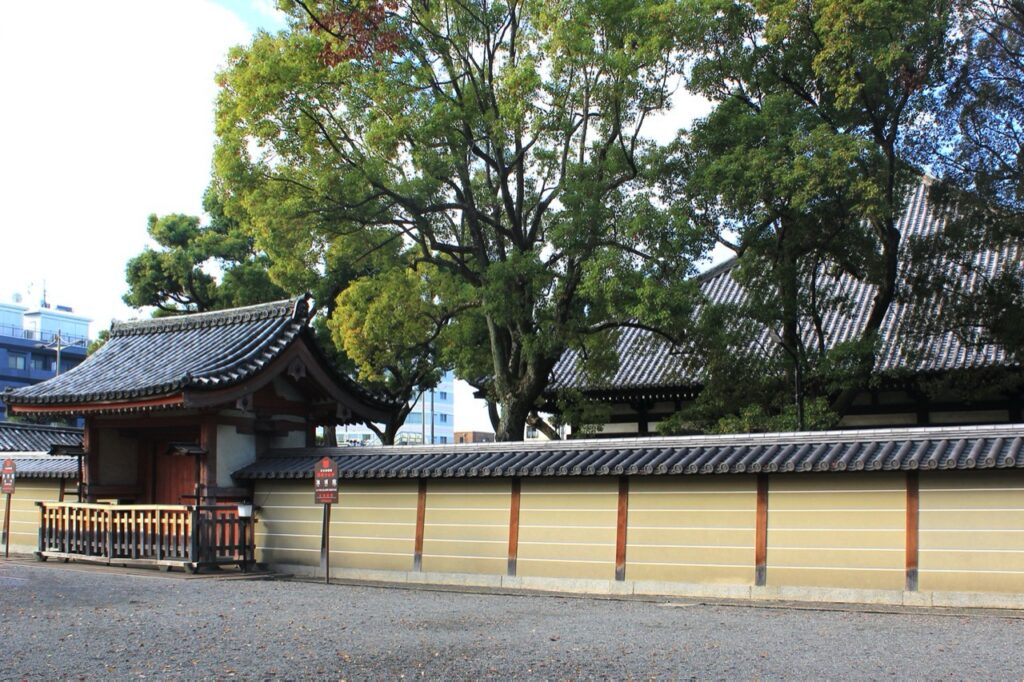
Kancho-in Temple (Important Cultural Property) *Normally closed to the public
Access from Kyoto Station
Approx. 15 min. walk from JR "Kyoto Station" Hachijo Exit
Access by train
Approximately 17 minutes on foot from Kujo Subway Station
10 minutes walk from Toji Station on the Kintetsu Line.
Access by bus
Short walk from Toji Minamimon-mae bus stop on city bus lines 19 and 78, Toji Higashimon-mae bus stop on city bus line 42, and Toji Nishimon-mae bus stop on city bus line 16.
Basic Information
Address: 1 Kujo-cho, Minami-ku, Kyoto-shi, Kyoto
Phone number: 075-691-3325
Official Website:https://toji.or.jp/
Parking lot available. Regular cars: 600 yen for 2 hours, 300 yen per hour after 2 hours.
*Special rates apply during the New Year's Special Viewing. Also, not available on Kobo Market Day, the 21st of each month.
Entrance Fee
The precincts are basically free of charge
Normal release
Kondo and Auditorium] Adults ¥500
Kanchiin] Adults 500 yen
Special publicity.
Inside the first floor of the five-story pagoda, Kondo hall and lecture hall] 800 yen for adults
Treasure House] Adults 500 yen
Opening time
5:00-17:00 (closing gate)
Hours of operation
Kondo, Auditorium
8:00-17:00 (Registration closes at 16:30)
Kanchiin
9:00-17:00 (Registration closes at 16:30)
Treasure House] *Open only in spring and fall
9:00-17:00 (Registration closes at 16:30)

Over 600 interviews per year! An order site carefully selected by the editors who knows Kyoto and Shiga.
nowOfficial LINE friend registration500 yen OFF coupon is being issued!
Distributed every Friday morning at 8:00 am! From new restaurant information to event information that we want to share with you, We deliver articles about Kyoto that are useful to know. About 20,000 people have registered.Click here to add a friend!
 News
News Feature article
 Featured event