

![安藤忠雄建築[TIME'S]京都建築センター](https://www.leafkyoto.net/leaf/wp-content/uploads/2026/08/260807-times1-300x200.jpg)


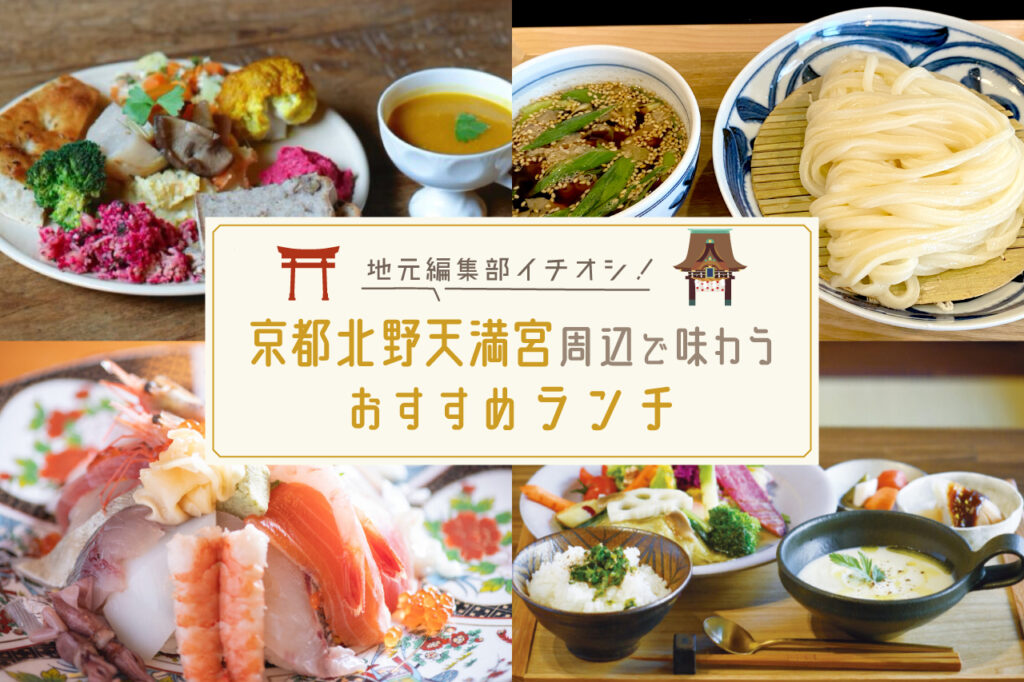

The area around Kitano Tenmangu Shrine is a hot spot for attractive restaurants such as ramen stores operated by long-established restaurants, sushi restaurants opened by veteran chefs, and handmade udon restaurants! In this issue, we introduce the best restaurants for lunch recommended by our editorial department.
This long-established soba noodle store in Nishijin began in 1905 as a food stall serving soba noodles at night. Today, the fourth-generation owner, Yoshinori Tanigaki, and his mother Izumi and her son continue to preserve the same taste that has remained unchanged since the establishment of the restaurant. It is especially surprising that the additive-free broth, which is made from scratch at the restaurant, still tastes the same after more than 100 years. The restaurant offers a wide variety of dishes, such as set menus and rice bowls, that one would not expect to find in a soba restaurant, and many fans visit from all over Japan. Some dishes have been revived in response to customers' requests, such as Naruto Soba with grated yam and Nishin Soba, and the year-end special Kombu Maki.
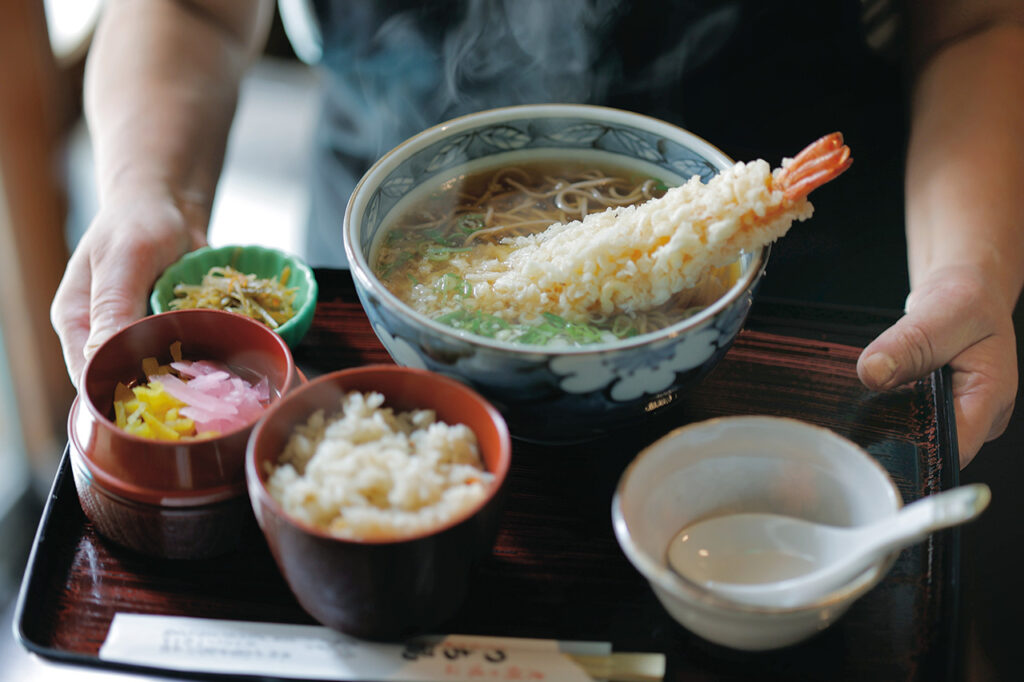
Tempura Soba Noodle: 980 yen. +Comes with kayaku gohan (boiled rice with kayaku) and kobachi (small bowl of cooked food), which can be added for 250 yen. Ebi-ten (shrimp tempura) is coated with a secret batter, and the batter is slightly thickened so that it absorbs the broth and makes the whole soba even more flavorful.
This ramen restaurant was established on the second floor of a long-established restaurant [Gotsuji no Kombu], which has been in business for more than 120 years. In a stylish space with gray walls and a wooden counter, you can enjoy a course of Kombu Ramen. First, compare mizu-dashi (water-dried kelp) of makonbu, Rausu kelp, and Rishiri kelp in a glass of wine, and then enjoy the oboro kelp that Mr. Kuze, the representative, shaves in front of your eyes. The main dish, kelp ramen, has a clear soup with concentrated kelp flavor and chewy noodles. Kelp ramen is served on a one-kelp basis, with at least one item purchased at the store on the first floor.
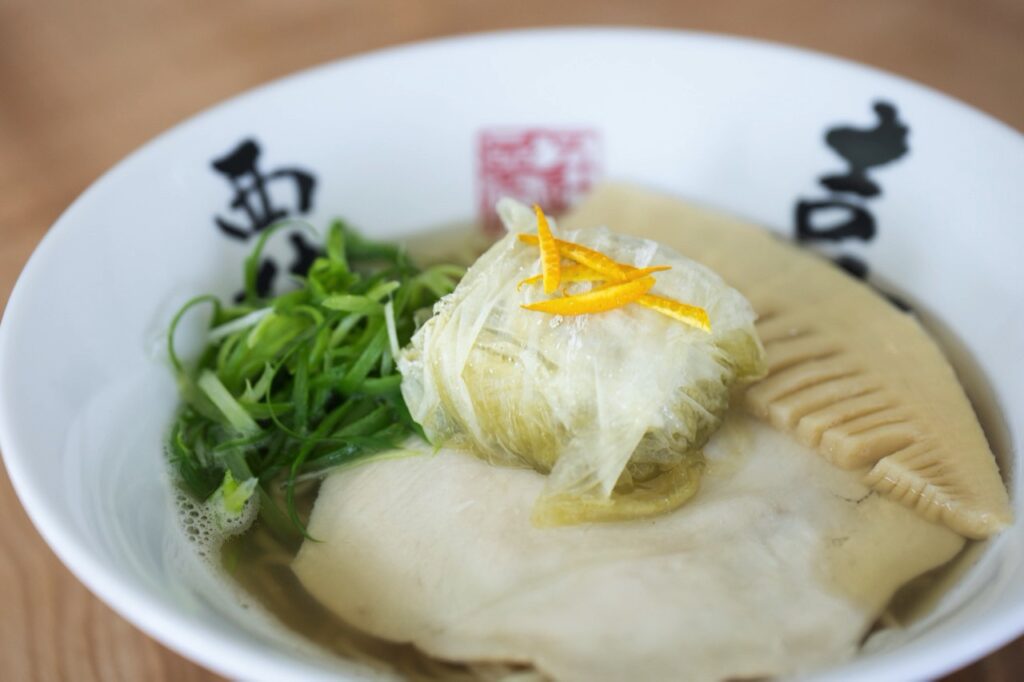
Kombu Ramen: 1152 yen. The soup is made from a blend of kelp, Rausu kelp, and Rishiri kelp, with dried bonito flakes, shellfish, tea leaves, and other ingredients added in water. [It is a perfect match for the whole wheat noodles from Raamen Tohichi.
This fruit and vegetable store and diner makes use of a 100-year-old townhouse. As soon as you enter, you will find a grocery store space with a wide variety of fresh leafy greens, potatoes with mud on them, and seasonal fruits. Moving to the back of the building, the "Sukoyaka Shokudo" stands by, which was started by Chie Nakamoto, the representative of the company, who started the business by utilizing her experience as a cooking school owner, along with her desire to "do something about the delicious vegetables that are called 'B-grade' vegetables. It is a warm space that connects producers and consumers, with a happy cycle of tasting vegetable-filled lunches and sweets and buying them back because they were so delicious.
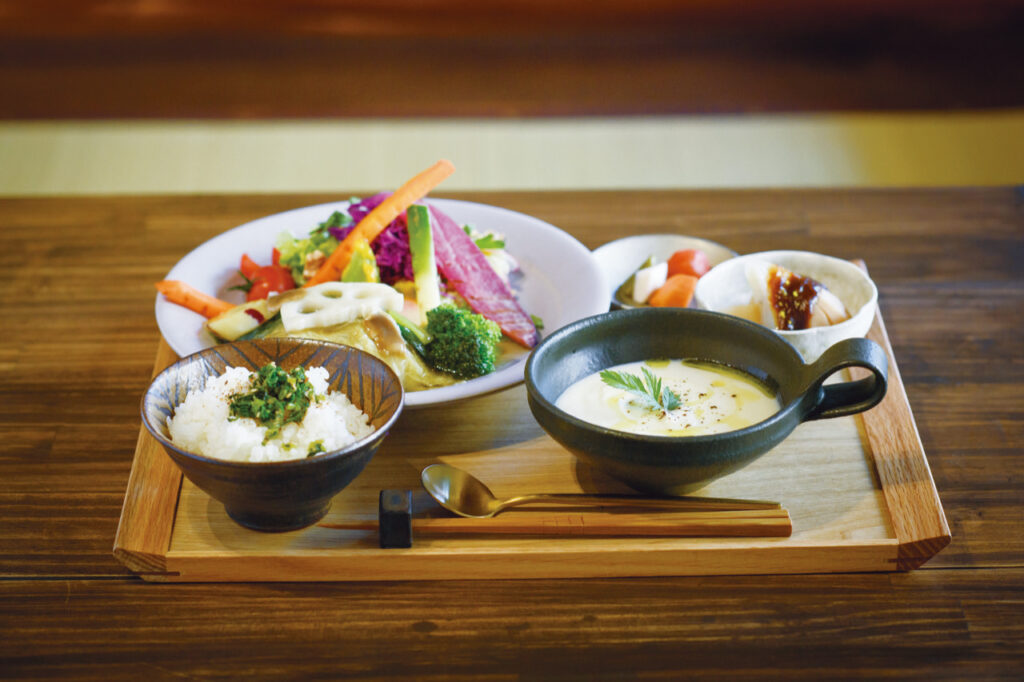
The photo shows an example of the Sukoyaka Set (1,700 yen), which features seasonal vegetables as the main ingredient. The deliciousness of the vegetables soaks through your entire body. Including a drink is 1,900 yen.
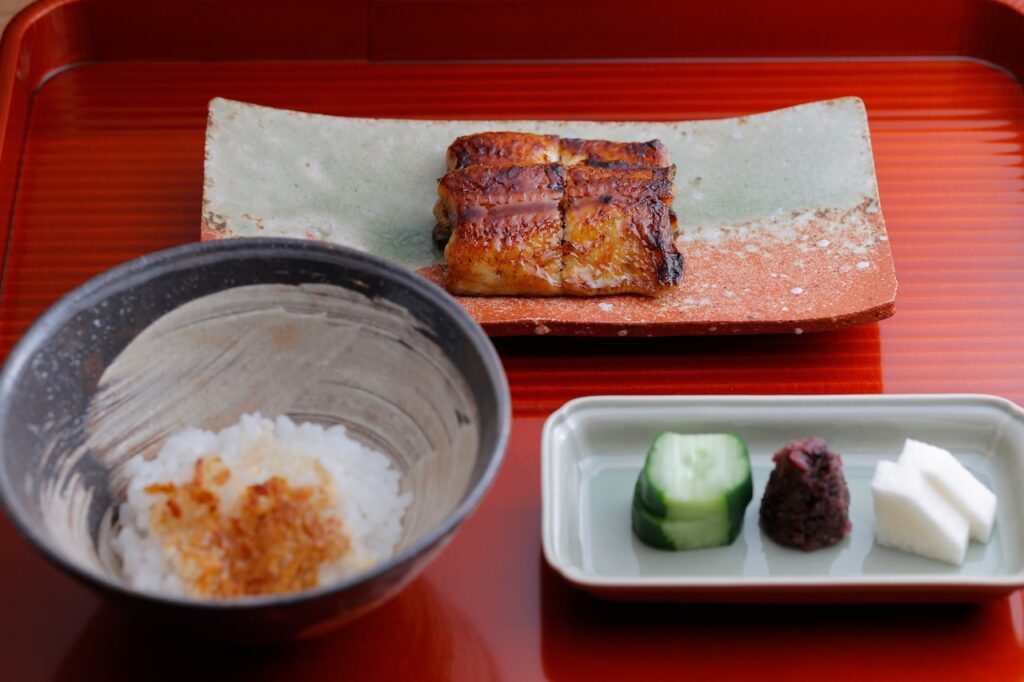
This Japanese restaurant was established near Kitano Tenmangu Shrine. The interior of the sukiya-style restaurant is beautifully decorated in a Japanese style, and is equipped with private rooms as well as counter seats. [The owner, Mr. Senda, who studied at Shimogamo Saryo and Kenshu Horibe, offers only one course, 5,500 yen for lunch and 15,000 yen for dinner. Each beautiful dish, which skillfully reflects the season, is sure to impress each time it is brought to the table. The eel bowl, which appears at the end of the lunch course, is made with eel, a technique inherited from his family's eel cuisine in Wakasa, Fukui. The fragrant grilled eel with secret sauce is exquisite. Try it with a glass of Wakasa's local sake, such as "Kamoei," which is rare in Kyoto.
A large soft-serve ice cream sculpture welcomes you from inside a Japanese-style room as you pass through the gate. After the playful and artistic approach, you will find a seating area with a relaxed atmosphere that still retains the machiya-style atmosphere. Enjoying a view of the tsuboniwa garden, you can savor hand-drip coffee from Circus Coffee (600 yen), original herbal tea from niwatoco tea (730 yen and up) made by a pharmacist-blender, and other carefully selected coffee menu items. Of course, sweets with soft-serve ice cream are also on standby. Take-out is also available.
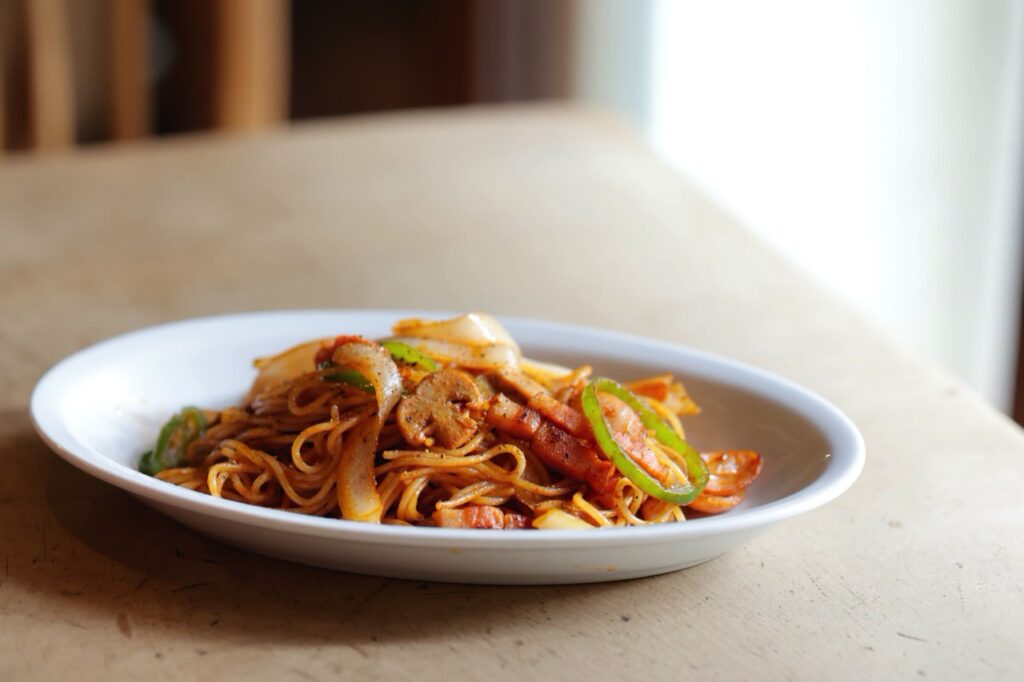
Old-fashioned Neapolitan with the classic ingredients of onions, bacon, mushrooms, and green peppers is 900 yen. The secret ingredient is a small amount of Worcestershire sauce.
Over 600 interviews per year! An order site carefully selected by the editors who knows Kyoto and Shiga.
nowOfficial LINE friend registration500 yen OFF coupon is being issued!
Distributed every Friday morning at 8:00 am! From new restaurant information to event information that we want to share with you, We deliver articles about Kyoto that are useful to know. About 20,000 people have registered.Click here to add a friend!
 News
News Feature article
 Featured event