

The god of victory smiles [Aga Shrine Tarobogu Shrine]


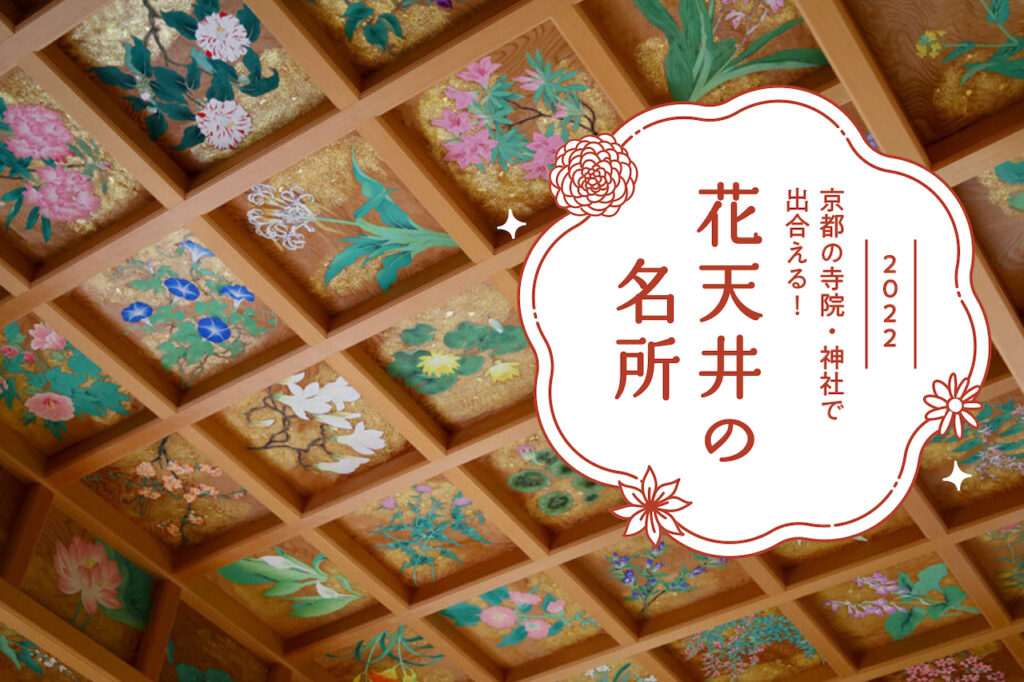

Hana-tei (flower ceiling) is found in temples and shrines, and is characterized by a variety of flowers painted one at a time on each square of the coffered ceiling. They are said to express the meaning of respect for the Buddha and gods enshrined there. Many of them have high value as cultural assets and are valuable as representations of the times and culture. When you visit Kyoto, be sure to see them.
A temple of the Tendai sect, founded by Toyotomi Hideyoshi in 1586.
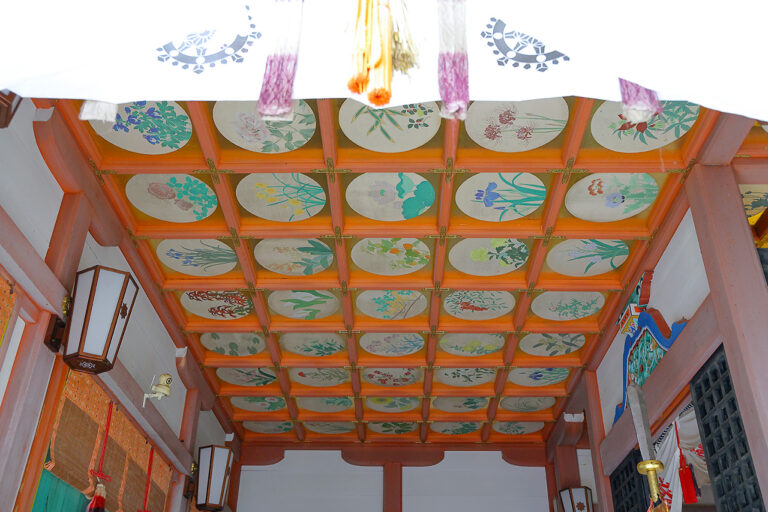
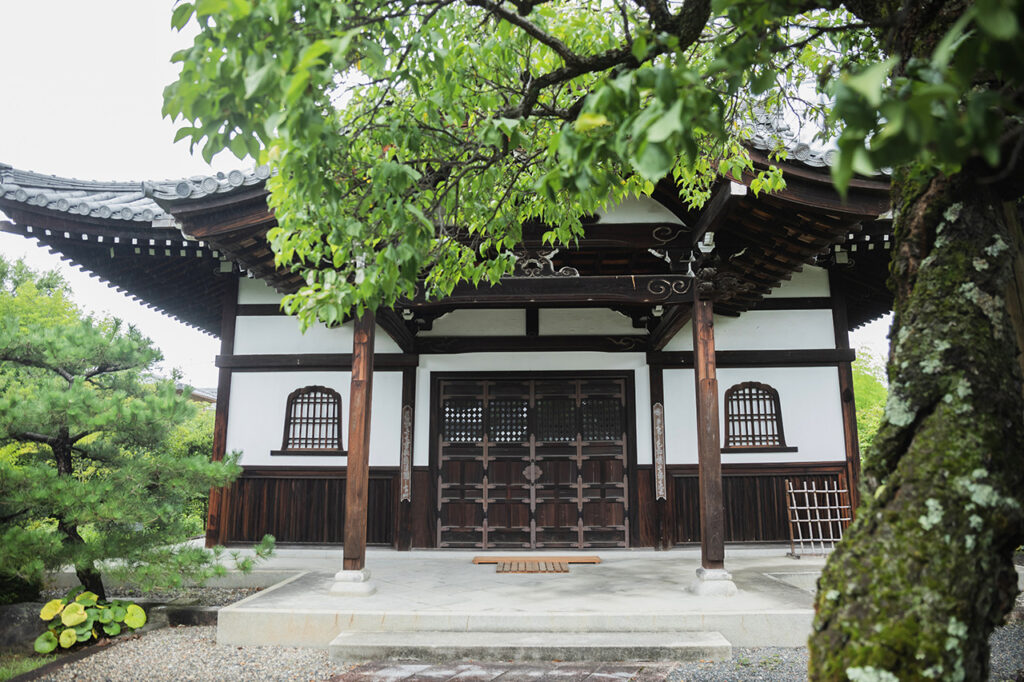
The hana-temple ceiling is located inside Daikokudo Hall, which enshrines Daikokuten, a goddess said to have been carried by Hideyoshi as a talisman. There are 80 floral ceilings painted in the inner sanctum of the hall, all with different pictures of flowers. The ceiling inside the bell tower, where the temple bell is located, is also painted, so be sure to observe both ceilings carefully when you visit the temple.
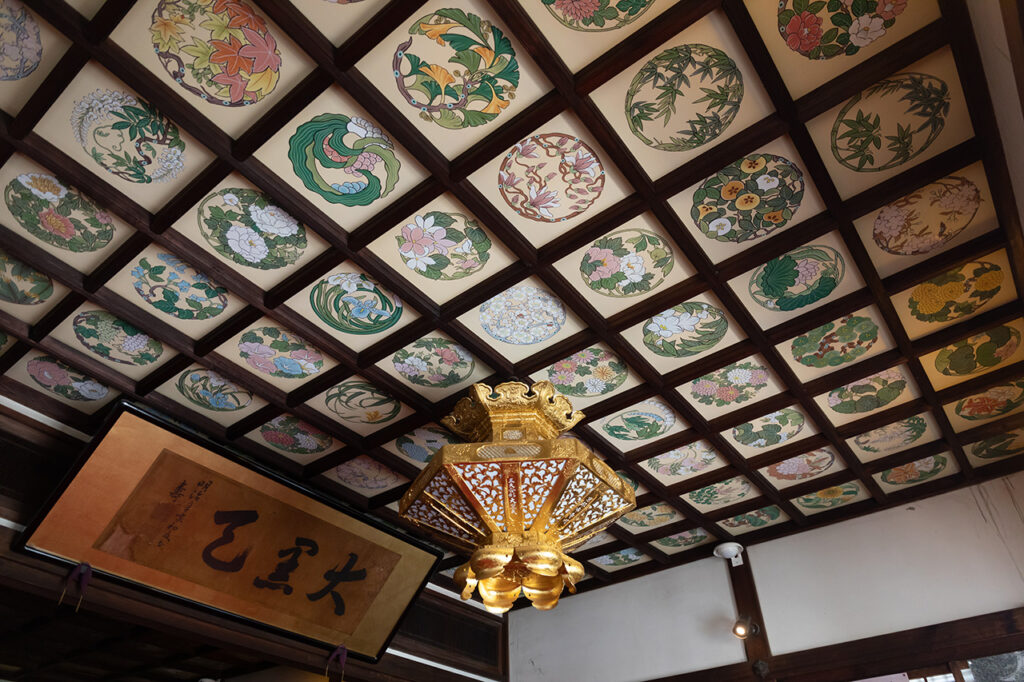
Visitors can see lovely flowers painted in a circular pattern. In addition to Japanese flowers, colorful Western flowers decorate a total of 80 ceilings. Production period and painter are unknown.
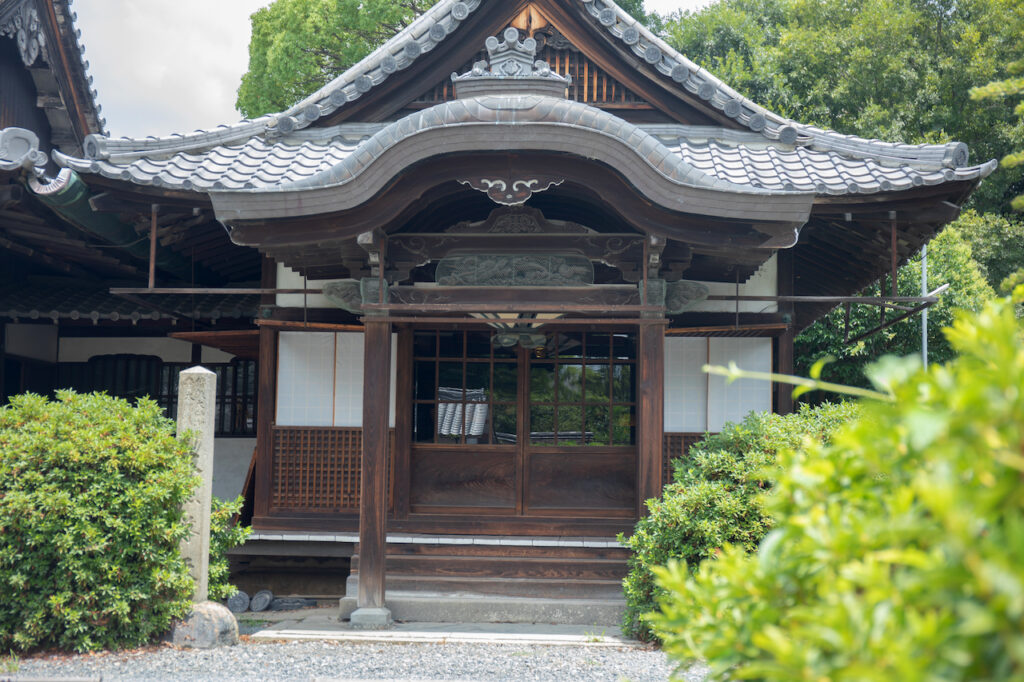
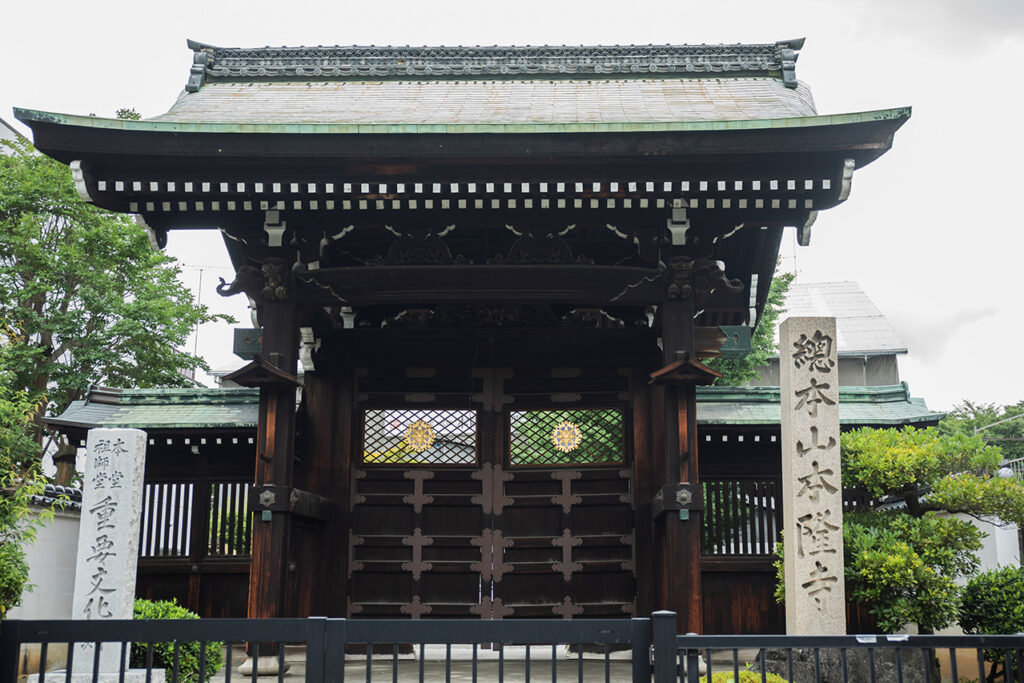
The head temple of the Shinmon school of the Lotus Sect, founded by Nisshin Shonin in 1488 (Chokyo 2), blending in with the old streets of Nishijin.
In the inner sanctuary of the Soshidō Hall, an Important Cultural Property, plants are painted on more than 150 surfaces on the mirror panels of the coffered ceiling. The background is characterized by a deep blue, and although the colors have faded, remnants of the vivid colors can be seen in places. The main hall is currently undergoing restoration, which will be completed next year. The Soshido-Hall is usually closed to the public, but visitors wishing to view the hall must make a reservation by the same day. Restoration is scheduled to begin next summer.
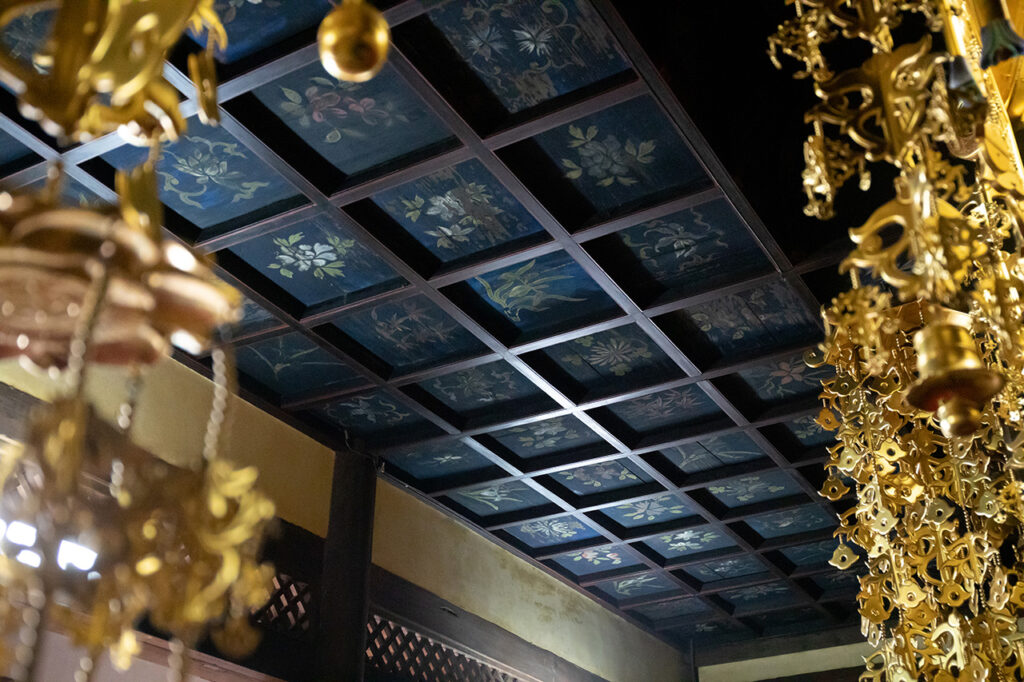
The painter and the date of production are unknown, but the work is believed to be from the early Edo period. Note the black-lacquered coffered edge of the coffered ceiling.
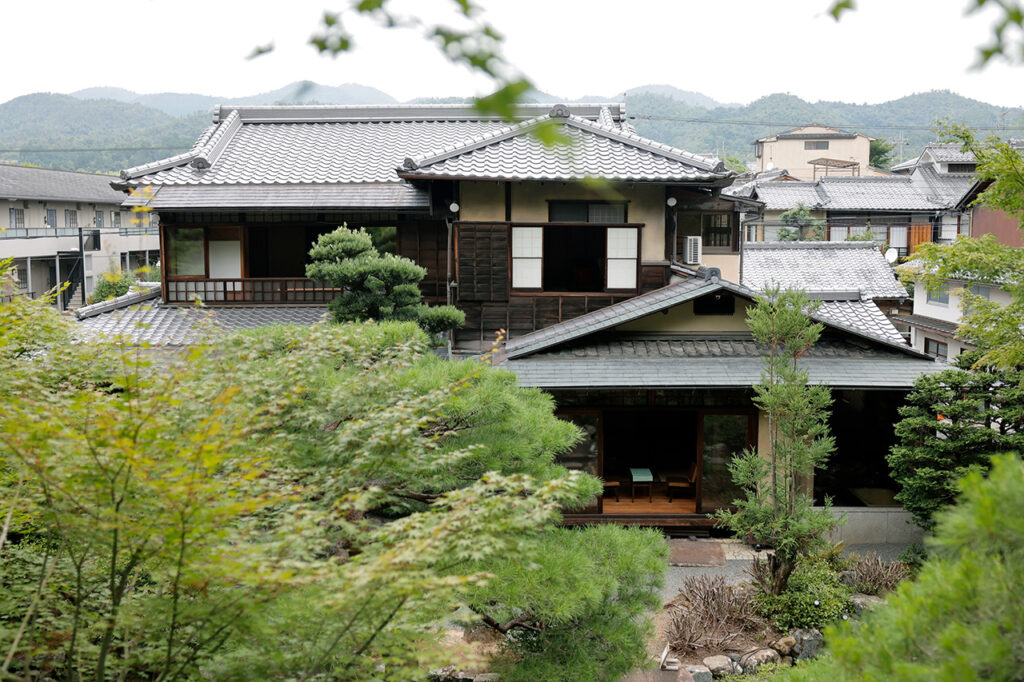
The garden and sukiya-style architecture spread over an area of 500 tsubo (1,860 m2), and in 1970, the late Mitsuo Yamamoto, president of the Kyoto lumber mill Yamazan Sawmill, took over the house, renovated the dilapidated garden, and partially renovated the building. The house has been used as a place for socializing, mainly by renting the entire building year-round.
The Western-style room with a flower ceiling was added during the renovation. Six flower paintings surround a chandelier. It used to be a guest room with a luxurious sofa. The floral ceiling probably added color to the hospitality of the guests.
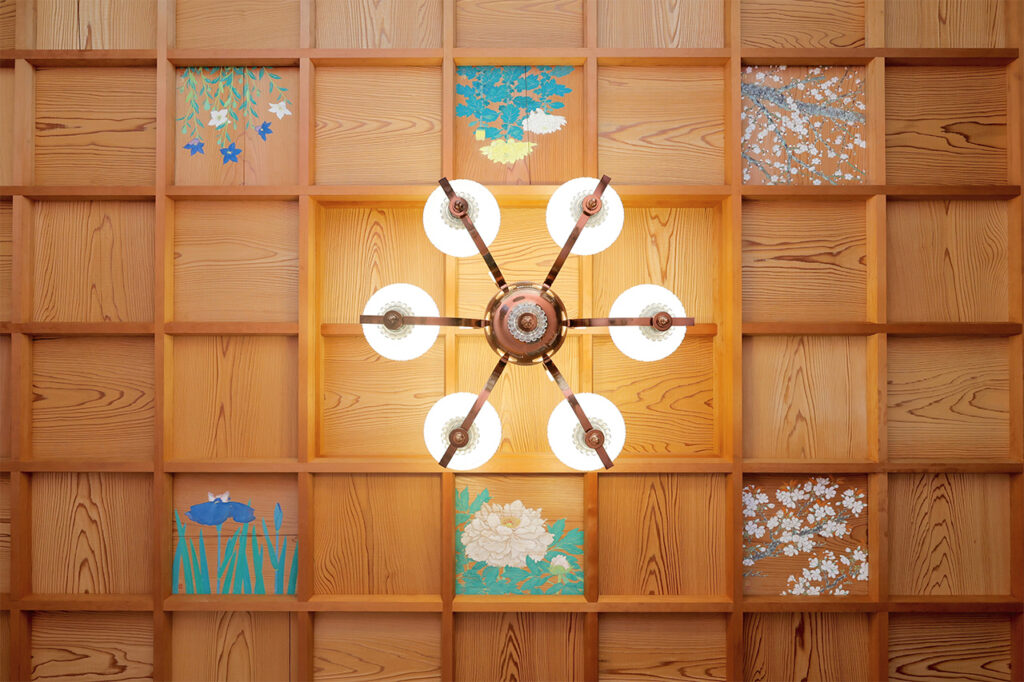
Although the date of production is not clear, it is estimated that a flower ceiling was also painted when the building was expanded. The artist is Akira Muto, a Japanese-style painter whose works were in Mr. Yamamoto's collection.
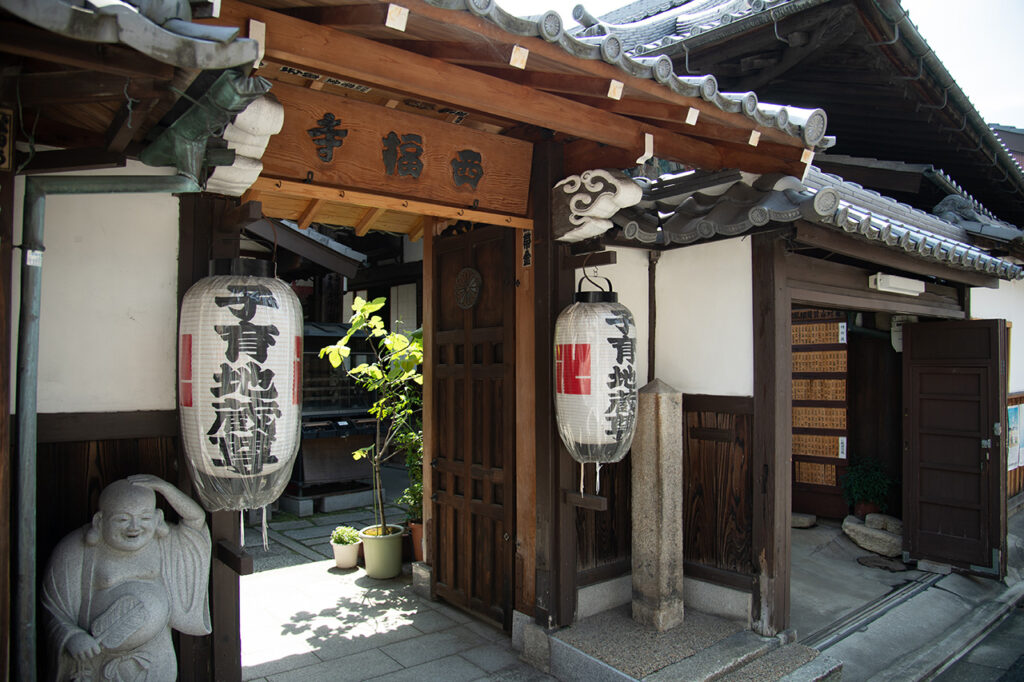
In the Heian period (794-1185), Kobo Daishi built Tsujido at Rokudo Tsuji, located at the entrance to Toribeno, one of the three major burial grounds in Kyoto, and enshrined a Jizo statue of his own creation. It is still worshipped today as a child-rearing Jizo, a child-supporting Jizo, and a child-supporting Jizo.
Currently, there are no special openings, and the floral ceiling cannot be viewed from inside the main hall, but it can be seen from outside. The flower ceiling, created in the Showa period (1926-1989), depicts many Western flowers such as iris, gerbera, and bougainvillea.
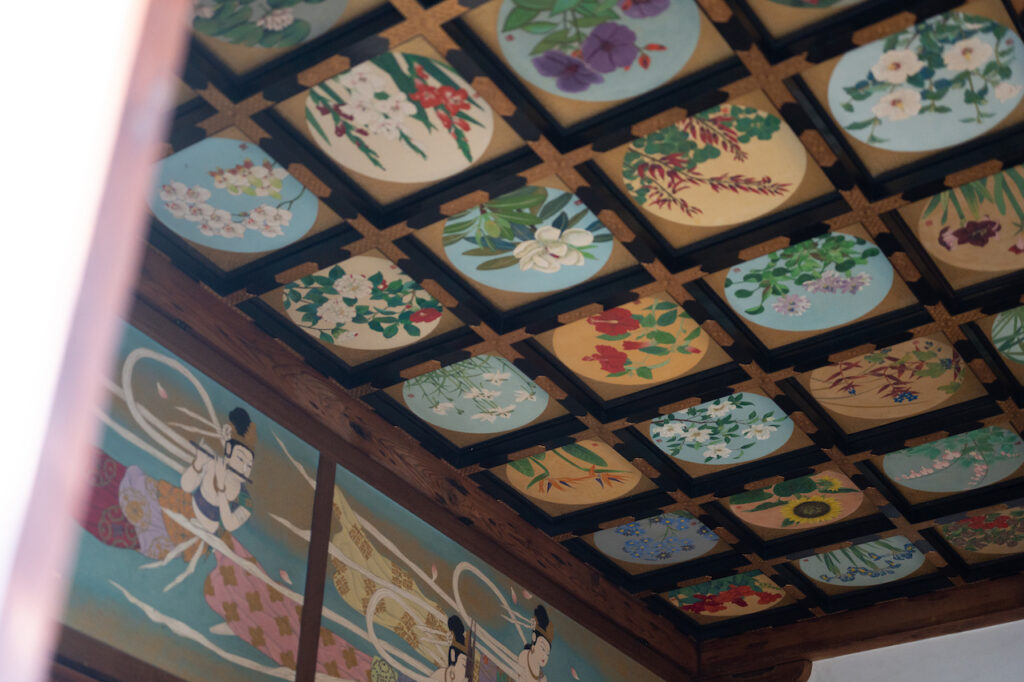
Dedicated in 1983 by Japanese painter Yuzumi Morimoto and his students as a memorial service for the 1,150th anniversary of Empress Danrin's death. Nine of the 64 panels were created by Morimoto Yuusen.
Also known as Jouban Gosho, this nun-monzeki temple of the Jodo sect was founded in 1356 by Princess Shinko, daughter of Emperor Go-Fushimi, in the northern part of Muromachi Ichijo-kita.
The interior of the hall has a folding top ceiling that gives a sense of prestige, and the 80-sided flower ceiling in the center of the hall is magnificent. The 80-sided flower ceiling in the center of the hall is magnificent. The elegant and dainty atmosphere of the flowers, which is typical of nun monzeki, is a sight to behold. The temple grounds also include Tokiwa Kaikan, a building that was moved from the Showa Period (1926-1989). Normally, these buildings are closed to the public, but they are open to the public on special occasions, so take the opportunity to visit.
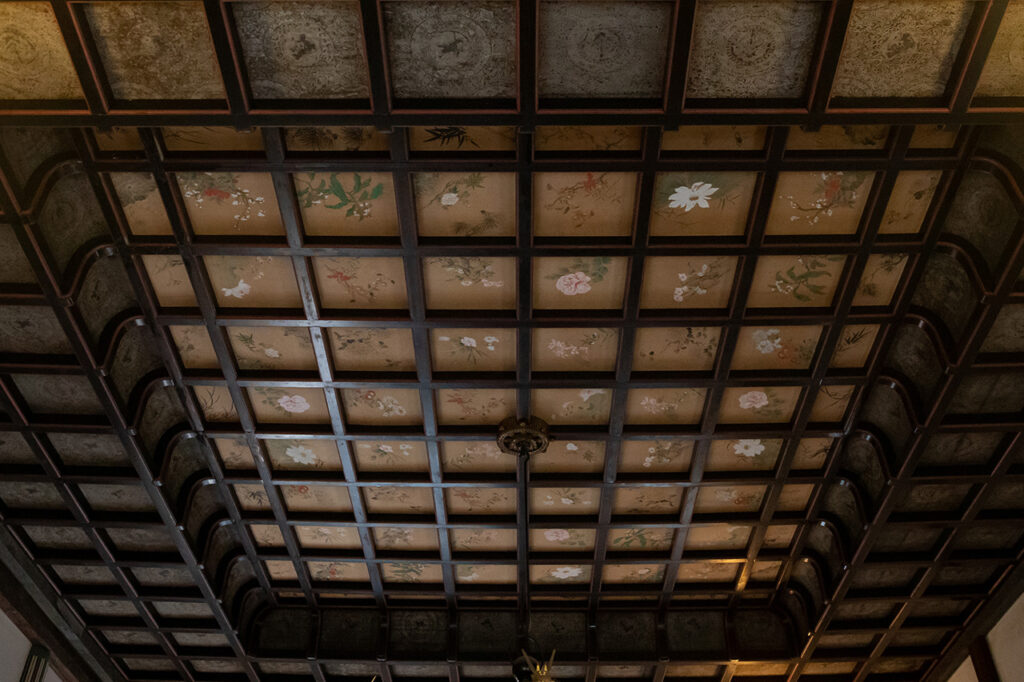
The hana-tei (flower ceiling) was created by Kyoto-born nanga artist Naogai Tanomura in 1968, the same year the main hall was built. Flowers such as ume (Japanese apricot), kiku (Japanese aster), and lotus are depicted.

Over 600 interviews per year! An order site carefully selected by the editors who knows Kyoto and Shiga.
nowOfficial LINE friend registration500 yen OFF coupon is being issued!

Distributed every Friday morning at 8:00 am! From new restaurant information to event information that we want to share with you, We deliver articles about Kyoto that are useful to know. About 20,000 people have registered.Click here to add a friend!
 News
News Feature article
 Featured event



![[2026]京都の初詣スポット!おすすめ神社](https://www.leafkyoto.net/leaf/wp-content/uploads/2025/01/251223-hatsumoude-768x512.jpg)