

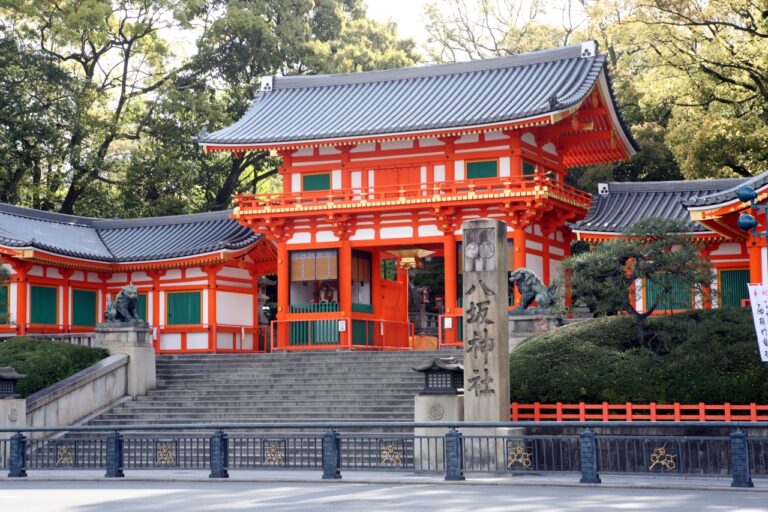
Dig deeper into the highlights of [Yasaka Shrine]! Unknown attractive sports...


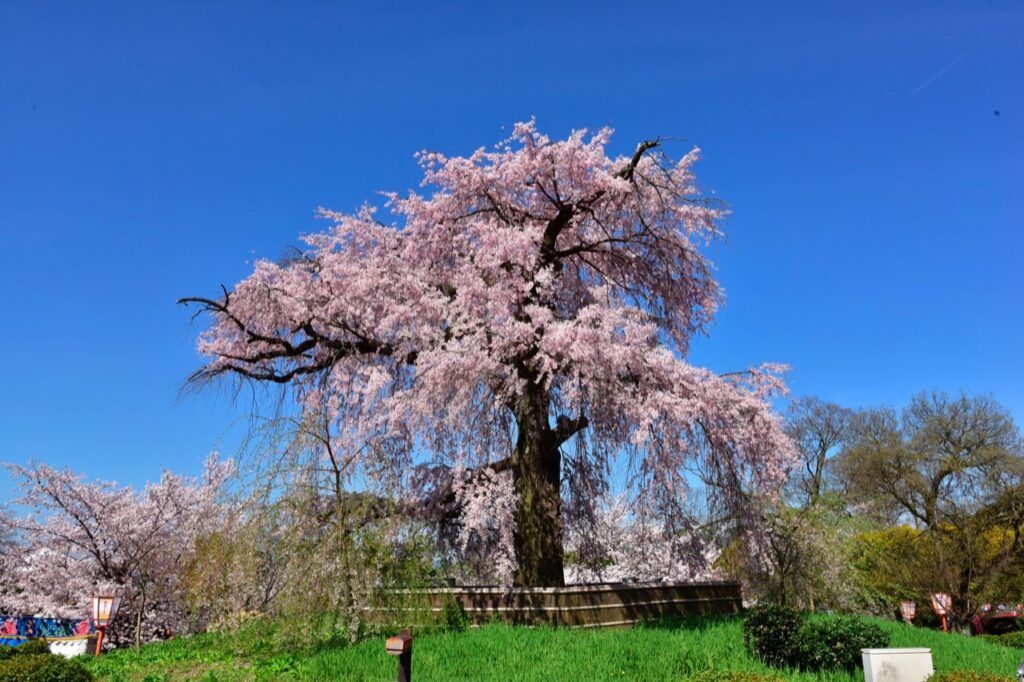

Maruyama Park is located in the town of Gion, but boasts a vast area rich in nature, and is a favorite spot for both residents and tourists. The park features the symbolic Gion weeping cherry tree, a garden filled with tranquil nature and the beauty of a traditional Japanese garden, and numerous other attractions scattered throughout the park.
Maruyama Park is located next to Yasaka Shrine and Chion-in Temple in Higashiyama, and is dotted with historical buildings and beautiful gardens, offering nature in every season. Maruyama Park is known for its cherry blossoms, including the Gion weeping cherry tree, and in the fall, the autumn leaves create a beautiful scene. The park was established in 1886 (Meiji 19) by Jihei Ogawa VII, and is the oldest park in Kyoto City. The garden is a Japanese-style garden with a circular path around a pond, and is designated as a national place of scenic beauty.
In the Heian period (794-1185), this area, which later became Maruyama Park, was a wilderness where makuzu (scarlet kadsu) and susuki (Japanese pampas grass) grew thickly, and the area including the premises of Anyoji Temple and Chorakuji Temple at the western foot of the east mountain was called "Maruyama" or "Minambata. The name "Enzan" is said to be derived from the mountain name "Jienzan" of An'yō-ji Temple.
In the Edo period (1603-1867), Rokuami, the head priest of An'yoji Temple, started "renting out rooms" to the public, and the area became lively. With the view and the beauty of the forest and springs as a backdrop, the area became a famous place for poetry and haiku poems, song and dance, and entertainment. Later, in 1886 (Meiji 19), Kyoto Prefecture designated the entire Maruyama area as a park, and the area was developed into the present Maruyama Park.
In 1913, landscape architect Jihei Ogawa VII created a Japanese-style garden with a pond in the center. The Hyotan Pond is fed by a waterfall drawn from underground water, and has an interesting stone bridge that combines rectangular and circular stones. The garden, which makes the most of the terrain leading to the Higashiyama mountains, is surrounded by a view of the mountains and other elegant natural features, providing a relaxing and peaceful place to rest and forget that downtown is just around the corner.
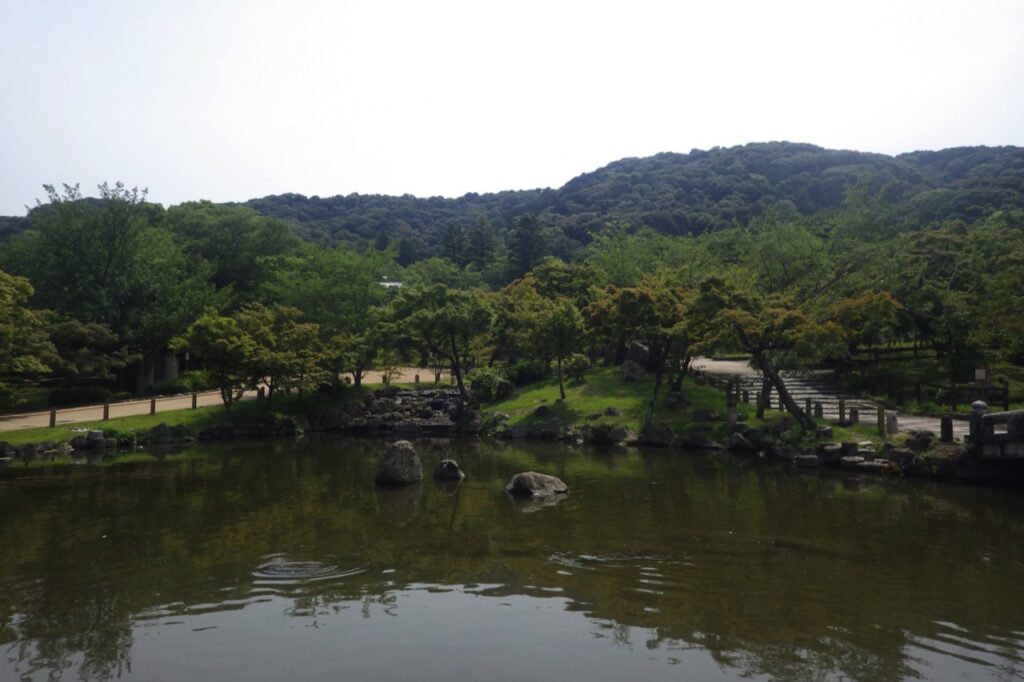
garden
In spring, about 500 cherry trees bloom in the park, making it one of the best cherry blossom viewing spots in Kyoto. The Gion weeping cherry tree that stands tall in the center of the park is officially called a single white higan weeping cherry tree, but the current one is actually the second generation. The first generation tree died after about 200 years of age, and the second generation was transplanted by Toemon Sano XV of Ueto.
Gion weeping cherry (Prunus incisa)
In early April, the temple is lit up with bonfires, giving it a solemn and colorful appearance.
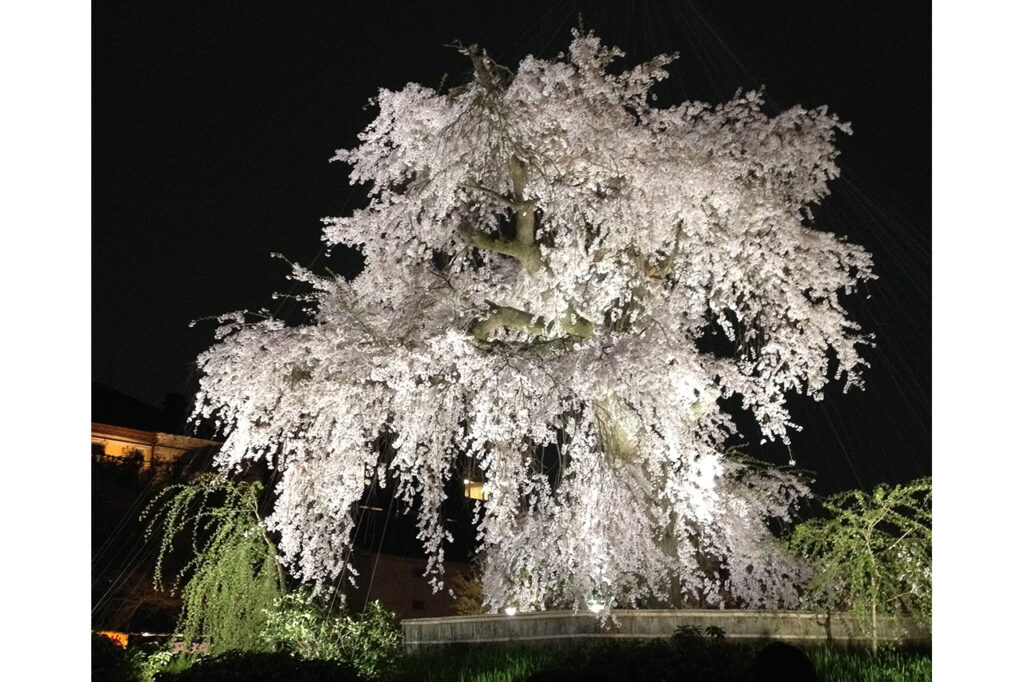
Illuminated Gion weeping cherry blossoms
The Gion Kouta (Gion Kouta song) monument stands by Hyotan Pond, under a maple tree. The lyrics are said to have been written by Mikihiko Osada at a teahouse in Gion called "Yoshiuta. The moon is in the misty eastern mountains, the nightly bonfire is in the haze, and the dream is in the misty night, the red cherry blossoms are in the furisode, and I am in love with Gion, and I am in love with Darari no obi yo. The music was composed by composer Sasa Koka. Every year on November 23, the Gion Kouta Festival is held, where geiko and maiko of Gion add flowers to the monument and recite the lyrics.

Over 600 interviews per year! An order site carefully selected by the editors who knows Kyoto and Shiga.
nowOfficial LINE friend registration500 yen OFF coupon is being issued!

Distributed every Friday morning at 8:00 am! From new restaurant information to event information that we want to share with you, We deliver articles about Kyoto that are useful to know. About 20,000 people have registered.Click here to add a friend!
 News
News

 Feature article
 Featured event