

[2025]京都紅葉情報!名所から穴場までおすすめ...


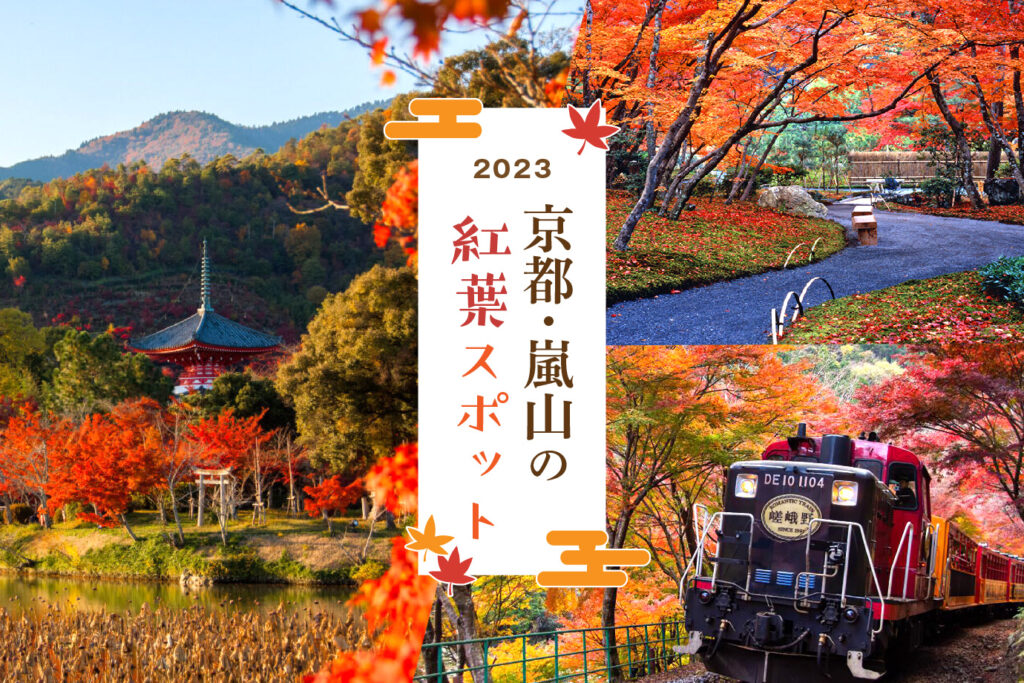

Arashiyama is a popular tourist destination in Kyoto, where visitors can enjoy the beautiful scenery of the four seasons. Especially during the season of autumn leaves from mid-November to early December, the area attracts many tourists. In this issue, we will introduce some of the most popular autumn foliage spots in Arashiyama.
Known as the god of marriage, Nomiya Shrine was the place where the Saio, the Saio's wife who served the Ise Jingu Shrine, purified herself during the Heian period (794-1185), and is a historic shrine that was described in the Tale of Genji (Genji Monogatari).
Visitors can feel the elegance of the Heian period when they visit the temple grounds surrounded by a black wooden torii gate and a small shibagaki fence. In autumn, the sky is decorated with maple trees, which contrast fantastically with the black torii gate. The shrine is also a place to recall the autumn foliage viewing that the aristocrats of the Heian period must have enjoyed.
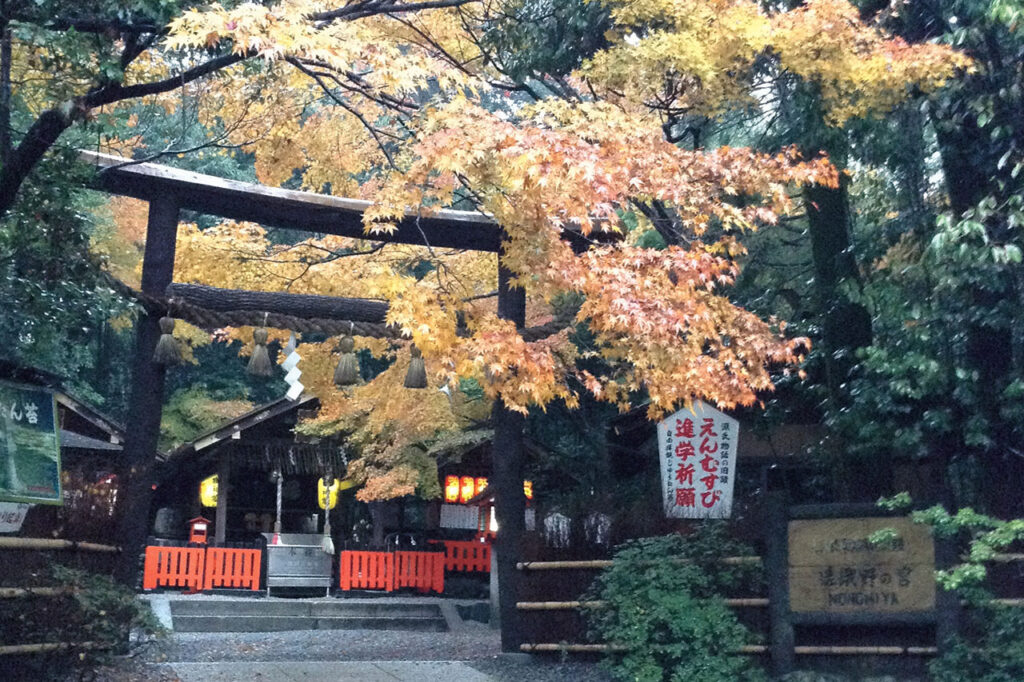
Best time to see/usually mid-November to late November
Visiting hours/9:00-17:00
admission feeFree of charge
The approach to the 12-meter-high Dabotou (pagoda) at Jojakkoji Temple is decorated with autumn leaves.
It is said that the villa "Shiguretei" of the Heian period poet Fujiwara no Teika was once located here. The approach to the temple, past the gate, Niomon gate, and the main hall, leads to a pagoda with a magnificent panoramic view of Kyoto.
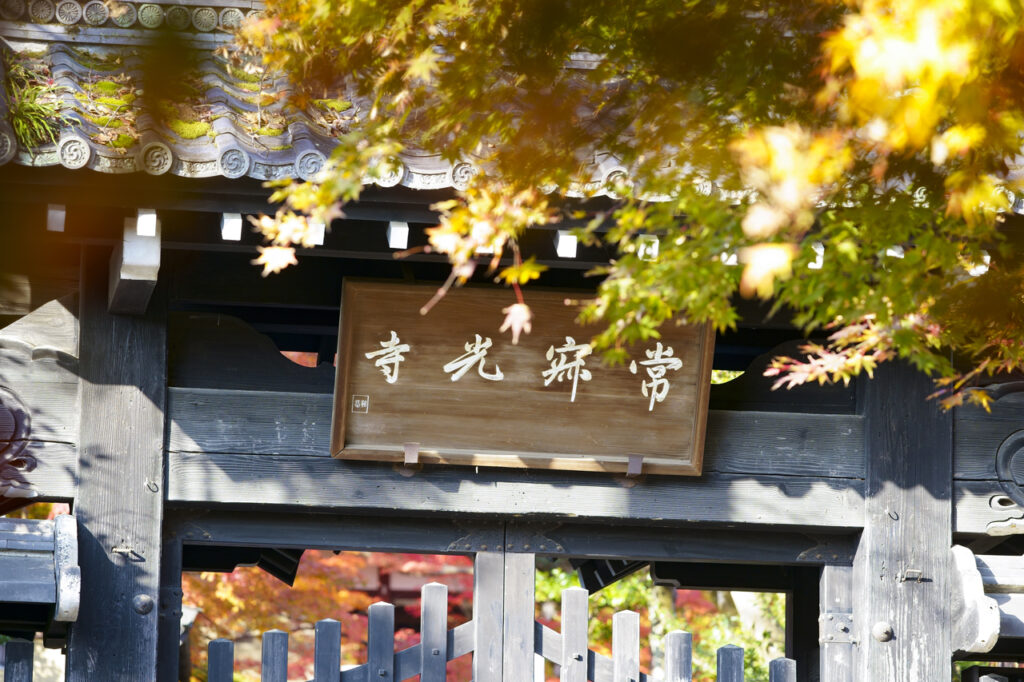
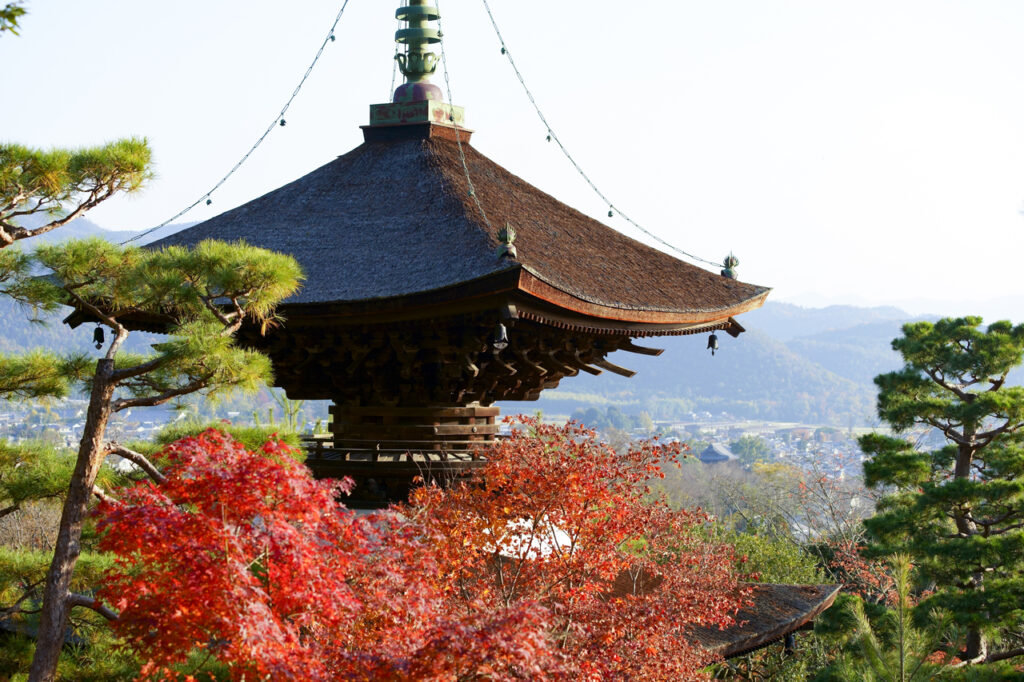
Best time to see/usually mid-November to late November
Special visit to the Main Hall
Period of visitation / November 18 (Sat.) to 27 (Mon.), 2023
Visiting hours/9:00-16:00
Entrance fee/500 yen (required separately from the entrance fee)
[Rikao-in Temple was originally a pagoda built by Ashikaga Yoshimitsu in 1379 to commemorate the founding of Hodan-ji Temple. Hodan-ji Temple was destroyed during the Onin War, but Rakao-in Temple is said to be the only one that survived. The main image of Shakyamuni Buddha and the statues of the ten great disciples have been handed down from the time of the temple's construction. The ten large disciples, with their brightly colored statues, are said to be by Unkei. The approach straight after the temple gate is the best place to view the autumn leaves.
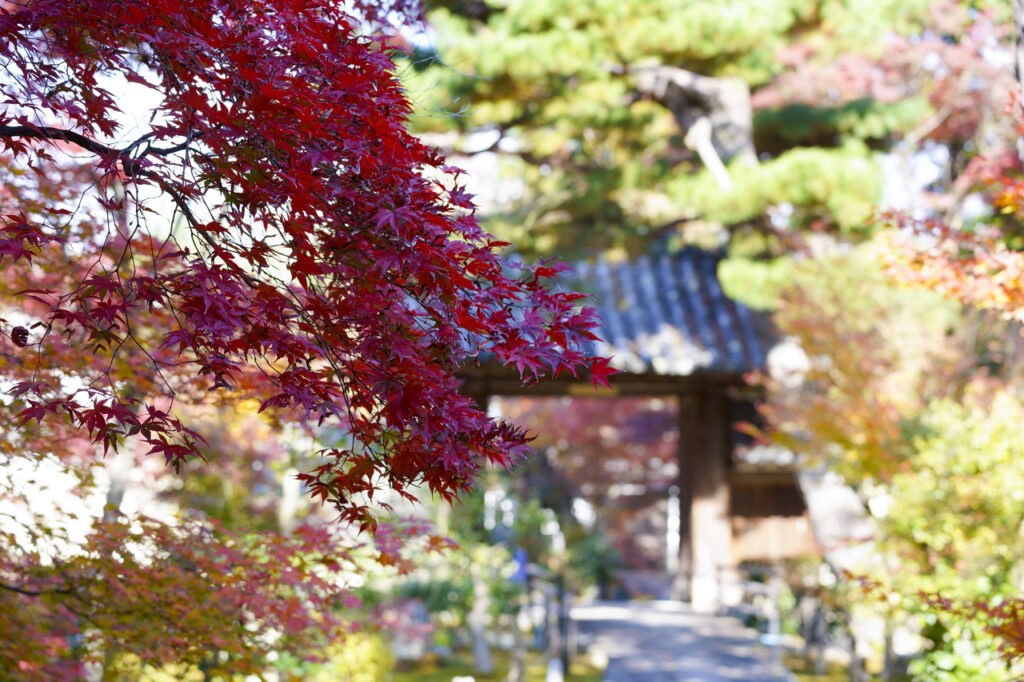
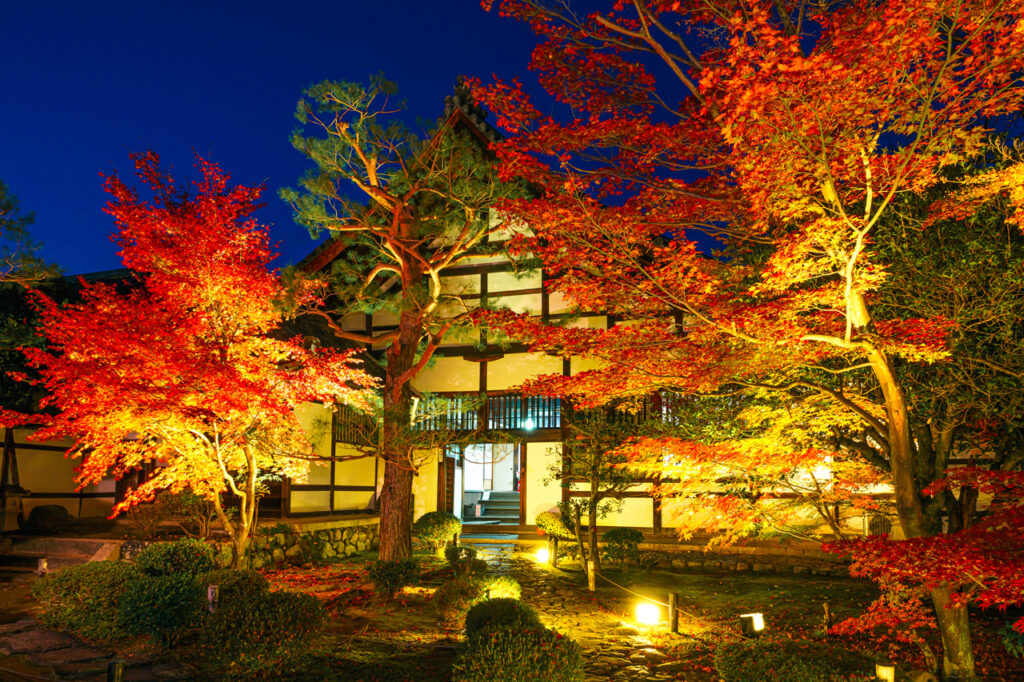
©Katsuhiko Mizuno, Kaoin Temple, Autumn leaves at night
Best time to visit: Late November to early December
Special Evening Viewing
Period of visitation: November 10 (Fri.) - December 17 (Sun.), 2023 *Closed on Mondays
Hours: 17:30~20:00 (last admission at 19:30)
Entrance fee: 2,500 yen (with tea and original Japanese confectionery) *On weekdays, Kyogen (Japanese comic storytelling) will be performed to entertain visitors.
*Reservations must be made in advance.herefrom
A temple of flowers and heart sutra [Daikakuji] that conveys the refinement and beauty of the dynastic culture in Saga.
Known as the flower temple where ikebana originated, Daikakuji Saga chrysanthemums are grown independently to a height of 2 meters so that they can be viewed from the palace. At the Saga Chrysanthemum Exhibition held every November, you can enjoy elegant viewing of chrysanthemums together with the natural scenery of Saga colored with autumn leaves.
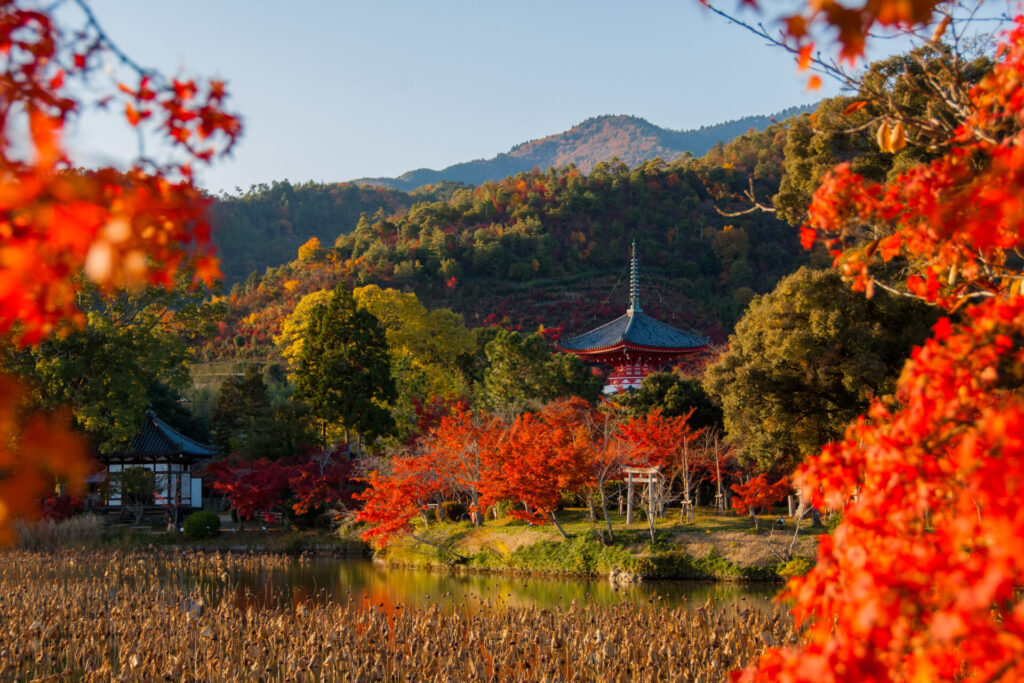
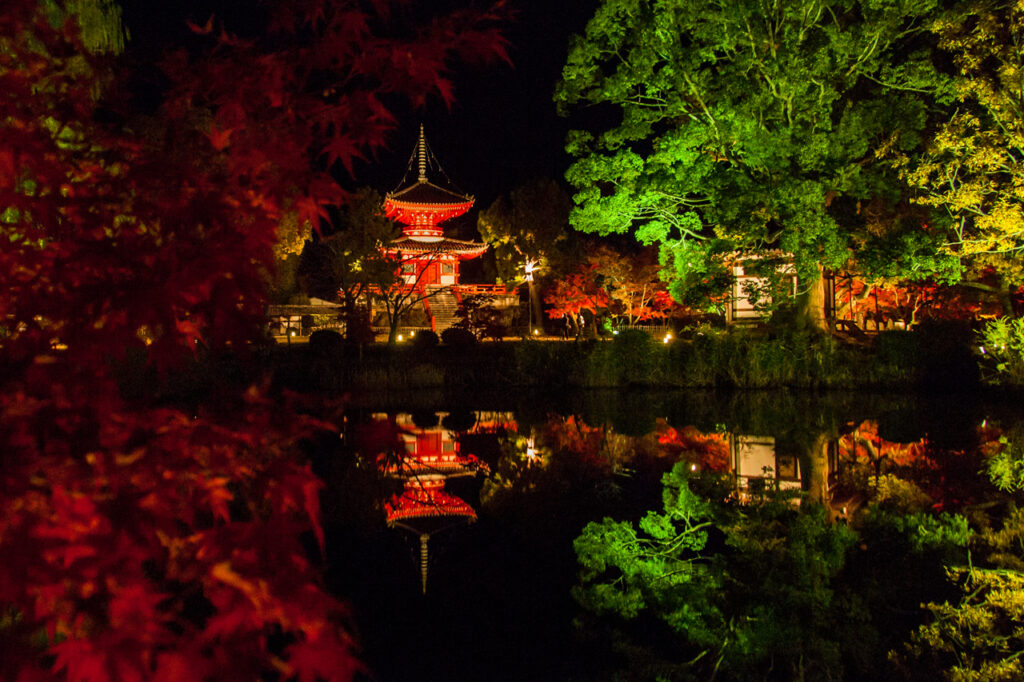
Best time to see/usually mid-November to early December
Autumn Special Viewing "Autumn Masterpiece Exhibition: Rare Treasures from Daikakuji Temple - Eternal History, Inherited Thoughts -" (Japanese only)
Period of visitation / October 13, 2023 (Fri.) - December 4, 2023 (Mon.)
Visiting hours/9:00-17:00 (Last entry/16:30)
Admission/ Adults 800 yen, Junior high and high school students 600 yen *Including admission fee to the hall area.
Oosawaike Pond Light-up
Period of visitation / November 17 (Friday) to December 3 (Sunday), 2023
Opening hours: 17:30 - 20:30 (reception closes at 20:00) *Day and night shifts are available.
Admission/ Adults 900 yen, Elementary, Junior high and High school students 500 yen *With novelty gift *Daytime visitors also need to pay a separate admission fee.
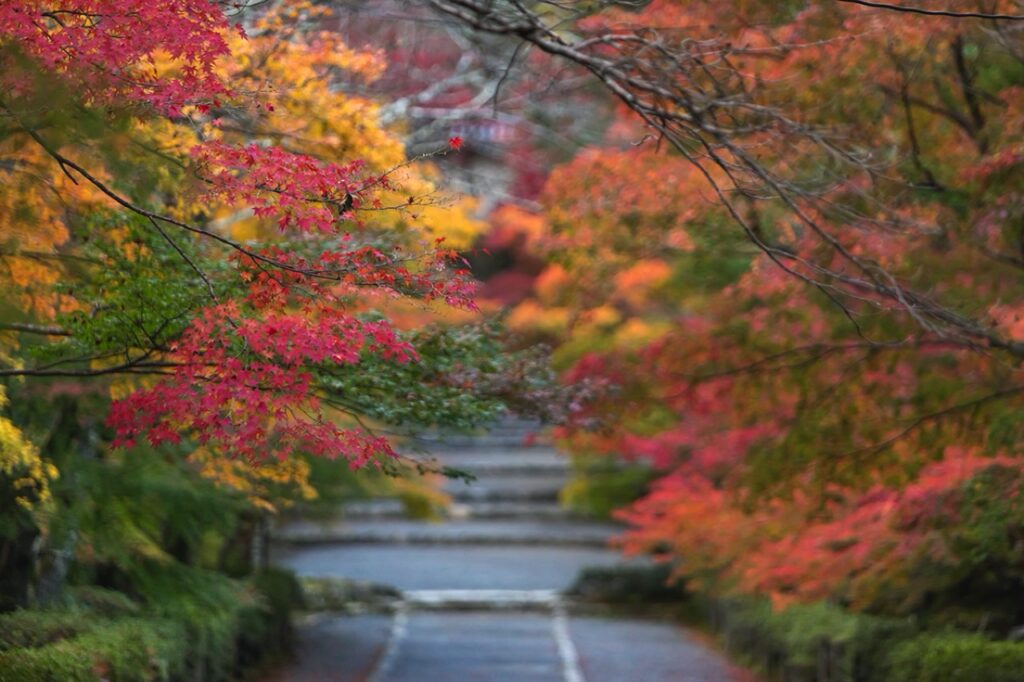
A temple associated with Honen Shonin in Saga [Nison-in]. The temple was built by Jikaku Daishi during the Jowa period (843-848) at the request of Emperor Saga. The temple is located at the foot of Mt. Ogura, which is also mentioned in the Hyakunin Isshu (One Hundred Poems), and its name derives from the two statues of Shaka Nyorai and Amida Nyorai that are the principal images of the temple. The temple has a strong connection with Honen Shonin, as he lived and preached the Dharma here in the early Kamakura Period. The approach to the temple past the main gate is called "Baba (autumn leaves)" and is famous for its autumn foliage.
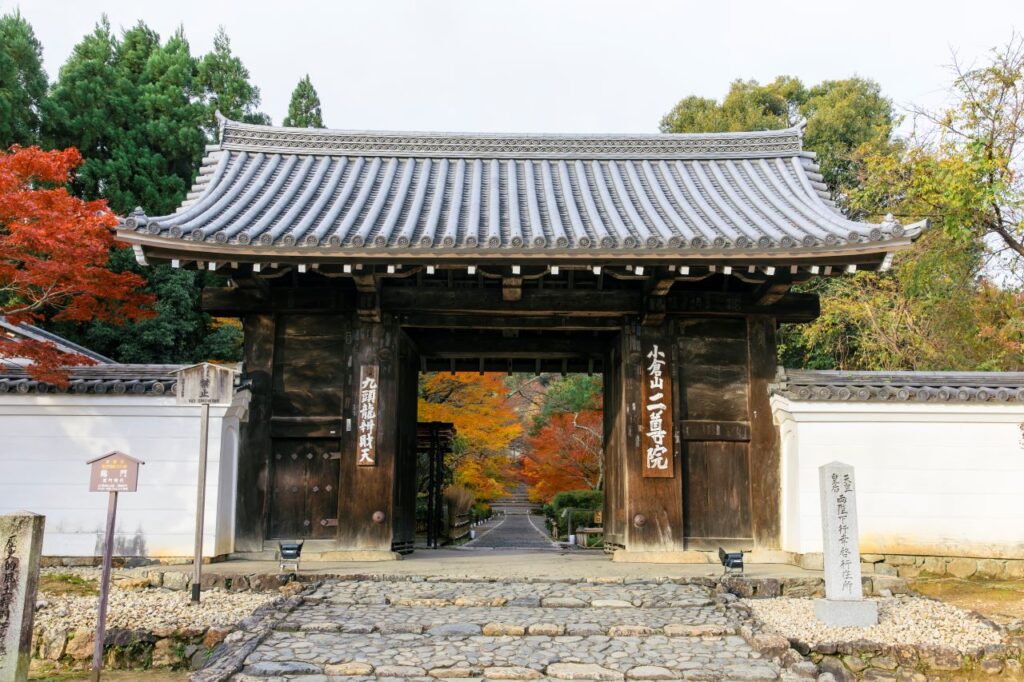
Best time to visit: Late October to early December
Special Grand Opening of the Temple Treasure, "Twenty-Five Bodhisattvas Raiyorai Zu" (The Twenty-Five Bodhisattvas Raiyorai Zu)
Period of visitation: October 28 (Sat.) - December 3 (Sun.), 2023
Visiting hours/9:00-16:30 (last reception)
Entrance fee/ General admission: 1,000 yen

Over 600 interviews per year! An order site carefully selected by the editors who knows Kyoto and Shiga.
nowOfficial LINE friend registration500 yen OFF coupon is being issued!

Distributed every Friday morning at 8:00 am! From new restaurant information to event information that we want to share with you, We deliver articles about Kyoto that are useful to know. About 20,000 people have registered.Click here to add a friend!
 News
News

 Feature article
 Featured event