

![[2026]老舗から定番まで!京都のおすすめ抹茶スイーツ](https://www.leafkyoto.net/leaf/wp-content/uploads/2024/10/260203_matchasweets-768x512.jpg)
[2026]老舗から定番まで!京都のおすすめ抹茶ス...


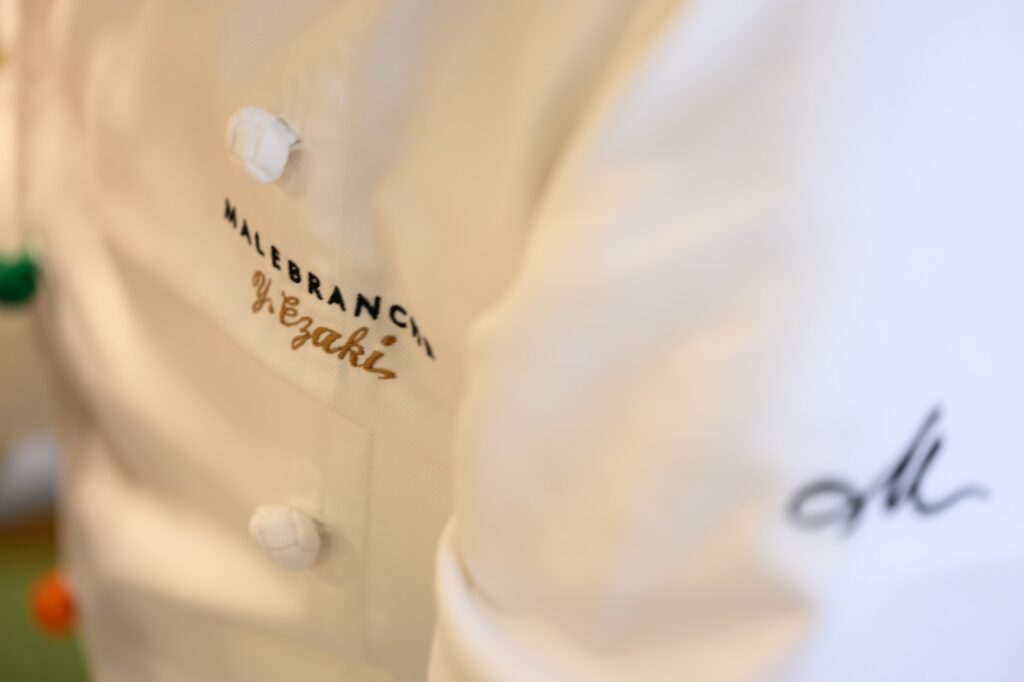

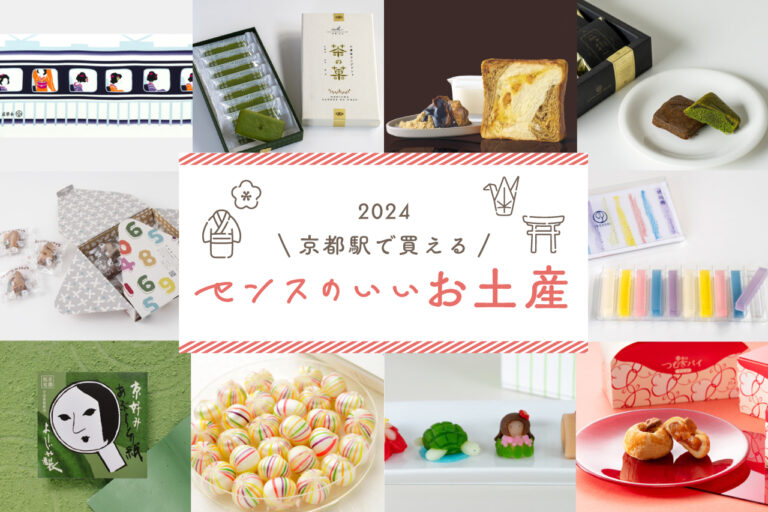
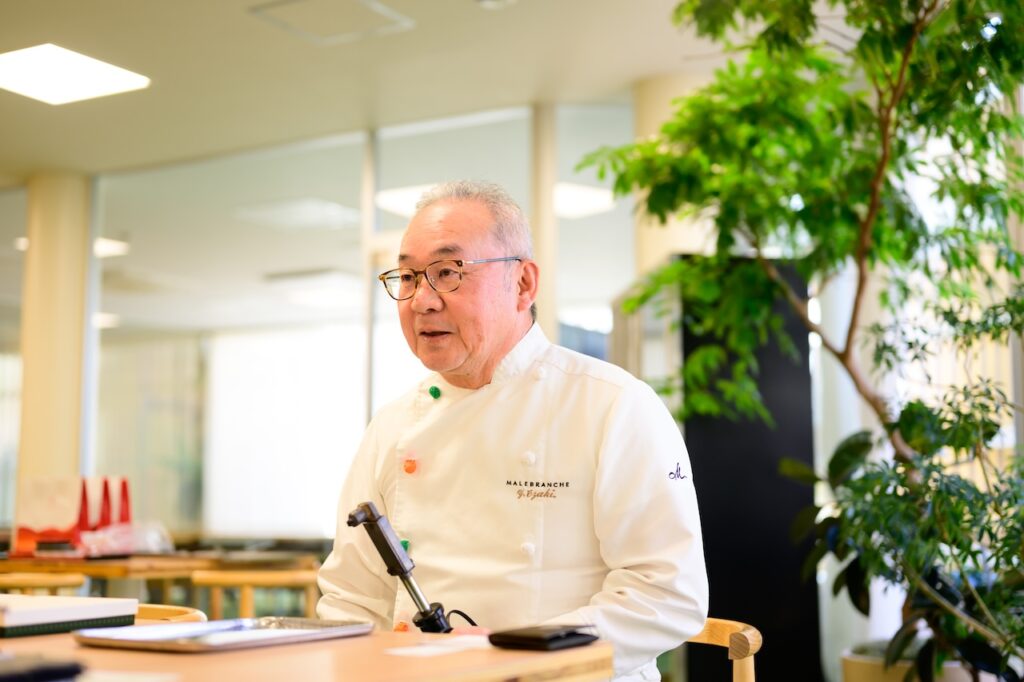
Launched in 2007, the "Cha no Kwa" dark tea Langdosha has become one of the most popular Kyoto souvenirs. How did this well-known Kyoto confectionery come into being and why has it become a long-seller? We asked Executive Chef Yasuhiko Ezaki and Marketing Department Manager Hirokazu Akita, the creators of "Cha no Kwa," about their thoughts on the product and the unknown story of its birth.
Please tell us about the beginning of Mar Blanche.
Mr. Akita: Our company actually began as a pure coffee shop that we opened shortly after World War II. The content of our business changed with the changing times, and it was 1982 when we opened the "Mar Blanche Kyoto Kitayamamoto Store". At a time when there were many Japanese-style confectionery stores and few full-fledged confectionery stores in Kyoto, we aimed to create "a confectionery store of exceptional quality" and created a store with an upscale feel.
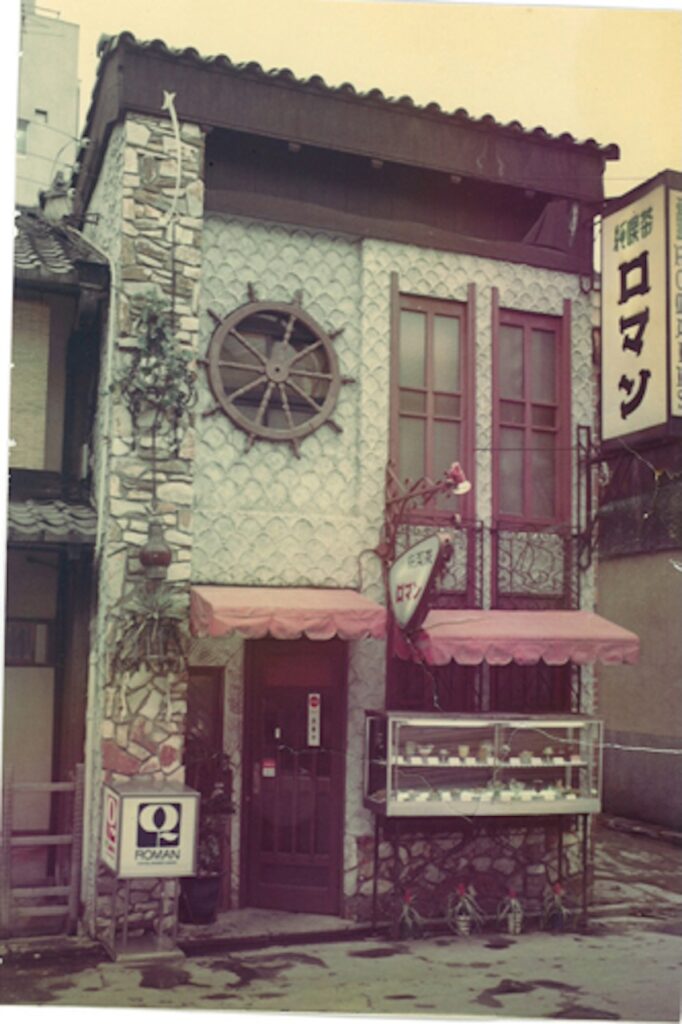
[The "Pure Café Romain," which was the beginning of "Mar Blanche.
Mont Blanc has been the store's signature product since the beginning. We developed the recipe by adapting the mont blanc we encountered in France, the home of the product, to the tastes of Kyoto residents. In Japan, yellow candied Japanese chestnuts were the mainstream, so mont blanc made with French marron paste attracted a lot of attention, and it is still a staple at "Mar Blanche" to this day.
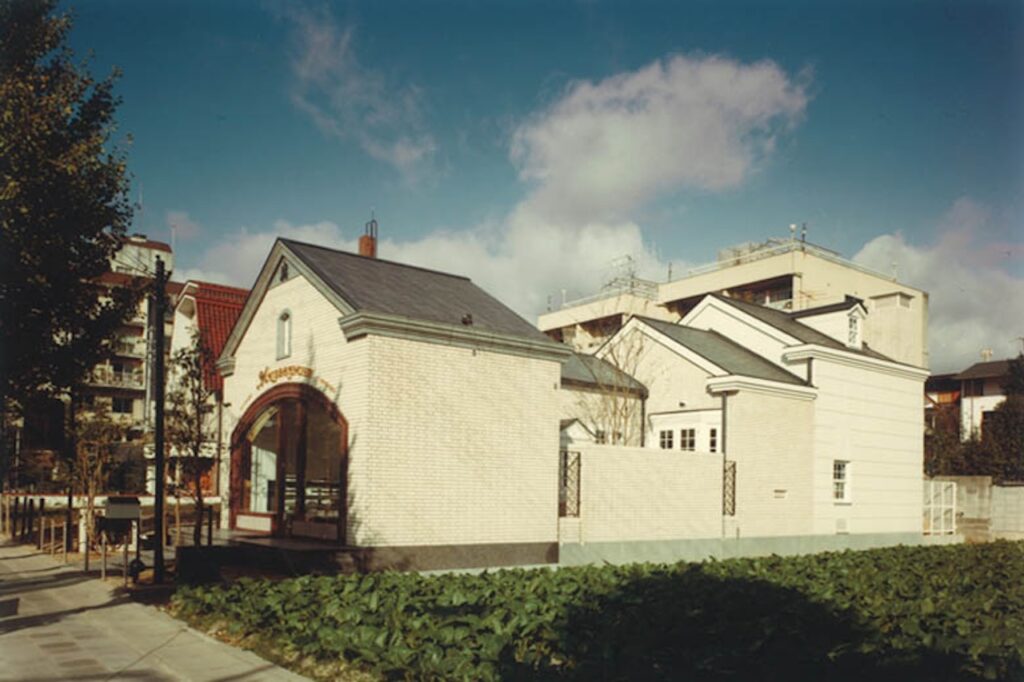
Mar Blanche Kitayama Honten when it was first established.
What was the impetus behind the creation of "tea cakes" from "Mar Blanche"?
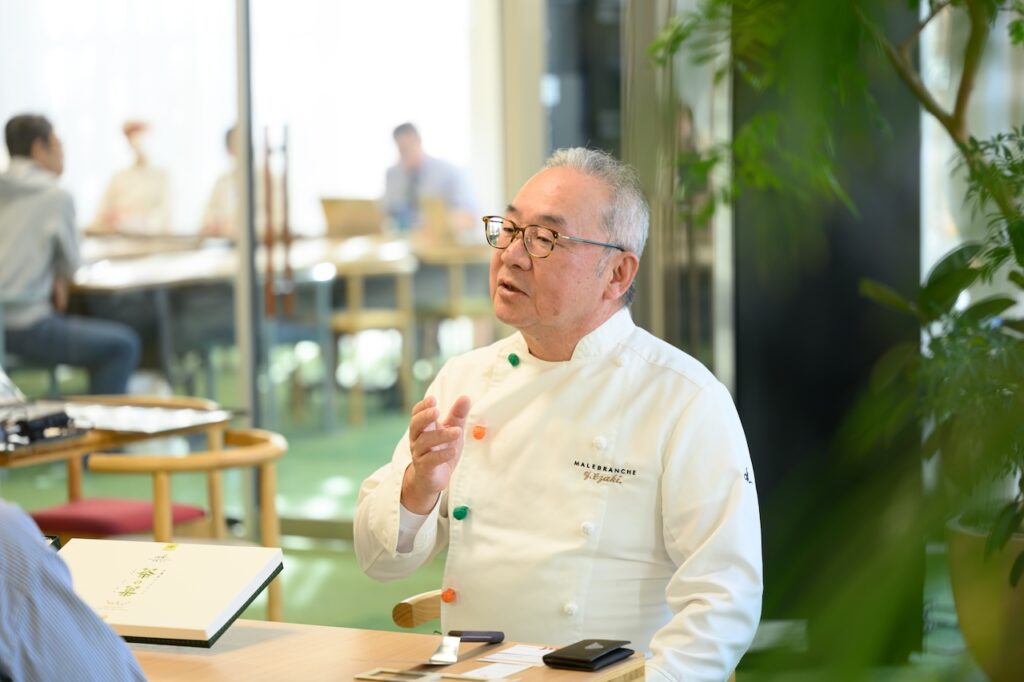
Mr. Ezaki: In 2006, Makoto Kawachi, then president and current chairman, asked me to create a confectionery that would evoke the image of Kyoto. He gave me the idea of putting white chocolate between two pieces of langdosha made with matcha green tea.
Matcha is relatively easy to use in fresh cakes, but when it comes to baked goods, it is difficult to bring out its flavor and color. It was extremely difficult to bake langue d'ocha, which is usually browned on the edges, to a beautiful green color on all sides and to convey the matcha flavor directly without losing the flavor of the baking process. After experimenting with various methods, we broke the common practice of baking langue d'ocha and came up with a method of baking it at a low temperature.

Three types of branding brands: Kyoto, tea, and confectionery, in reference to "Kyoto's tea confectionery".
Why did you use dark green tea instead of the more common light green tea?
Mr. Ezaki: At first, we started the trial using the lighter type of matcha, but the wife of the current chairman, who had a deep knowledge of the tea ceremony, asked, "Why don't you use dark tea? She was very knowledgeable about the tea ceremony and asked me if I would like to use dark green tea.
Koicha, a high-quality tea with less bitterness and astringency than thin tea, is costly and its use in confectionery is unheard of and unknown. We consulted with a tea wholesaler in Uji to see if there was a suitable dark tea. As a result, we found that by blending various types of dark tea to give a deeper flavor, we could match it to the Langdosha dough. By changing from light tea to dark tea, the color has improved overwhelmingly and the flavor has become stronger.
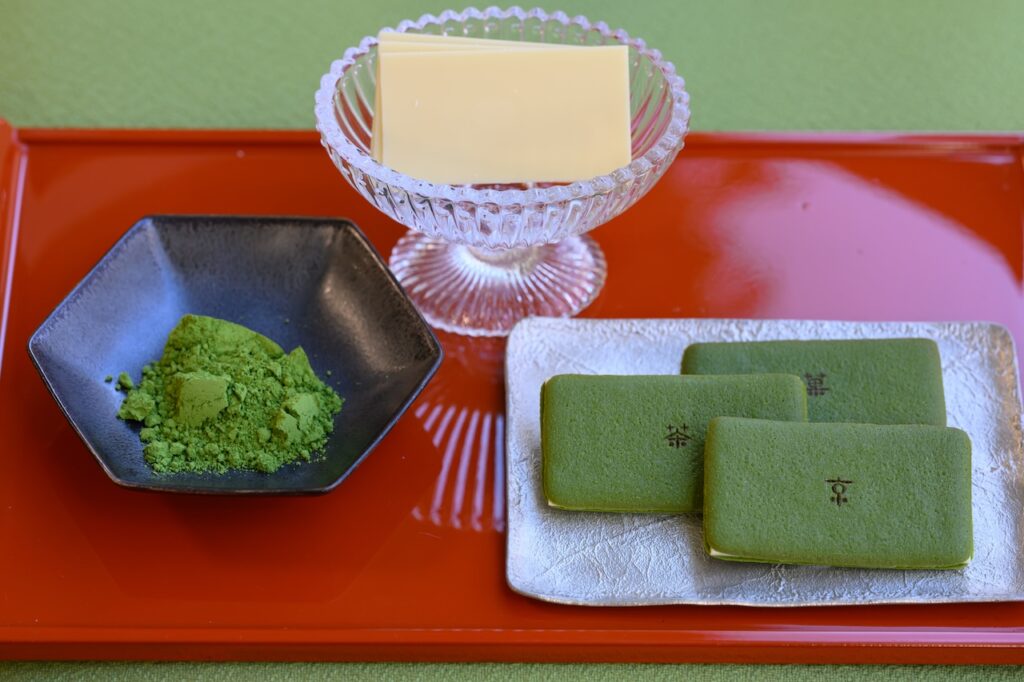
Starting with the crispy texture of the langdosha, the dark tea mellowed in the mouth as it combined with the white chocolate, leaving an aftertaste of dark tea when eaten all the way through. The exquisite aftertaste was unique to dark tea. I was surprised at how rich in flavor dark tea is, an idea that I would not have come up with on my own.
ーーーWere you finding it difficult to combine matcha and white chocolate?
Mr. Ezaki: The main ingredient was the matcha green tea langdosha, and the white chocolate was intended to complement it. In order to find the best match with matcha, I ordered all the white chocolate available at the time, both domestic and foreign.
After repeated tastings with matcha langdosha, we created an original recipe for white chocolate. The weight of each piece of chocolate was set at 4 g to balance with the langdosha, with a margin of error of 0.5 g. The chocolate was spread thinly and evenly on a palette, cut with a roller cutter, and each piece was measured.
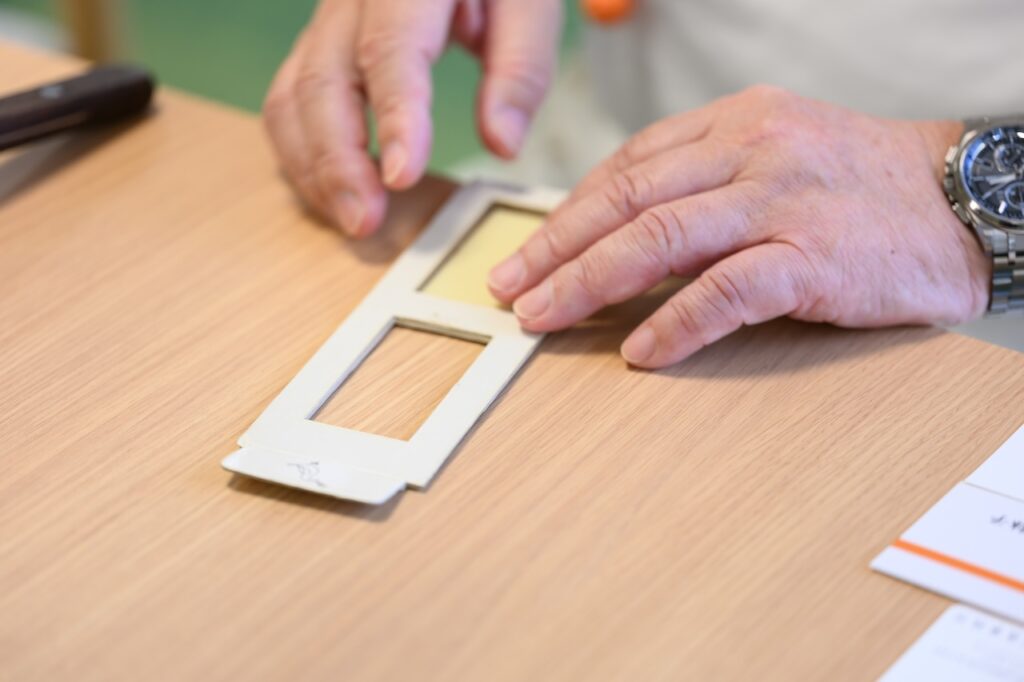
ーーーー So it was done by hand?
Mr. Ezaki/Yes, in the beginning, everything was done by hand. The branding was done when the langdosha was warm enough to be taken out of the oven, and when the temperature reached 26 to 27 degrees Celsius, which was enough to keep the chocolate from melting, the chocolate was inserted and the langdosha was wrapped.
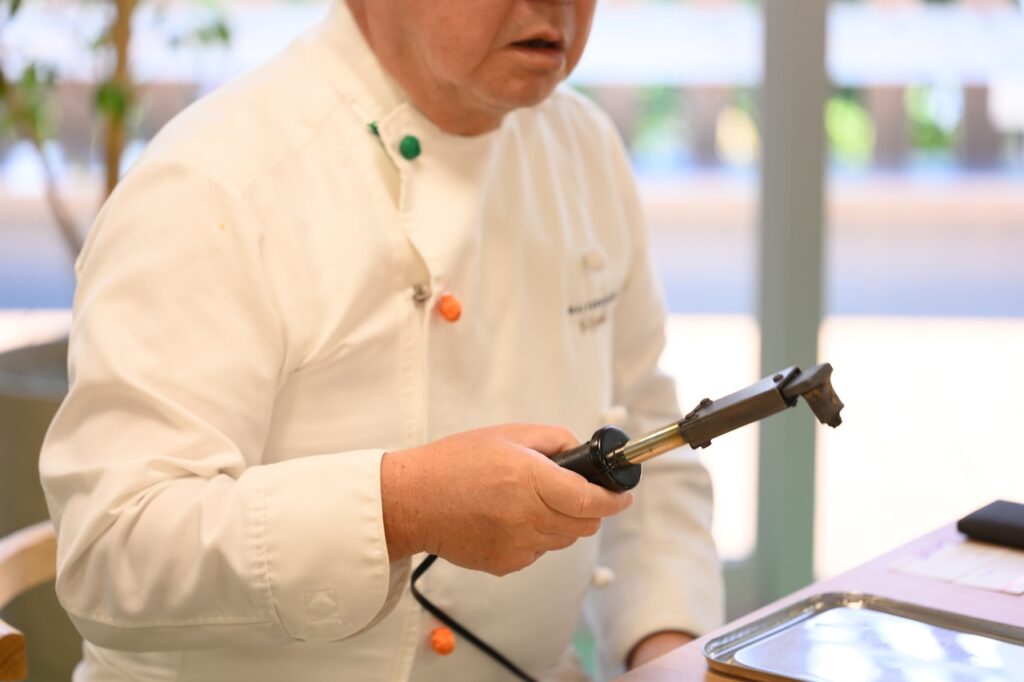
If the timing of branding is off, the branding will smell burnt, and langue d'ocha is sensitive to moisture. In addition, matcha tends to fade easily, so it was important to make the process as smooth as possible. We had to devise various ways to make the branding process more efficient, such as by slightly sloping the table.
ーーーYou have overcome various challenges to create this product, haven't you?
Mr. Ezaki/That's right. At that time, we usually took about six months to develop a new product, but it took us a year and a half to complete "Cha no Hana".
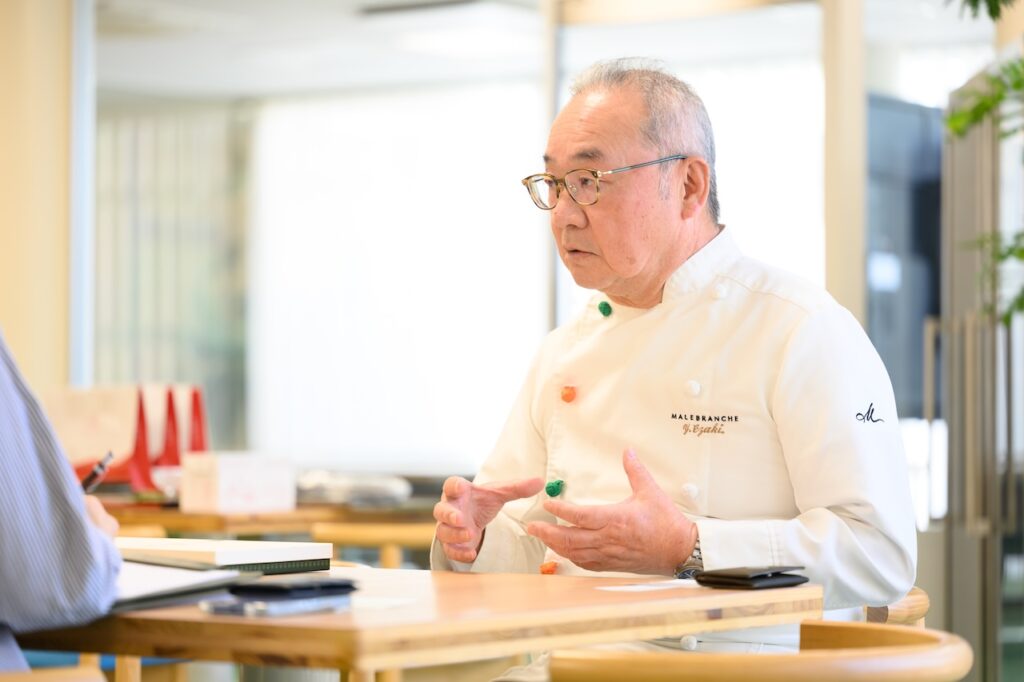
Since there were already so many matcha sweets in the world, some people said, "Why matcha now?" It is true that there were some who said, "Why matcha green tea now? However, the unprecedented combination of dark green tea and white chocolate seemed to be the right choice, and we received many comments such as, "I don't like green tea, but I can eat this! We have received many comments like, "I don't like matcha, but I can eat this! It was widely supported by both the elderly and children.
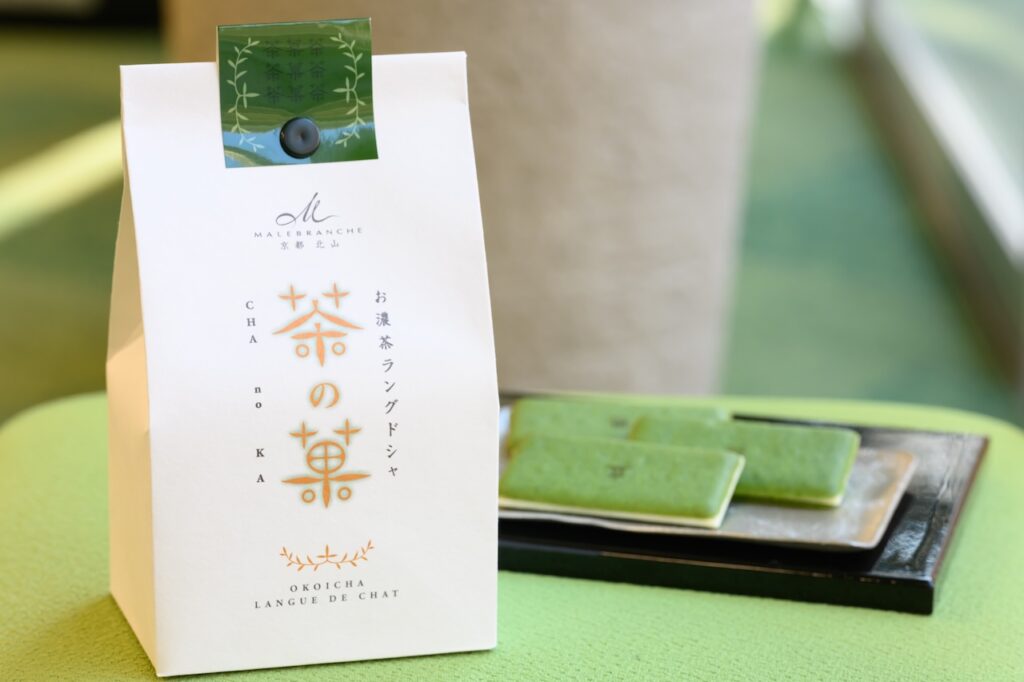
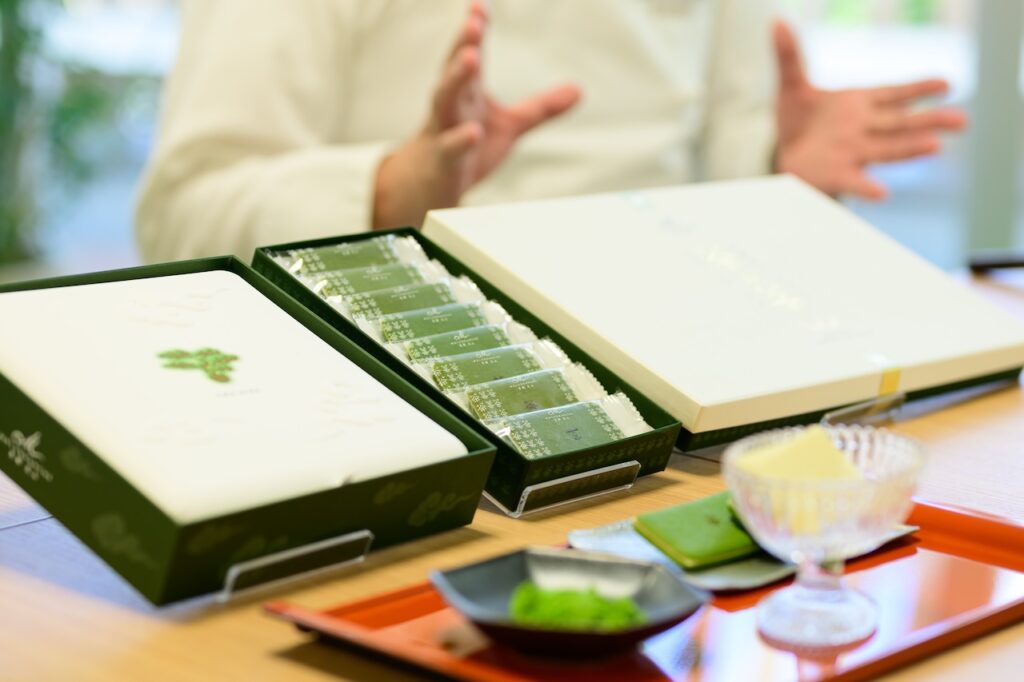
Chanokabi 5-piece set, 810 yen. The simple yet luxurious packaging makes it a perfect gift!
[Mar Blanche used to have a nationwide presence, but withdrew and concentrated on Kyoto when we started selling "Tea Crackers". The reason for this was our strong desire for customers to purchase "Cha-no-ka" as a souvenir of Kyoto.
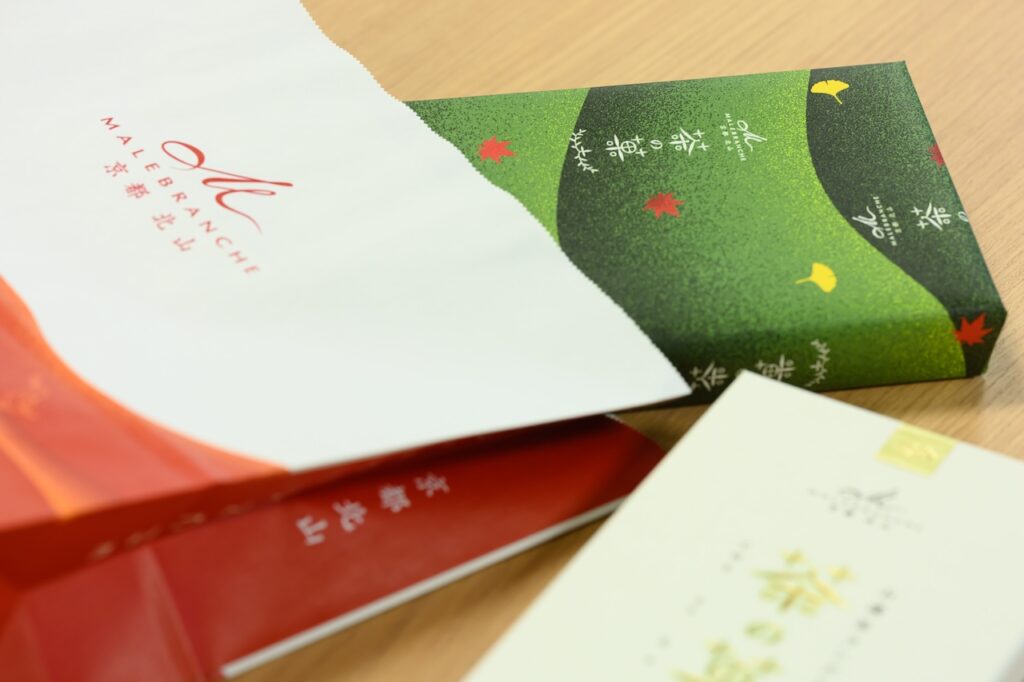
Gorgeous green wrapping paper on an orange paper bag lifts the mood.
What do you pay attention to in order to maintain quality?
Mr. Ezaki: We use high quality Uji tea leaves for our "Cha no Ka," but tea leaves are a natural product. The quality of the tea leaves depends on the climate and other factors of the year. Therefore, we not only make sweets, but also communicate with tea farmers and work as a team to grow tea leaves.
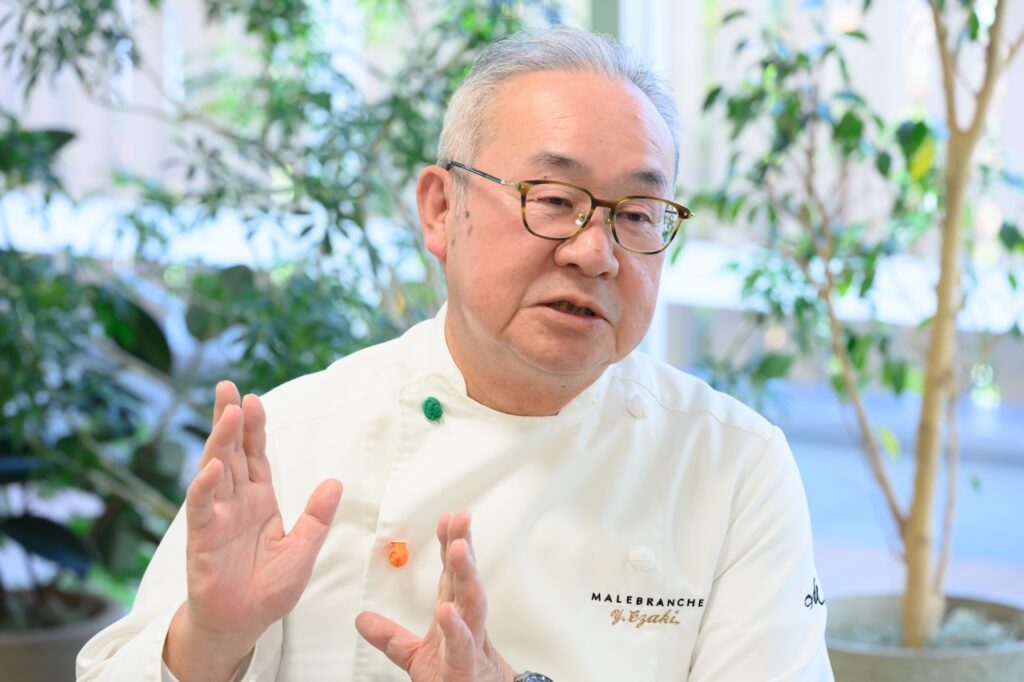
A tea connoisseur blends the tea every year to match the level of "Chanoka," and of course I also check the taste of the tea and use only tea leaves that I am satisfied with. I also carefully grind the tea leaves on a millstone to bring out the full flavor of the tea leaves, and take my time to make the tea thicker.
Over 600 interviews per year! An order site carefully selected by the editors who knows Kyoto and Shiga.
nowOfficial LINE friend registration500 yen OFF coupon is being issued!
Distributed every Friday morning at 8:00 am! From new restaurant information to event information that we want to share with you, We deliver articles about Kyoto that are useful to know. About 20,000 people have registered.Click here to add a friend!
 News
News Feature article
 Featured event