

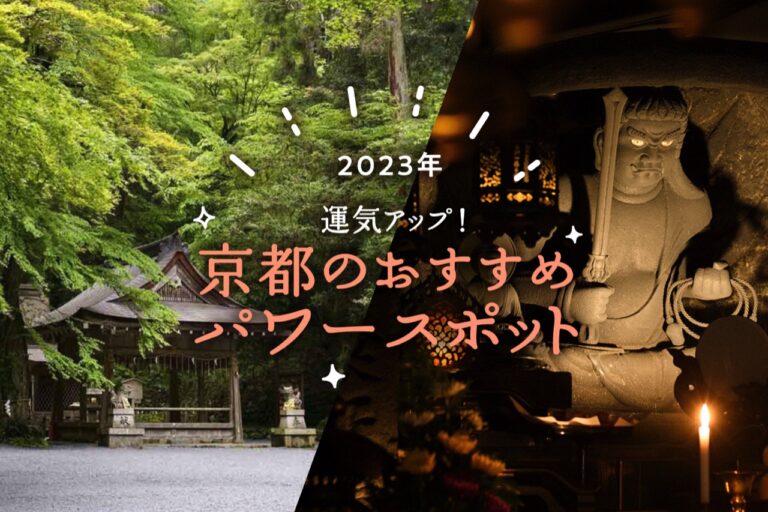
[2023] Better luck! Recommended power spots in Kyoto...


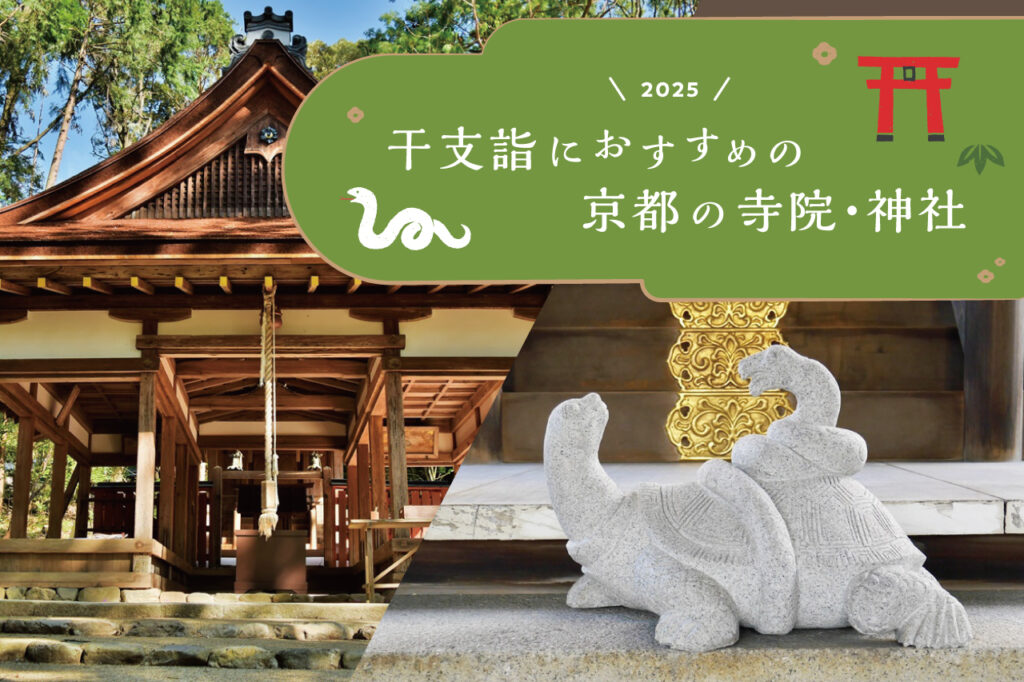

The Chinese zodiac sign for the year 2025 is "Mimi," meaning snake. In this issue, we will introduce 7 temples and shrines in Kyoto that are recommended for zodiac year of Snake pilgrimages. Why not make your year auspicious by visiting places associated with snakes, receiving gifts, and paying a visit to temples and shrines that are associated with the Chinese zodiac sign of the snake?
We asked fortune teller Hieten Sensei about spots in Kyoto and Shiga where you can expect to have good luck in 2025! Check it out!
What is the fortune of 2025 that you are interested in?
The Chinese zodiac is essentially a combination of the ten signs of the zodiac and the twelve signs of the Chinese zodiac.
The twelve signs of the Chinese zodiac are: Kou, B, C, D, Ching, Boshi, M, Kung, Sein, Spin, Im, and Gye. By combining the two, the calendar can be expressed in 60 different ways, from "Ki" (the first sign of the Chinese zodiac) to "Mizu-no-Toi" (the second sign of the Chinese zodiac).
Based on this thinking, the Chinese zodiac sign for 2025 is precisely "Kinotomi" (乙巳).
The number "B" in the Chinese zodiac represents the elements of wood and yin in the ancient Chinese philosophy of yin-yang and the five elements, and has the connotation of plants growing in a flexible manner.
On the other hand, the "snake" of the twelve signs of the Chinese zodiac, or the serpent, has long been considered an auspicious creature. For example, the snake's strong life force and repeated shedding of its skin has become a symbol of fertility and rebirth. It is also often worshipped as the god of money.
Thus, if we look at the meaning of "Otomi", we can say that 2025 will be the year in which "things will come to fruition through hard work and preparation". Take this opportunity to visit temples and shrines associated with snakes and pray that your goals for the year will come to fruition.
Mimuroto-dera Temple, founded in 770, is the 10th temple of the Saigoku Sanjusankosho Kannon Sacred Shrine. It is also one of the most famous flower temples in Kyoto, and is especially known as "Ajisai-dera" because of its beautiful hydrangea garden. The name of the Jataibashi Bridge at the entrance of the temple comes from a folk tale about a crab that slays a snake in return for a favor. According to a later story, a wooden statue of Ugajin was dedicated to the snake as a memorial service.

main hall
In honor of this legend, a stone statue of Ugajin sits in front of the main hall. Ugajin has the head of an old man and the body of a snake, and is believed to be a god of fortune and money. The tail of the snake is said to bring money and the beard of the old man is said to bring good health and longevity, so be sure to touch them. If you get an amulet of Ugajin, you will be able to acquire even better luck.
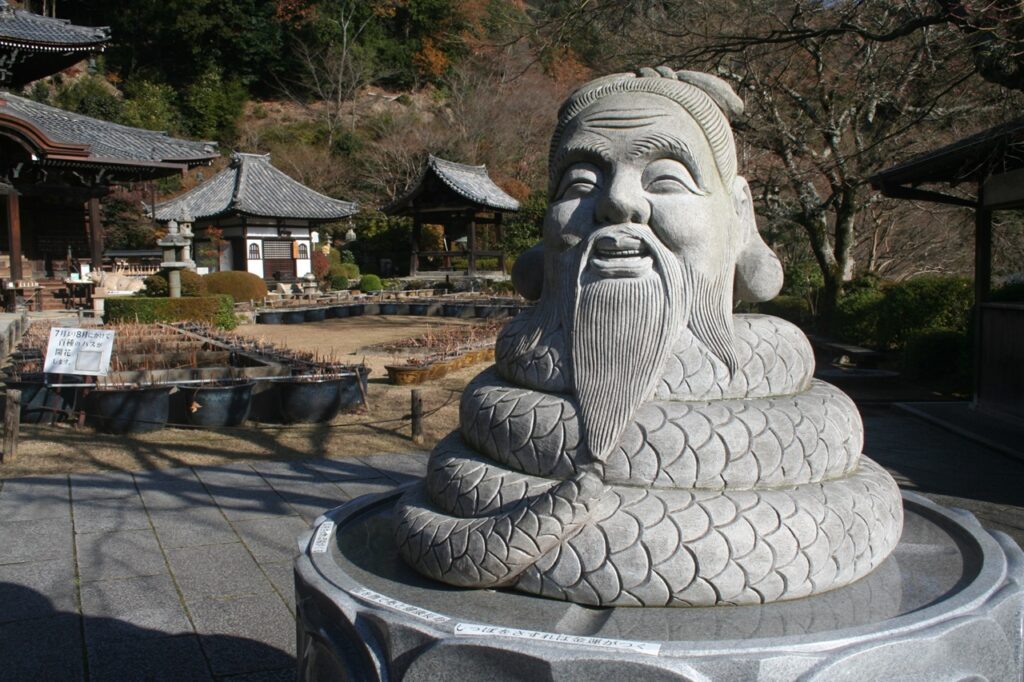
Statue of Ugajin enshrined as a guardian snake, not a guardian dog
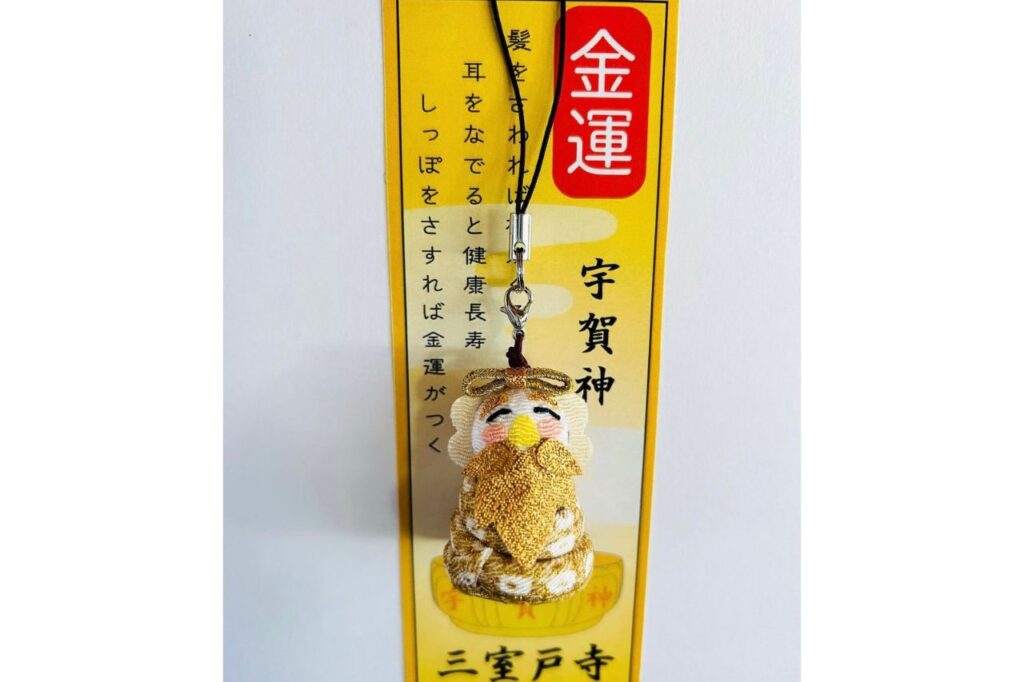
Ugajin's good luck charm 1,000 yen
Otoyo Shrine was built in the Heian period (794-1185) to pray for the healing of Emperor Uda's illness. The shrine is also known as "Komanezumi-no-sha" (Shrine of Komainazumi) because of the presence of komainazumi (guardian rats) in the Okuni-sha, the last shrine. In addition, there are komainaru (guardian monkeys), komatobi (guardian steeplejacks), and komain foxes at the other shrines on the shrine grounds. The shrine is believed to bring good health, good fortune, longevity, academic success, matchmaking, and safe childbirth.

main shrine
The main shrine enshrines Sukunahikono-no-mikoto, who presides over medicine and medical treatment. Standing in front of him are two guardian snakes. They are black and white and symbolize health, longevity, rejuvenation, and money. The shrine also offers a snake charm and omikuji (omikuji fortune) as gifts to commemorate your visit to the temple.
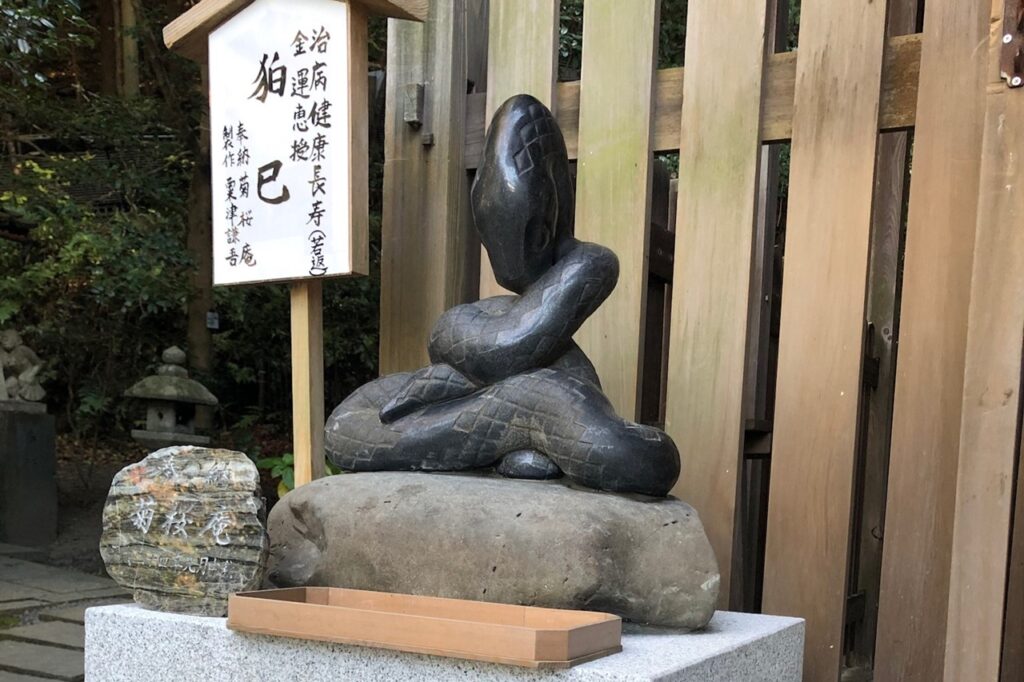
Black guardians on the left toward the main shrine
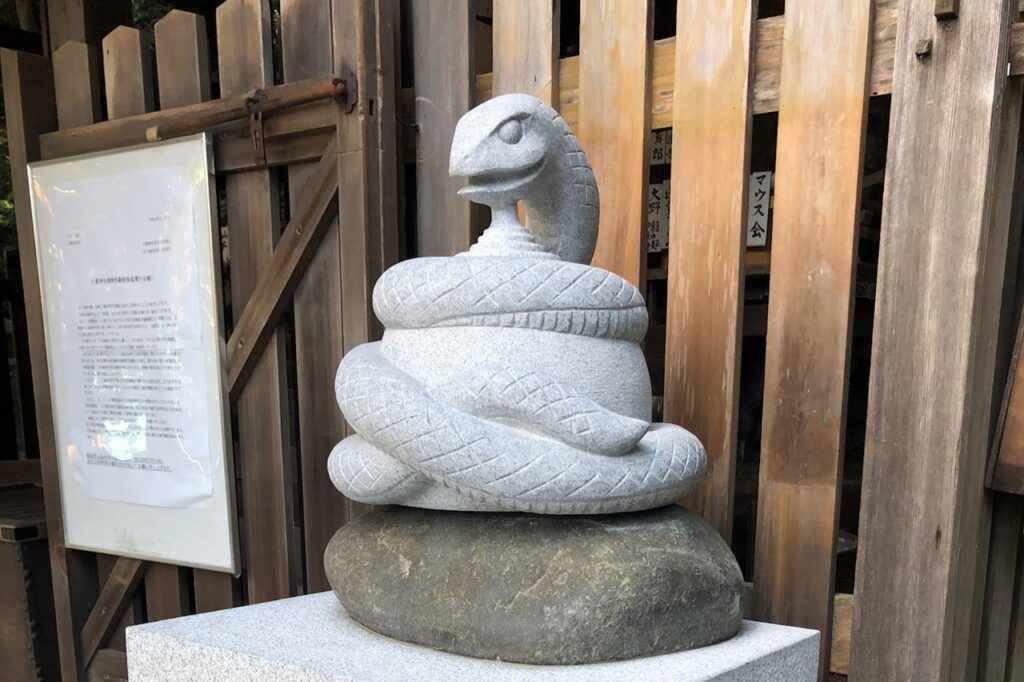
White guardians on the right toward the main shrine
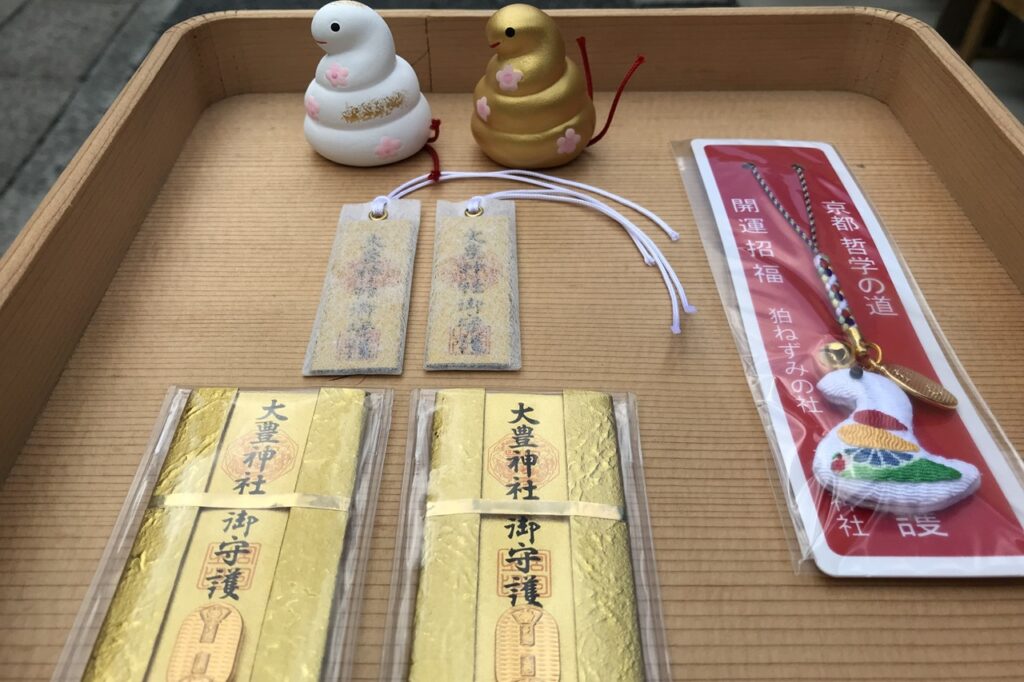
(Right) Large charm of good fortune for a big snake 1,000 yen (Bottom left) Large charm of good fortune for a snake 1,000 yen (Middle left) Small charm of good fortune for a snake 500 yen (Top left) Snake fortune, white and gold, 500 yen each
Ota Shrine, said to be the oldest shrine in the Kamigamo area, is a branch of Kamigamo Shrine. The shrine enshrines Ame-no-Uzume-no-mikoto as its deities, and is said to be blessed with longevity and good fortune, as well as good luck in the performing arts. The Ootanosawa area, which stretches across the shrine's grounds, is home to a cluster of kakitsubata (potherb mustard) flowers that come into bloom around May every year.
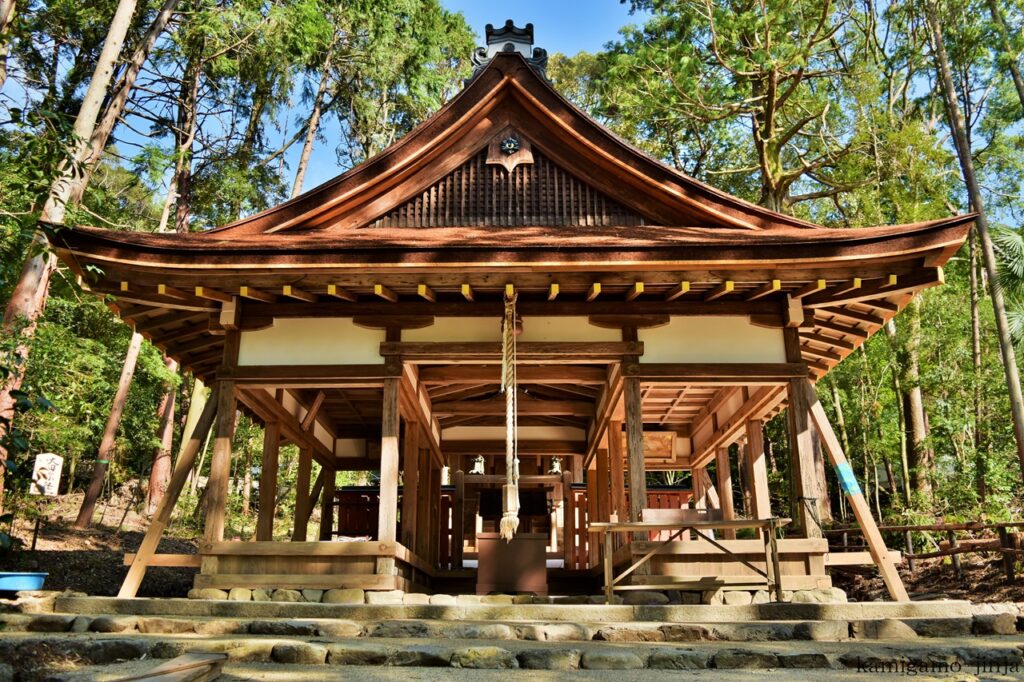
main shrine
Let's stop for a moment in front of the torii gate on the approach to the temple. If you look to the right of the stone bridge over the creek, you will see a stone called "Janomakura," or "snake pillow. Snakes have long been said to be creatures that bring rain, and since they used the stone as a pillow, it is also called "janomakura-ishi," or "stone for praying for rain," and was used to pray for rain. It is a real pleasure to visit the shrine while thinking about the customs of ancient times.
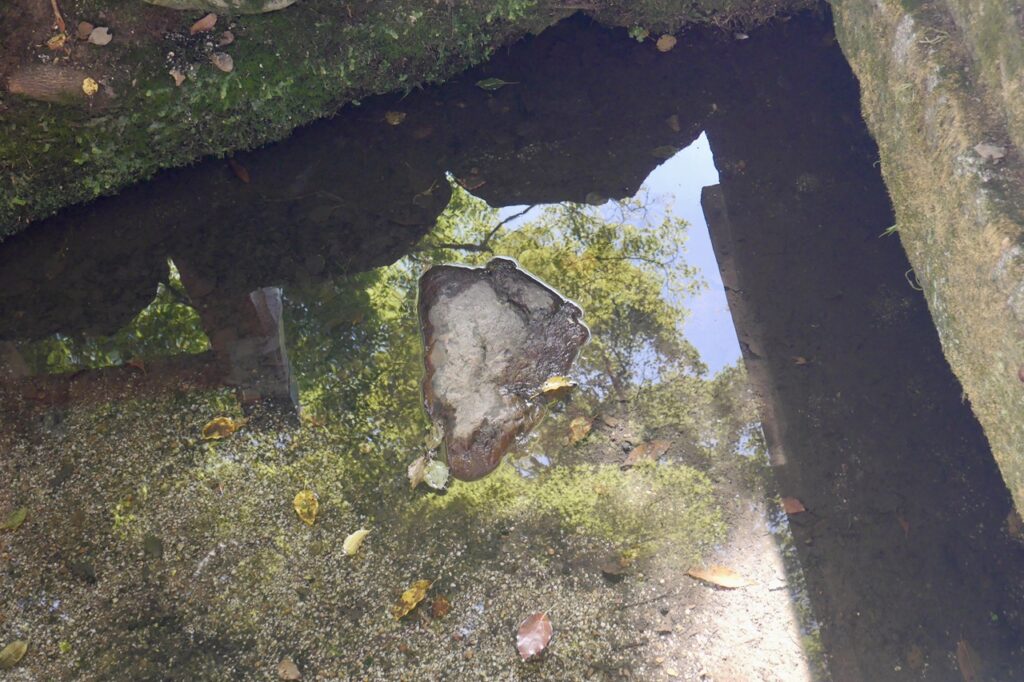
A "snake pillow" that was once used to pray for rain.
Genbu Shrine, a Shinto shrine in the northern part of Kyoto, is the birthplace of the "Yasurai Festival," one of the three major festivals in Kyoto. At the Genbu Yasuraisai held every year on the second Sunday of April, people enter a hanagasa (parasol) in a procession to ward off plague and evil spirits. The festival has been passed down from generation to generation since the Heian period (794-1192) as a ceremony to pray for good health and good fortune.
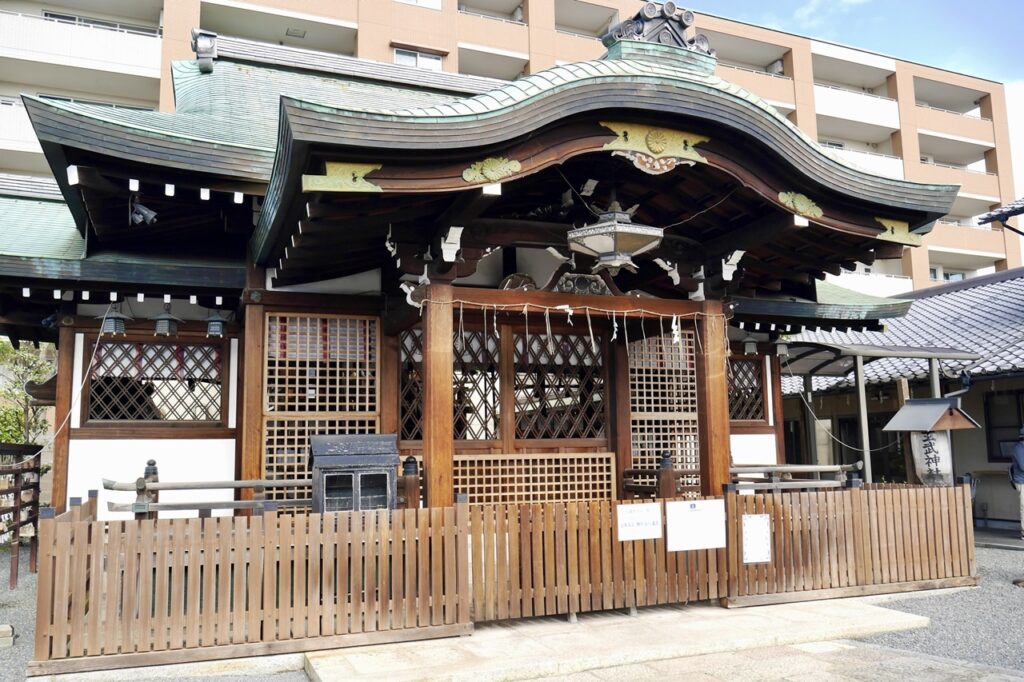
main shrine
A statue of Genbu, a tortoise with a snake coiled around it, is enshrined in the main shrine. The tortoise is said to bring longevity and the snake is said to bring prosperity. Let us pray to these auspicious beasts of the gods for a healthy and prosperous year.
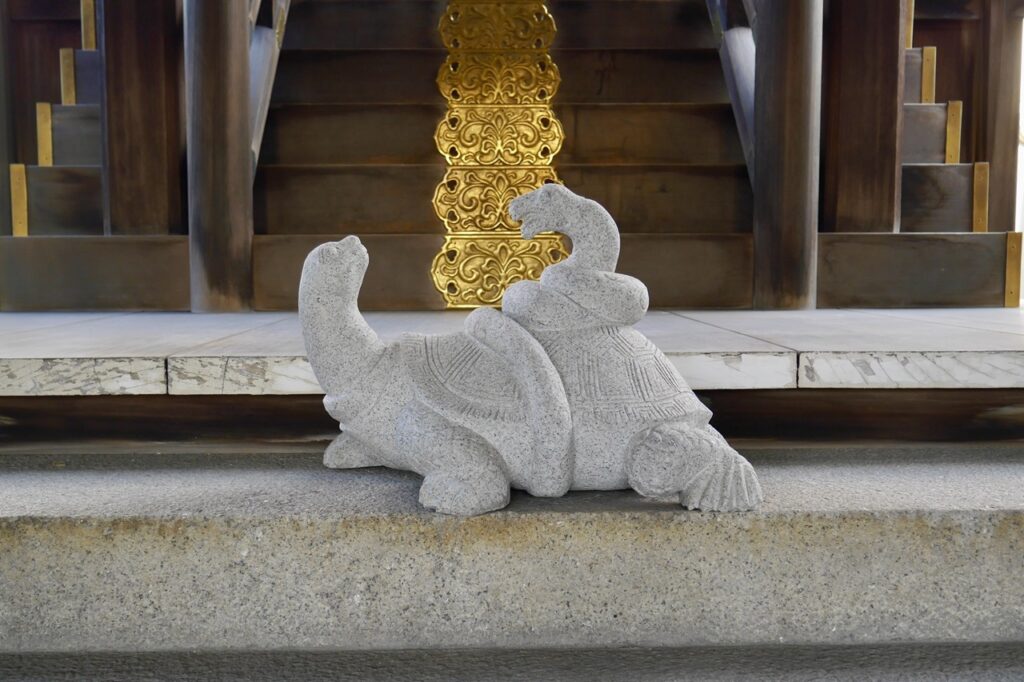
seven mansions (Chinese constellations) of the northern heavens

Over 600 interviews per year! An order site carefully selected by the editors who knows Kyoto and Shiga.
nowOfficial LINE friend registration500 yen OFF coupon is being issued!
Distributed every Friday morning at 8:00 am! From new restaurant information to event information that we want to share with you, We deliver articles about Kyoto that are useful to know. About 20,000 people have registered.Click here to add a friend!
 News
News



 Feature article
 Featured event
![[2026]京都の初詣スポット!おすすめ神社](https://www.leafkyoto.net/leaf/wp-content/uploads/2025/01/251223-hatsumoude-768x512.jpg)