

Call for Entries] Promoting the Attractiveness of Kyoto and Shiga! Leaf KYO...


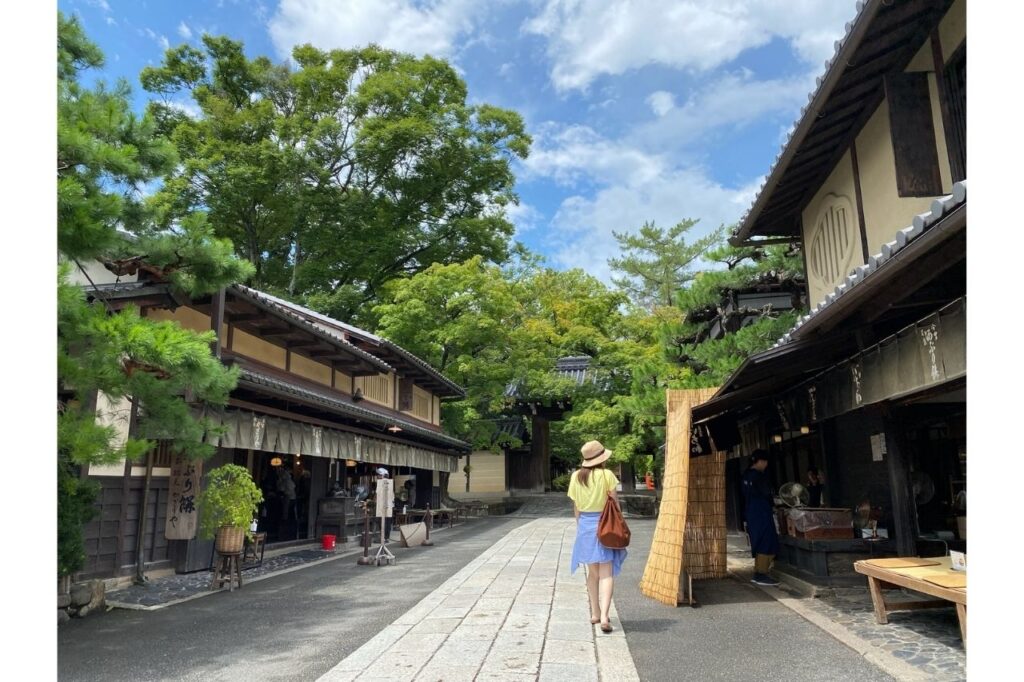

[Imamiya Shrine] (Kita Ward, Kyoto City, Kyoto Prefecture) stands in a quiet corner of Murasaki-no, Kyoto.
As soon as you step onto the approach, a light, toasty aroma gently welcomes visitors.
The source of this aroma is none other than [Imamiya Shrine]’s famous “aburi mochi.”
And the two long-established shops that continue to preserve that flavor—[Aburi Mochi Ichikawa] and [Aburi Mochi Honke Nemoto Kazariya]—are located across the approach from one another.
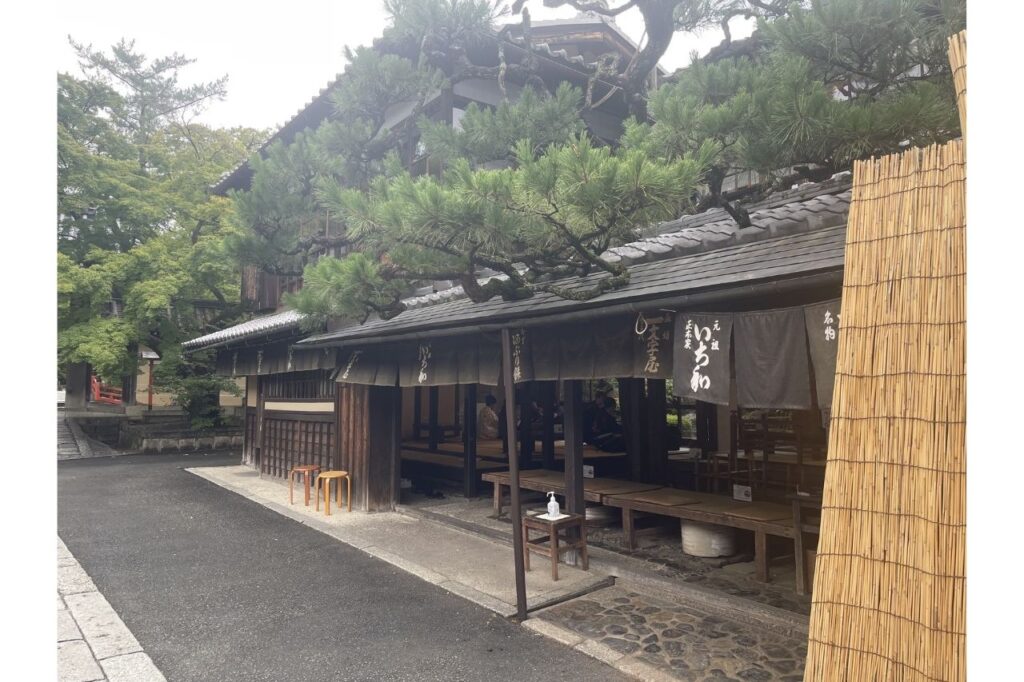
[Ichikawa] is said to have been founded in the Heian period, in the second year of the Chōhō era (1000), and is considered one of Japan’s oldest traditional Japanese confectionery shops.
On the other hand, [Kazaraya] is a prestigious shop that was founded around 1600, in the early Edo period, and goes by the name “Honke” (Original House).
Throughout their long histories, both have continued to preserve the simple yet profound flavor of “aburi-mochi,” delighting the palates of temple visitors and tourists alike.
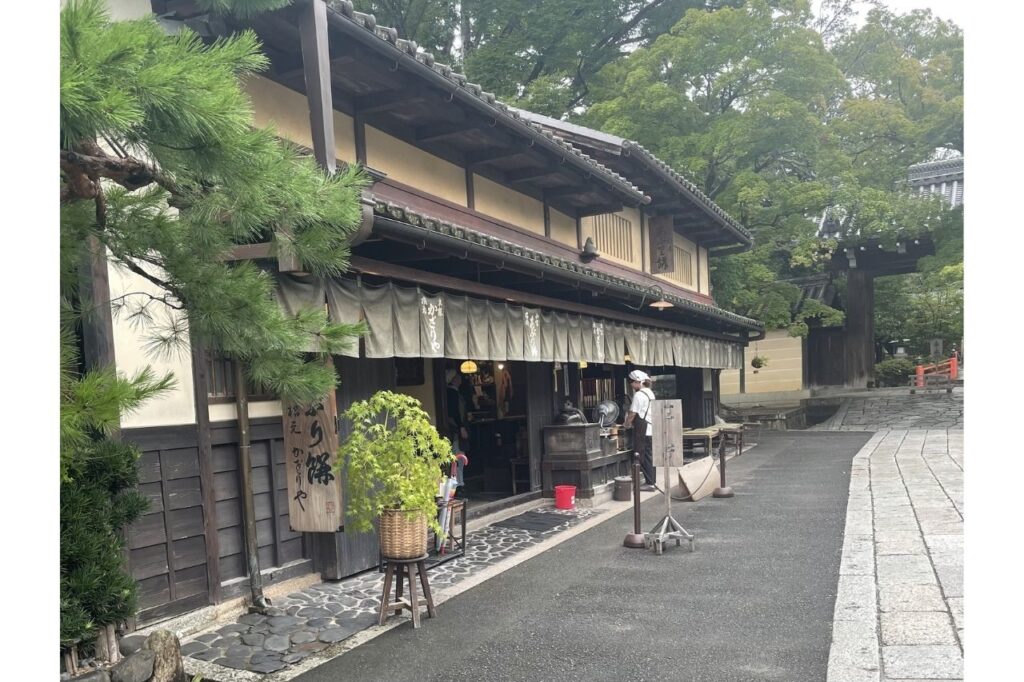
As you enter the approach to the shrine, you’ll first hear the lively calls of vendors echoing from both sides, leaving you with the pleasant dilemma of which one to choose.
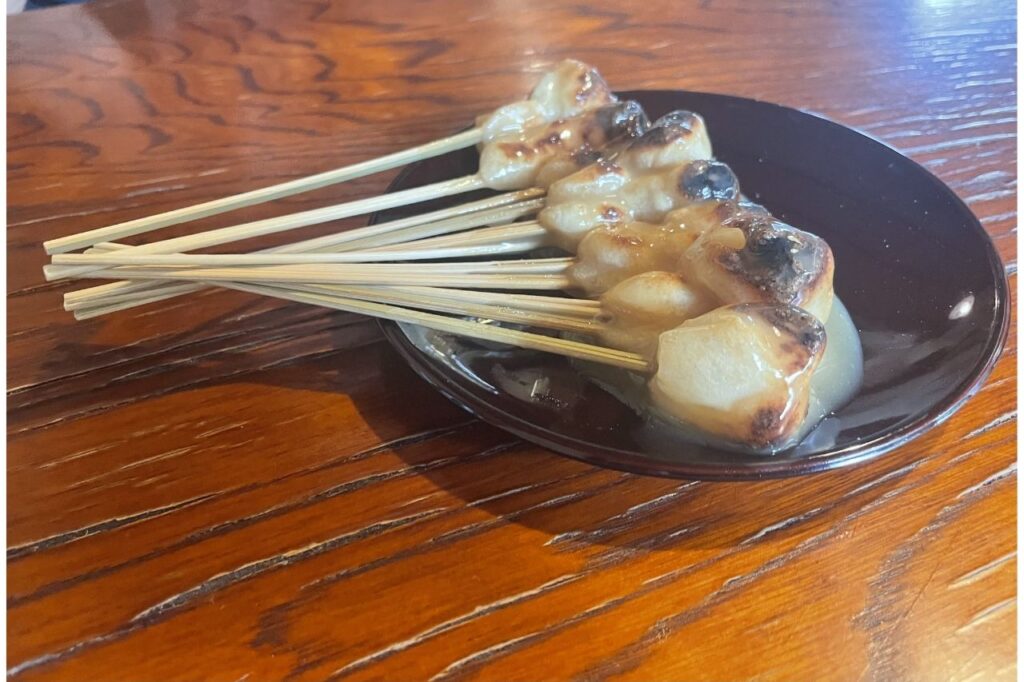
[Kazaraya]'s Grilled Mochi
The first place I visited was [Kazaraya]. As I was led into the spacious tatami-mat room, I was enveloped by an atmosphere that felt somehow nostalgic.
It’s a comforting feeling, just like coming home to my grandparents’ house in the countryside.
As I waited, sipping some tea to quench my thirst, the aburi mochi was eventually brought to the table.
The mochi, lightly seared over charcoal, is coated in a sweet-and-salty white miso-based sauce, and its toasty aroma and gentle sweetness fill your mouth. Before you know it, you can’t stop eating, and you’ll finish the whole thing in no time.
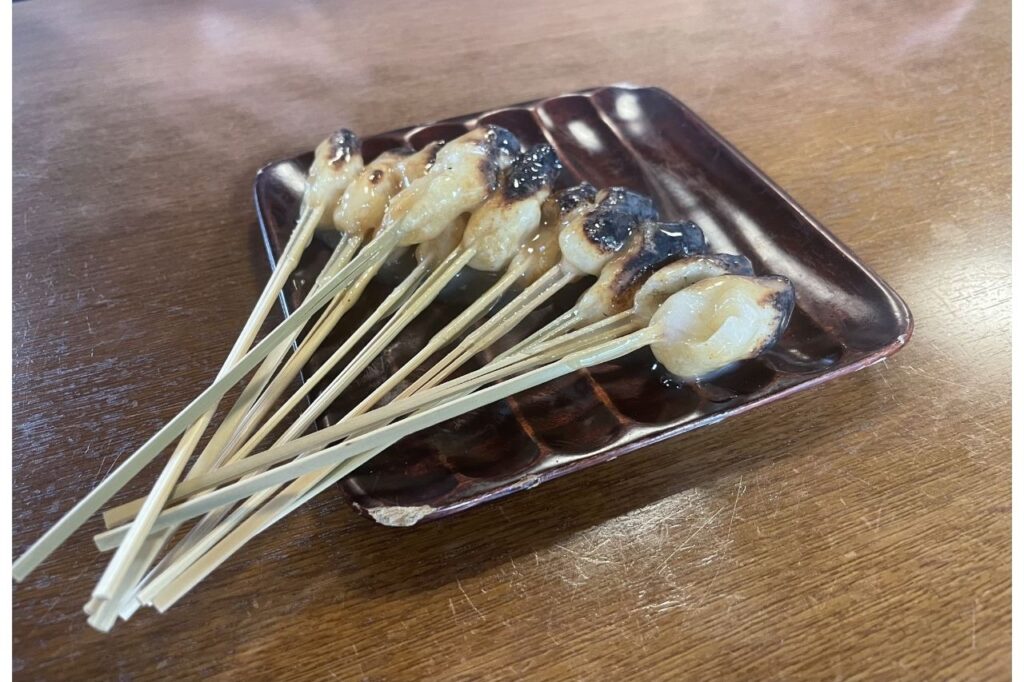
[Ichikazu] Grilled Mochi
After that, we visited [Imamiya Shrine] and took a leisurely stroll through the fresh greenery.
With my mind and body in order, I headed for [Ichikazu].
It's interesting how, even though it's the same aburi mochi, you can enjoy subtly different flavors depending on the shop.
It’s a real treat to cool off after working up a light sweat from my stroll—whether with the breeze from a fan or the natural breeze blowing through the window—while I wait once again for my aburi-mochi.
The mochi that was brought out was, as expected, exquisite, and I could savor a more toasty flavor and aftertaste than the one I’d had earlier.
This "aburi mochi" is served in portions of 11 pieces per person, and there's a reason for that.
In Onmyōdō, odd numbers are considered “yang”—that is, auspicious numbers—and are imbued with wishes for protection from misfortune and good health.
When you learn about the history of these temple-gate sweets—which have been passed down since the Heian period alongside people’s prayers—every bite feels even more special.
Aburi-mochi isn’t just delicious—it’s also steeped in history, faith, and the feelings of the people.
The time spent strolling along the approach to [Imamiya Shrine] is truly a quintessentially Kyoto experience that engages all five senses.
No matter which restaurant you visit—or even if you try both to compare them—each one will leave a lasting impression.
Walking along the approach path, drawn by the fragrant aroma, feels just like a brief journey back in time.
Over 600 interviews per year! An order site carefully selected by the editors who knows Kyoto and Shiga.
nowOfficial LINE friend registration500 yen OFF coupon is being issued!
Distributed every Friday morning at 8:00 am! From new restaurant information to event information that we want to share with you, We deliver articles about Kyoto that are useful to know. About 20,000 people have registered.Click here to add a friend!
 News
 Feature article


PR
 Featured event