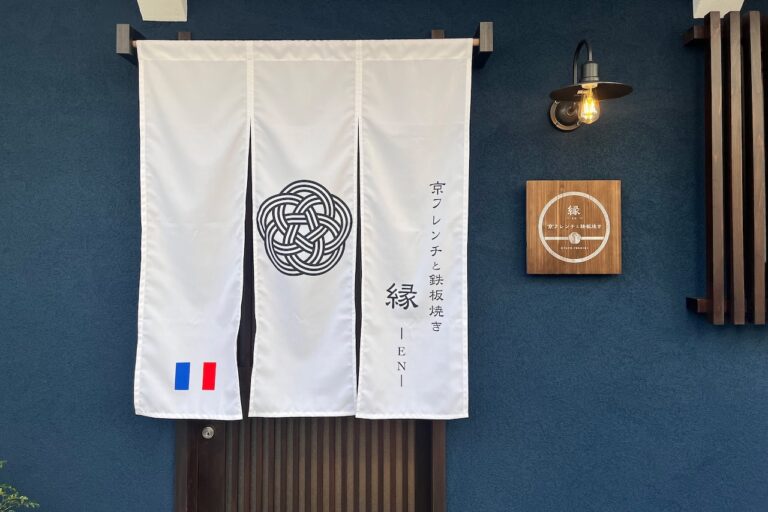



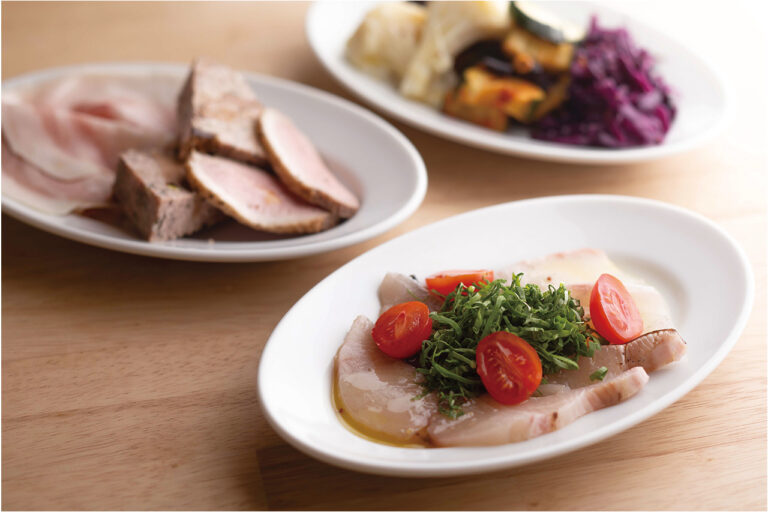
La Bottega R&R in Fushimi [La Bottega R & R (La Bottega...


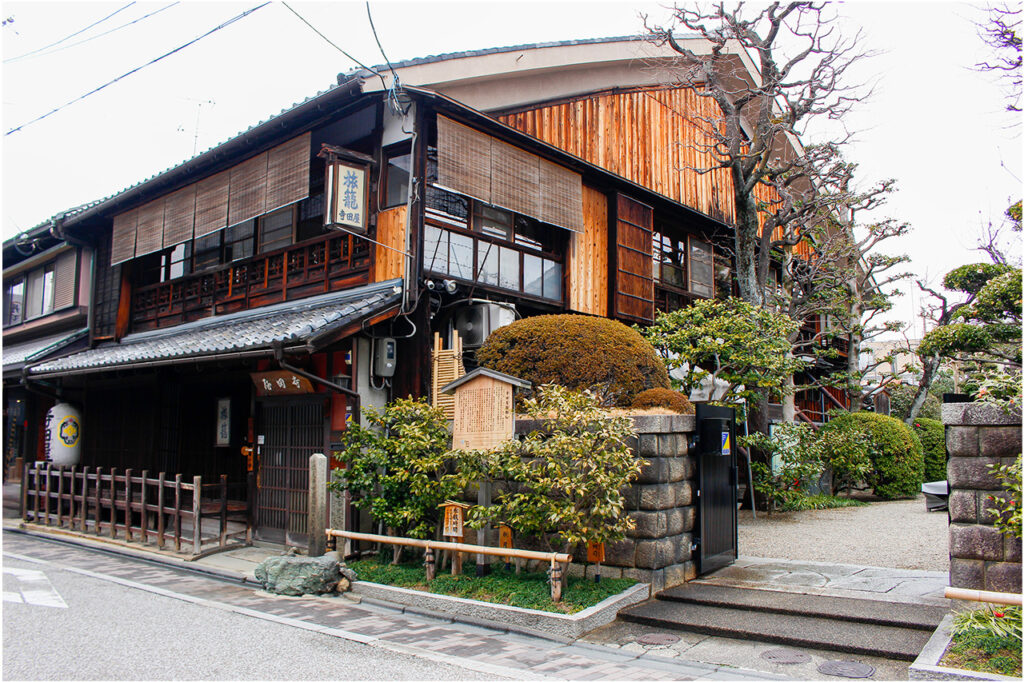
Teradaya: An Essential Landmark in the History of the Late Edo Period and the Meiji Restoration

Fushimi, Kyoto—known as one of Japan’s premier sake-producing regions—is also famous as a place associated with Ryoma Sakamoto. While there are many spots scattered throughout Fushimi Ward where you can learn about the history of the Bakumatsu period, this time we’d like to introduce [Teradaya], the site of the Teradaya Incident. Why not visit this historic setting where Ryoma Sakamoto and other Bakumatsu patriots made their mark?
Did you know that the so-called “Teradaya Incident,” famous in the history of the Bakumatsu and Meiji Restoration, actually refers to two separate incidents? One occurred in 1862 (Bunkyū 2), when radical loyalist and anti-foreign activists staying at [Teradaya] were suppressed. A public notice posted by the City of Kyoto in the square adjacent to Teradaya provides a detailed account of this event, identifying the site as the “Site of the Teradaya Disturbance.”
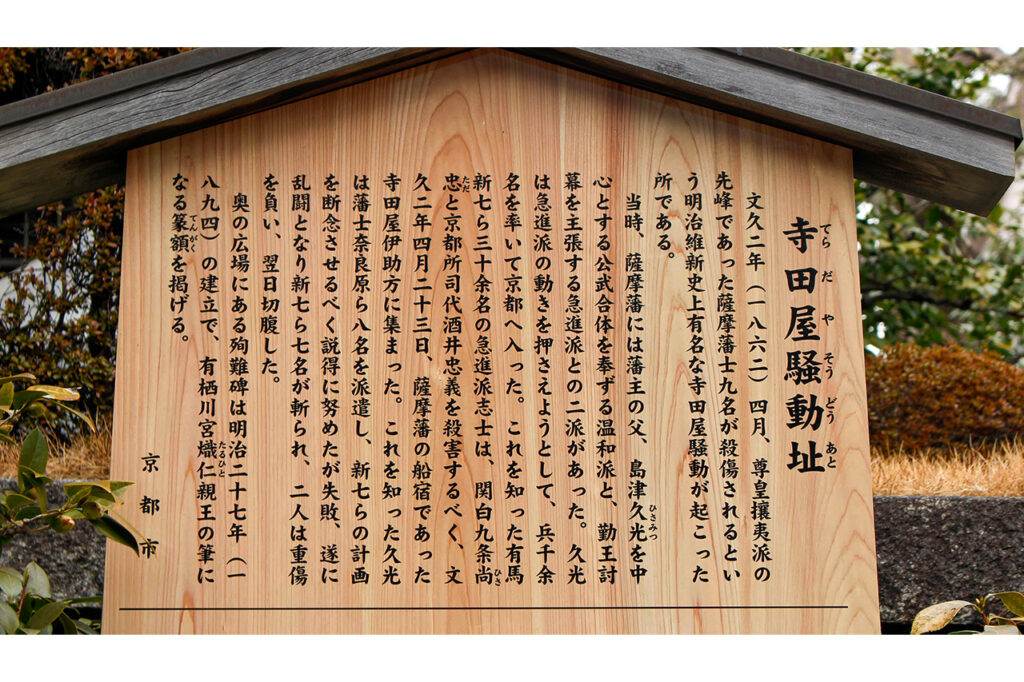
A public notice explaining the Teradaya Incident of 1862 (Bunkyū 2)
Another notable event is the 1866 (Keio 2) attack on Ryoma Sakamoto by the Fushimi Magistrate. It’s a well-known story that Sakamoto, who was staying at an inn at the time, escaped the attack thanks to the quick thinking of Oryo, who would later become his wife.
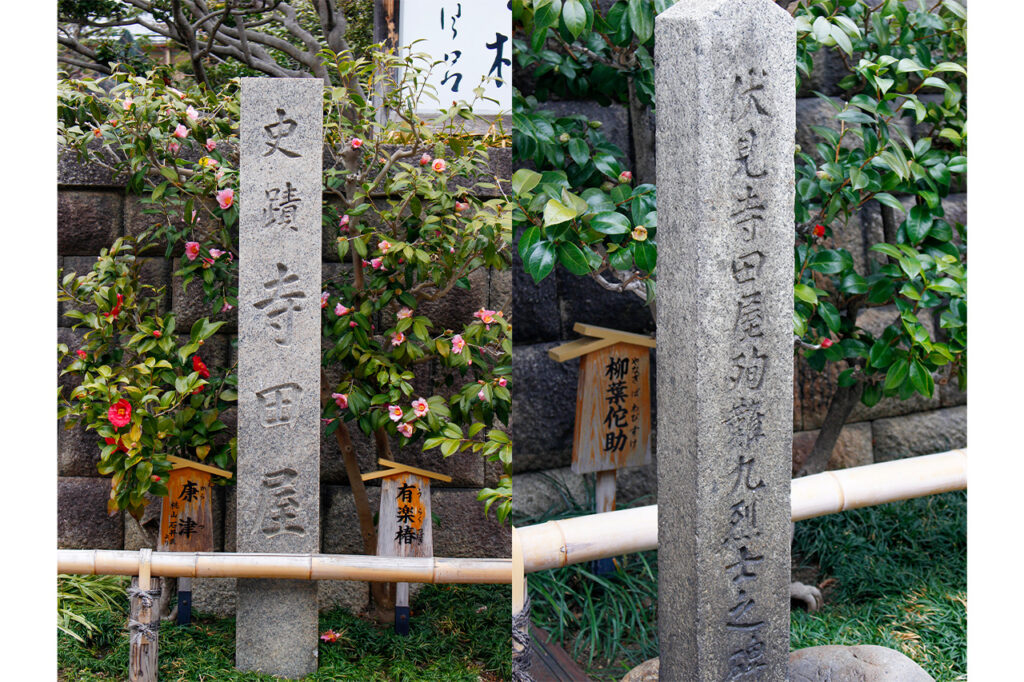
Left: Monument to the Historic Site of Teradaya; Right: Monument to the Nine Martyrs of Fushimi Teradaya
Now, let’s actually step inside [Teradaya]. As you enter the charming entrance hall, you’ll find the space crammed with Ryoma-themed merchandise, such as towels and books. Climb the steep staircase, and you’ll find Ryoma’s room, “Ume-no-ma.” The portrait hanging on the wall was commissioned by the innkeeper, Otose, who sensed a murderous aura creeping up on Sakamoto Ryoma and persuaded him—despite his reluctance—to have a local painter create it. Unintentionally, this became his only surviving portrait and served as the model for the bronze statue in [Maruyama Park]. As I looked at replicas of items said to have been used by Ryoma—such as a model of his pistol—I discovered sword marks and bullet holes still visible on the pillars! Although more than 100 years have passed, it’s deeply moving to think that I’m standing in the very same space where Sakamoto Ryoma and Oryo once stood.

"Ume-no-ma," the room where Ryoma was attacked
[Teradaya] was once a bustling inn for tourists traveling by boat between here and the Yodo River, and it flourished as the designated lodging for the Satsuma Domain. In fact, you can still stay in five of its rooms—all except the “Ume-no-ma”! If you go down a different staircase (which used to be a secret back staircase for hidden blades), you’ll find the bath where it’s said Oryu once bathed. Passing through the Japanese-style room, you’ll return to the original reception area.
Next to the [Teradaya] building is a plaza owned by the City of Kyoto. At the far end of the plaza stands a martyr’s monument featuring a seal script plaque inscribed by Prince Arisugawa Toshihito. In front of it stands a small yet striking statue of Sakamoto Ryoma, quietly gazing out at the present day. There is also the Otose Myojin shrine, dedicated to Otose, who was the proprietress of [Teradaya]; it is said to grant blessings for finding a good marriage partner. Though compact, this space is full of points of interest—why not take a moment to reflect on the patriots of the Bakumatsu era?
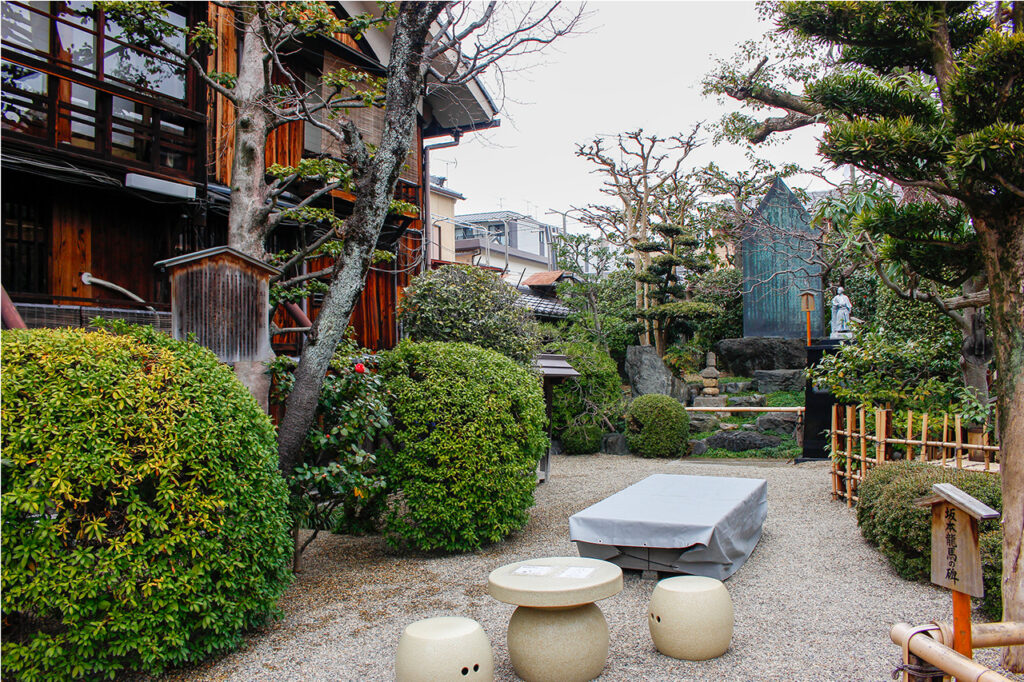
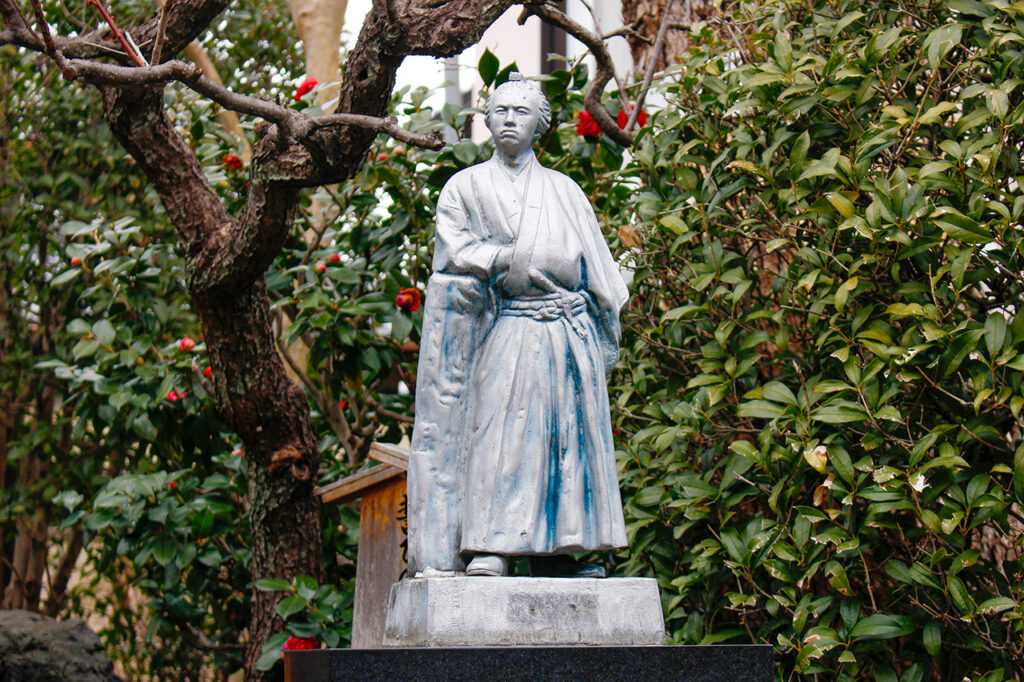
Statue of Ryoma Sakamoto
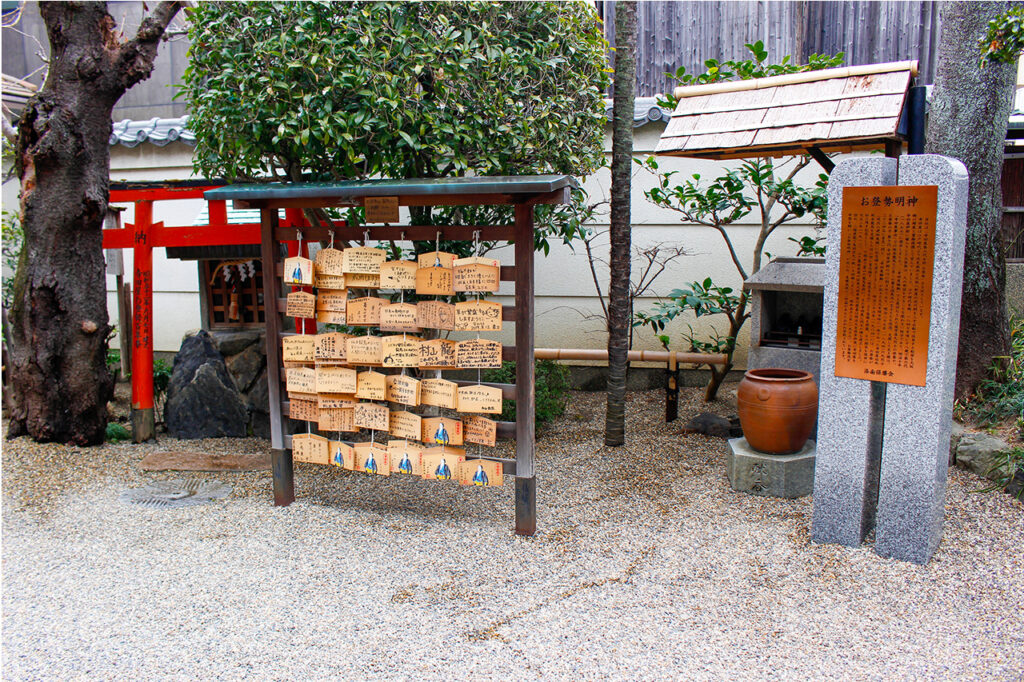
Otose Myojin

Over 600 interviews per year! An order site carefully selected by the editors who knows Kyoto and Shiga.
nowOfficial LINE friend registration500 yen OFF coupon is being issued!

Distributed every Friday morning at 8:00 am! From new restaurant information to event information that we want to share with you, We deliver articles about Kyoto that are useful to know. About 20,000 people have registered.Click here to add a friend!
 News


PR

 Feature article


PR


 Featured event