

2025] Eating & Drinking at Kiyomizu-Dera Temple Approach, Kyoto....


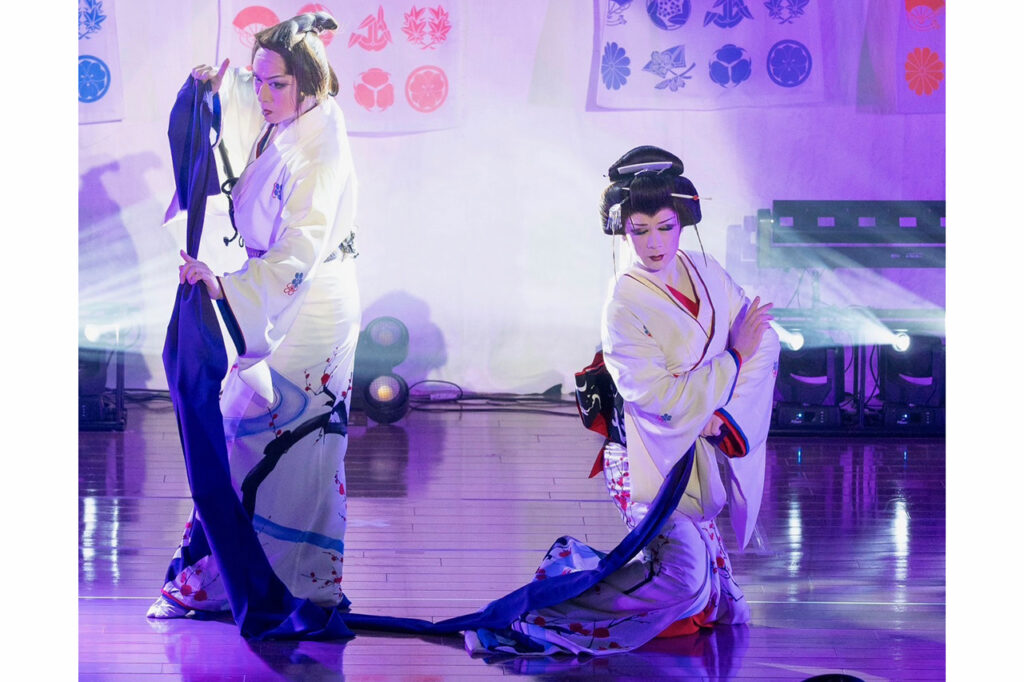
From the dance show in Part 2. Photo courtesy of Gion Gofukuzo

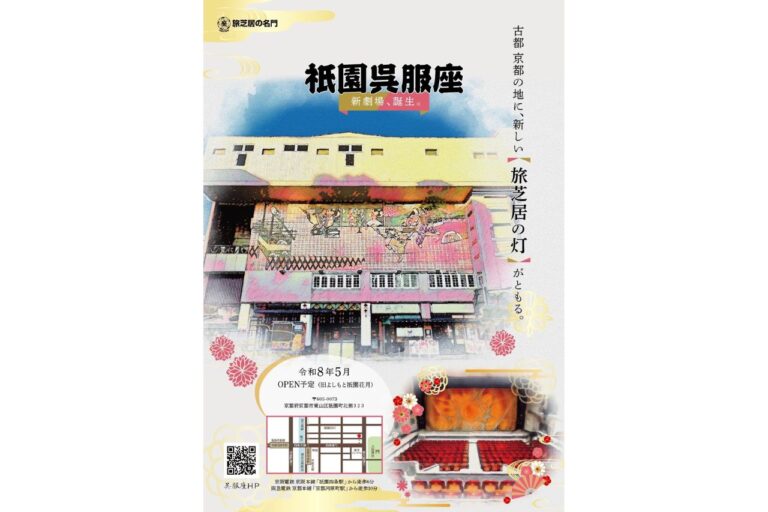
In May 2026, a new hub for theater culture, the [Gion Gofukuzo] (Higashiyama Ward, Kyoto City, Kyoto Prefecture), opened in Gion, Kyoto. As Kyoto’s first permanent traveling theater, it utilizes the site of the [Yoshimoto Gion Kagetsu], which closed last summer, and will present heartwarming plays filled with laughter and tears, as well as spectacular dance shows, every day.
At a press conference held in May, Mr. Yamazaki, the theater’s representative, said he deliberately insists on using the term “traveling theater.” “Traveling theater” refers to what is commonly known as “popular theater.” This is because he wants to “cherish the original spirit of touring from town to town.” “Kyoto has a wonderful theater called the [Minamiza], and Kabuki is deeply rooted here. If you trace the origins of popular theater back far enough, it actually stems from the same source as Kabuki: ‘Okuni of Izumo.’ That’s precisely why I’m eager to create a traveling theater production that will be cherished by the people of Kyoto for generations to come,” he said enthusiastically. Having lived in Kyoto for over 10 years since his student days, he shared his passionate feelings: “Even after I started working, the people of Kyoto helped me tremendously. I took on this challenge because I want the people of Kyoto to enjoy this production.”
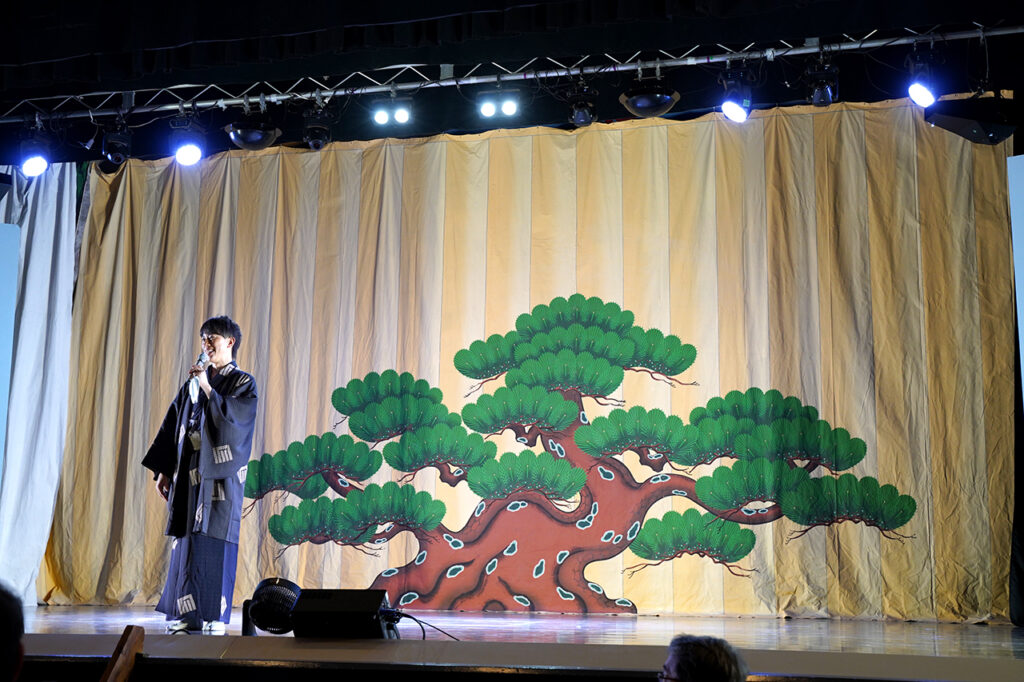
Mr. Fumiaki Yamazaki, representative of the renowned traveling theater troupe [Gofuku-za]
The stage features a different program every day. The theater companies rotate monthly, so you can enjoy a different story every time you visit. Performances are held twice daily—once in the afternoon and once in the evening—and consist of two parts: the first features heartwarming period dramas, while the second is a lavish and spectacular dance show. The close proximity to the audience—where you can even feel the actors’ breath—creates a sense of realism unique to traveling theater troupes. After the performance, the actors gather in the lobby to see the audience off in a tradition known as “okuridashi.” Being able to share your thoughts directly with them or take photos together—and feeling closer to the actors you want to support—is another part of the appeal.
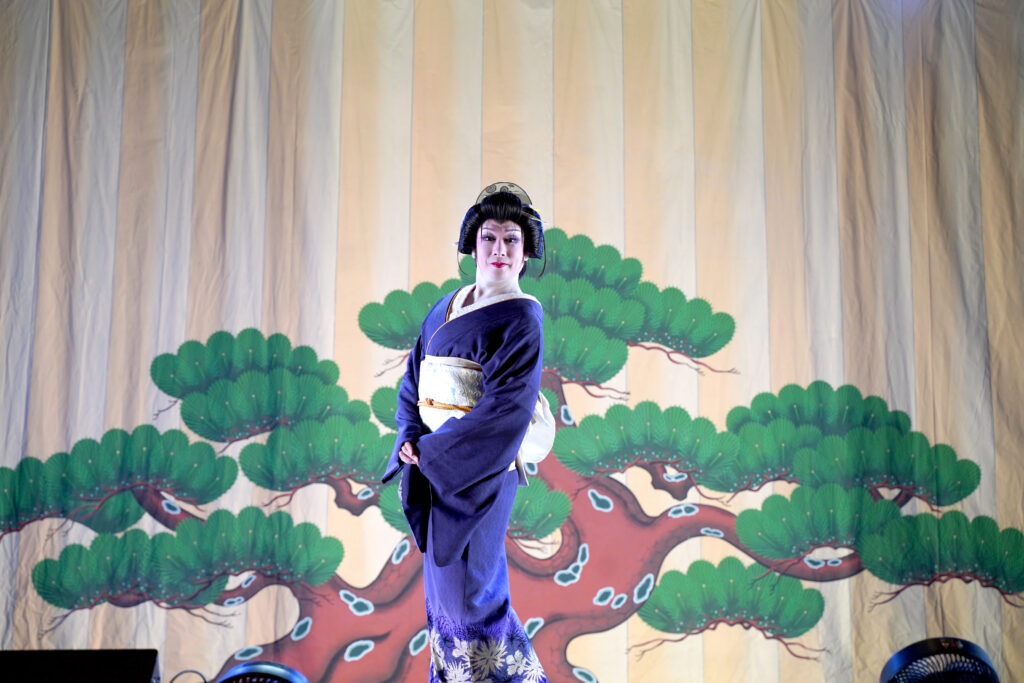
[Kyushu Otoko Theater Company] Artistic Director Ryotaro Okawa
Also taking the stage at the press conference was Ryotaro Okawa, the artistic director of [Kyushu Otoko Theater Company], which will perform the opening show. “This is the theater that our company’s actors have always wanted in Kyoto. For a long time, people kept saying that establishing a theater in Kyoto would be difficult,” he said, “Mr. Yamazaki had the courage to create a space like this in Kyoto. We, too, want to do our very best to make it a success,” he said with a smile.
The interior of the theater is filled with numerous ingenious features unique to traveling theater troupes. The stage still features a hanamichi (walkway) and a manually operated lifting mechanism called a “suppon,” and unique dividing curtains are installed to facilitate smooth scene changes. “These are measures designed to keep the audience from waiting,” explains Mr. Yamazaki. Since the program changes daily, the stage sets are also changed every day. By rearranging a variety of backdrop panels—such as houses, izakayas, pleasure quarters, and mountain huts—they bring the world of the story to life.
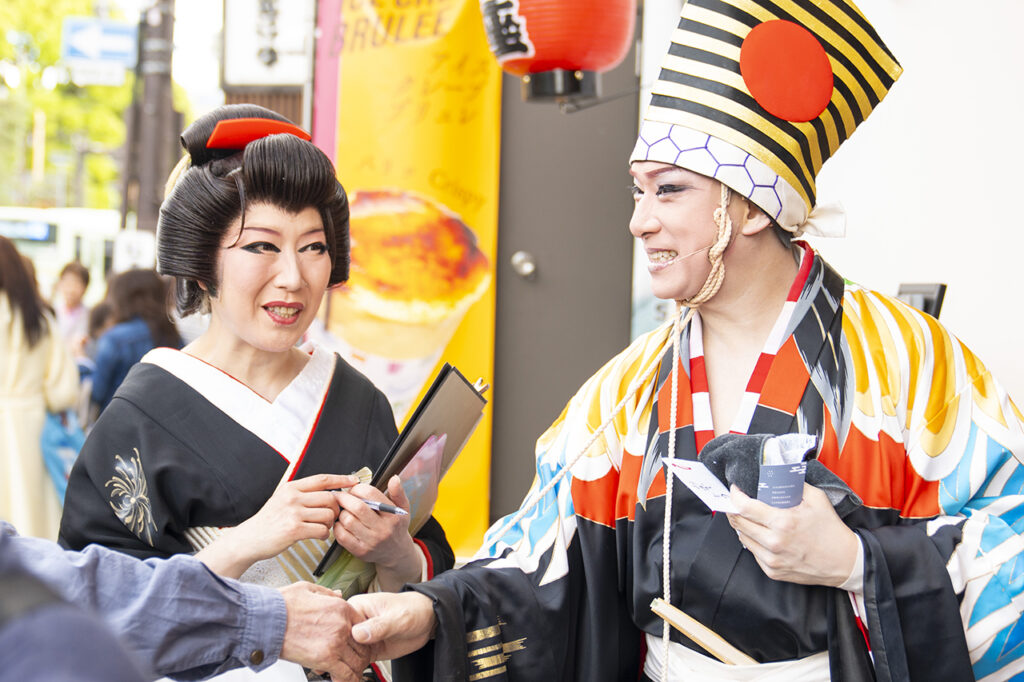
Scenes from the "send-off" after the performance
Furthermore, the venue will begin fully catering to inbound tourism. The second part of the dance show—which features no spoken dialogue—will be presented to international tourists as “Kyoto Gion: Samurai & Kimono Theatrical Show.” While the regular matinee performance begins at 1:00 p.m., a special 2:30 p.m. admission plan has been arranged for international visitors, allowing them to start their experience with the dance show. Mr. Yamazaki said, said, “There is still a lack of evening entertainment in Kyoto. I hope this will become a place where people can casually stop by after dinner,” revealing his intention to cultivate this as part of Gion’s nightlife culture.
Standing before the 352-seat auditorium, Okawa, the theater’s artistic director, candidly shared his thoughts: “I do have some anxiety about whether we’ll be able to fill these seats. But we want to grow as performers while making the most of this spacious stage.” Meanwhile, Yamazaki said with a smile, “Precisely because Kyoto didn’t have a permanent theater, we really want the people of Kyoto to experience this joy. It’s entertainment that includes both laughter and tears, and is easy to understand and enjoy. I hope it takes root in Kyoto as a form of theater culture that people can enjoy casually,” he said with a smile.
Carrying on the legacy of the “Gofuku-za,” a theater founded in Ikeda, Osaka, during the Meiji era, the “Gion Gofuku-za” is promoting a new era of traveling theater culture from Kyoto. Located in the Gion district, where Kabuki and traditional culture thrive, it looks set to become a place where you can discover your new favorite performers.

Over 600 interviews per year! An order site carefully selected by the editors who knows Kyoto and Shiga.
nowOfficial LINE friend registration500 yen OFF coupon is being issued!

Distributed every Friday morning at 8:00 am! From new restaurant information to event information that we want to share with you, We deliver articles about Kyoto that are useful to know. About 20,000 people have registered.Click here to add a friend!
 News

PR

PR


PR
 Feature article


PR

PR

 Featured event